Ukraine Talks Venue Signals Strategic Role for UAE and Switzerland
A potential November meeting would reinforce Abu Dhabi’s position as a diplomatic hub while testing Washington’s mediation strategy.
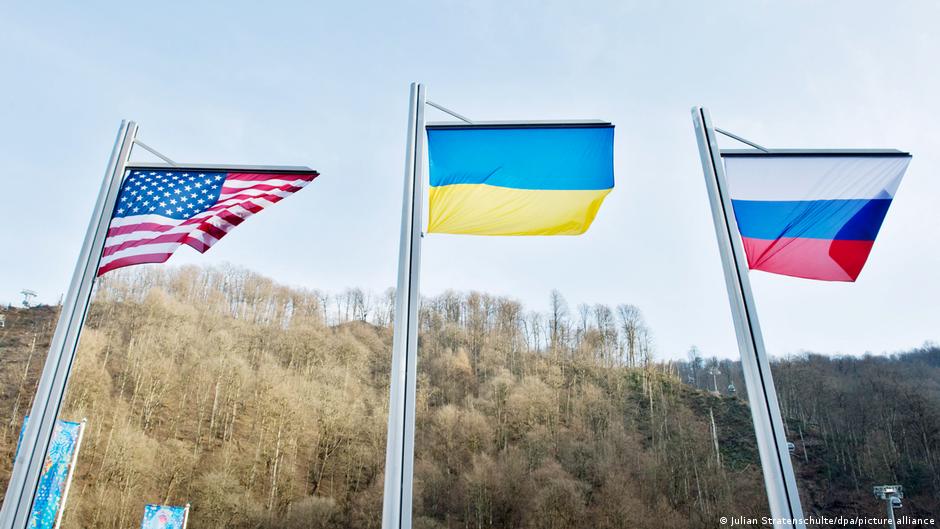
A new round of talks involving delegations from the United States, Ukraine and Russia could take place within weeks in Abu Dhabi or Switzerland, according to government sources who spoke on condition of anonymity. The possible meeting would focus on preparing the ground for negotiations at the highest political level, while also elevating the strategic importance of the prospective host country.
The choice between the capital of the United Arab Emirates and Switzerland reflects two different models of diplomatic positioning. Switzerland has a long-established reputation for neutrality and international mediation. Abu Dhabi, meanwhile, has increasingly sought a larger role in global diplomacy while maintaining working relationships across competing geopolitical blocs. Hosting another round would further consolidate the UAE’s status as a venue for sensitive negotiations.
The proposed talks are expected to bring together negotiating teams from Ukraine, Russia and the United States. It remains unclear whether Ukrainian and Russian representatives would communicate directly or whether the American delegation would act as an intermediary. A Washington representative said the ultimate objective would be to prepare a summit-level meeting.
Technical talks as a bridge to leadership decisions
Ukrainian President Volodymyr Zelensky said on October 23 that an agreement had been reached to hold a trilateral meeting among Ukraine, the United States and Russia at the level of negotiating teams. He said the meeting was planned for the first half of November and presented Kyiv as ready to move quickly.
“We are ready to meet on any day — even tomorrow. But everything depends on the Russians,” Zelensky said.
Speaking by video link to the Hudson Institute, a conservative US think tank, Zelensky characterized the negotiating-team format as technical rather than decisive. He argued that the process must advance from trilateral technical discussions to a meeting of national leaders because the central issues can be settled only at that level.
That distinction highlights a familiar management problem in complex negotiations: working-level teams can define options, identify areas of disagreement and prepare implementation frameworks, but they often lack authority to approve the most consequential trade-offs. A leaders’ summit would therefore represent a move from process management to strategic decision-making. The immediate value of a November session may be measured less by a final agreement than by whether it establishes the conditions for such an escalation.
Competing signals over location and participation
The Kremlin had shortly before stated that the trilateral talks would take place in Abu Dhabi during the first half of November. Kremlin spokesman Dmitry Peskov said the discussions would address security arrangements for Russia and Ukraine after the war ends. He also said European Union representatives would not participate.
The reported possibility of Switzerland introduces uncertainty over the final venue, but the competing locations share a commercial and diplomatic advantage: both are internationally connected jurisdictions accustomed to hosting senior officials and handling confidential engagements. For the UAE, another meeting would build on an existing operational role. For Switzerland, selection would reaffirm its traditional position in European diplomacy.
The exclusion of the EU, if maintained, would also shape the competitive landscape among the parties seeking influence over any settlement framework. Washington would occupy the central third-party role, while European institutions would remain outside the formal negotiating structure described by Moscow. That could affect how postwar security questions are framed, even though the talks themselves have not yet produced an announced breakthrough.
Previous rounds produced no breakthrough
The latest movement followed Russian President Vladimir Putin’s meeting in St. Petersburg with Steven Witkoff, a special envoy of the US president. After that discussion, Kremlin foreign policy aide Yuri Ushakov said Russia was prepared to resume trilateral negotiations with the United States and Ukraine.
The three countries have already conducted two rounds of closed-door talks in Abu Dhabi. The first was held on January 23-24 and the second on February 4-5. Neither round produced a breakthrough toward ending Russia’s war against Ukraine.
Those earlier outcomes set a cautious benchmark for any November meeting. Returning to Abu Dhabi would offer continuity, established protocols and familiarity among delegations. Moving to Switzerland could signal an effort to reset the format or broaden the diplomatic symbolism of the process. In either case, the core question is whether the participants are prepared to move beyond exploratory exchanges.
From a strategic perspective, the talks involve several layers of positioning. Ukraine is emphasizing that technical negotiations should lead to decisions by leaders. Russia is defining postwar security as the principal subject and has publicly identified Abu Dhabi as the venue. The United States is positioned as both participant and potential intermediary, with the stated goal of preparing a top-level meeting.
The next round, if held, will therefore test more than the willingness of delegations to reconvene. It will show whether the negotiating structure can develop from a closed technical channel into a decision-making process capable of addressing the conflict’s central political and security questions.