U.S. Strike on Cargo Ship Raises Stakes for Gulf Shipping and Energy Markets
CENTCOM’s disabling of the Panama-flagged M/V Ocean Molica underscores how maritime enforcement around Iran is becoming a strategic and economic pressure point.
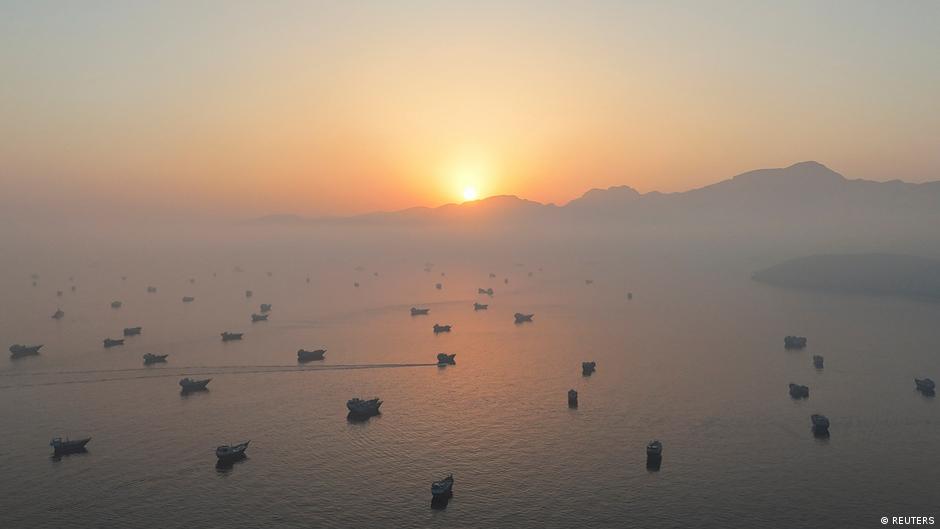
A U.S. Air Force fighter jet used a precision-guided munition to strike the stern of the commercial cargo vessel M/V Ocean Molica in the Gulf of Oman on October 10, disabling the ship’s propulsion system without injuring the crew, according to U.S. Central Command. CENTCOM said the vessel, also known as the Arika Sun, had ignored repeated warnings and attempted to breach an active maritime blockade targeting Iran-bound and Iran-origin shipping.
The Panama-flagged vessel had previously departed from an Iranian port, the command said. The strike represents another step in a campaign that has moved beyond interception and diversion toward the physical disabling of commercial vessels accused of violating U.S. blockade measures. For shipping operators, insurers, energy traders and governments, the incident adds a sharper operational risk to an already volatile trade corridor.
Crews have been advised to heed blockade warnings, according to the U.S. command’s statement.
The Gulf of Oman and the Strait of Hormuz remain critical to global energy flows. Any escalation in enforcement there carries commercial consequences well beyond the vessels directly involved. The latest U.S. action suggests Washington is attempting to impose real costs on maritime traffic connected to Iran, while avoiding casualties that could accelerate a broader confrontation.
A blockade becomes a business risk
CENTCOM said U.S. forces resumed the blockade on July 14 against all vessels entering or leaving Iranian ports. Over the following three months, four commercial ships were disabled, 135 vessels were forced to turn around and change course, and 10 tankers linked to the shadow network of Iran’s Islamic Revolutionary Guard Corps were destroyed, according to the command.
Those figures point to a widening maritime enforcement regime with direct implications for corporate strategy. Shipping companies operating in the region now face a higher-stakes decision matrix: whether to continue servicing routes connected to Iran, reroute at significant cost, or suspend operations in the area entirely. The risk is not limited to companies knowingly engaged in sanctioned or disputed trade. In a congested and politically charged environment, even routine routing, ownership structures, cargo documentation and flag-state arrangements can become commercially material.
For insurers and lenders, the CENTCOM statement reinforces the need to price in not only regional instability but also direct military enforcement. War-risk premiums, financing terms and charter-party clauses are likely to come under renewed scrutiny as owners and operators assess whether their compliance systems can withstand the speed and severity of military action at sea.
The use of a precision munition to disable the propulsion system, while leaving the crew unharmed, is also significant from a management and reputational perspective. The approach signals an effort to neutralize vessel movement rather than target personnel. But it also raises the practical cost of noncompliance: a disabled ship can create delays, salvage obligations, legal exposure, cargo losses and cascading contractual disputes.
Competitive pressure across the energy chain
The incident occurred as maritime security officials reported a separate attack on a tanker in the Strait of Hormuz. The United Kingdom Maritime Trade Operations organization said the tanker was struck on its port side by an unknown projectile, causing a fire. The captain reported that the crew was safe, according to UKMTO.
Taken together, the disabling of the Ocean Molica and the reported tanker strike underline the dual risk facing the sector: state-led enforcement on one side and hostile or unidentified attacks on the other. For energy companies, refiners, commodity traders and logistics providers, that combination complicates short-term planning and long-term exposure to Gulf routes.
The Strait of Hormuz is not merely a geographic bottleneck; it is a strategic chokepoint where security disruptions quickly feed into market psychology. Fuel prices have risen significantly in recent weeks against the backdrop of the war with Iran, adding pressure on businesses and consumers. The price increases have also created political pressure for Republicans roughly one month before the U.S. midterm congressional elections, at a time when recent polling indicates their popularity among voters has declined.
That political backdrop matters for business because it affects the durability and intensity of policy. A government facing electoral pressure from fuel costs may seek to show resolve while also limiting the kind of escalation that could push prices higher. This tension helps explain why maritime enforcement may remain calibrated: forceful enough to disrupt Iran-linked traffic, but designed to avoid crew casualties and uncontrolled escalation.
G7 stance adds diplomatic weight
The broader policy environment is also hardening. On October 2, G7 leaders condemned Iran’s continuing attacks on neighboring countries and its actions that disrupt international trade, energy security and the global economy. The group called for the immediate and full restoration of navigation rights and principles in the Strait of Hormuz and said it intended to strengthen collective efforts toward that goal.
For corporate boards and executive teams, the G7 position is a signal that the risk environment is unlikely to normalize quickly. The issue is no longer confined to military planners or regional diplomats. It sits at the intersection of energy security, sanctions enforcement, insurance markets and global trade continuity.
Companies with exposure to Gulf shipping will now have to treat the blockade as a live operating constraint rather than a distant geopolitical concern. That means tighter vessel tracking, more conservative route approvals, deeper due diligence on counterparties, and clearer contingency plans for cargo delays or diversions. Management teams may also need to revisit disclosure obligations if the region represents a meaningful share of supply, revenue or logistics capacity.
The Ocean Molica incident therefore carries significance beyond one disabled vessel. It shows how maritime enforcement against Iran is being translated into operational disruption, and how quickly military decisions in a narrow sea lane can reshape costs, competitive positioning and political calculations across the global energy market.