Donetsk Strike Exposes Command Risk in Russia’s Military Operating Model
The reported deaths of at least 20 Russian officers point to a concentrated command structure and raise questions about resilience in wartime management.
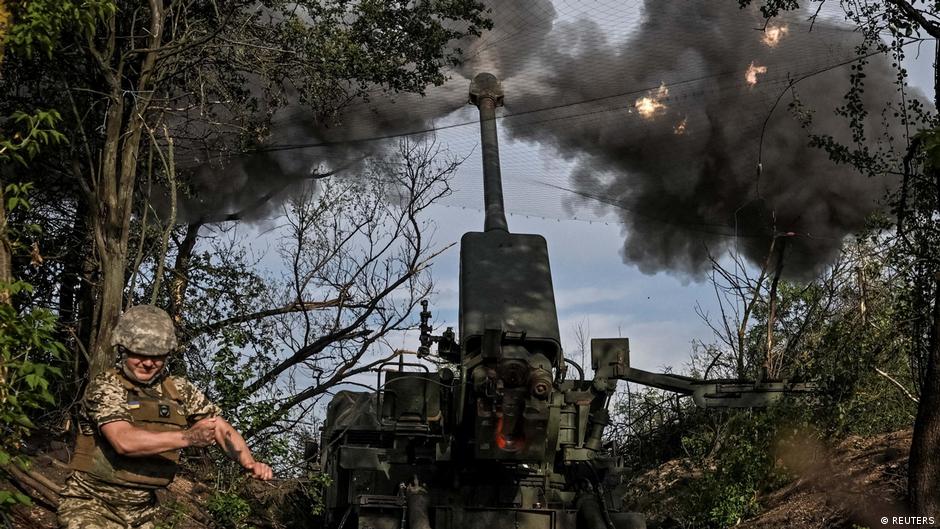
A Ukrainian missile strike on Russian-occupied Donetsk on August 26 killed at least 20 Russian officers, according to names established by Mediazona journalists, marking the largest known single loss of Russian officer personnel since the start of the full-scale invasion of Ukraine.
The reported scale of the losses is significant not only in military terms, but also as a case study in organizational risk. The officers identified by the outlet served in headquarters connected to Russia’s Center group of forces, including the headquarters of the Central Military District and the 41st Combined Arms Army. In corporate language, the strike appears to have hit elements of a management layer responsible for coordination, planning and command execution rather than only frontline operating units.
Of the 20 officers, 18 were killed on the day of the strike, while two others later died of wounds sustained in the attack. Among those killed were seven colonels and four lieutenant colonels, according to the findings. Such ranks typically occupy senior operational roles, making the loss a potential disruption to decision-making chains, institutional knowledge and continuity inside the affected formations.
Concentration of Leadership Creates Strategic Exposure
The episode underscores a recurring vulnerability for large hierarchical organizations: concentration of key personnel in identifiable nodes. In business, companies often try to reduce this risk through distributed leadership, redundancy, succession planning and secure facilities. In war, the equivalent challenge is to maintain command capability while preventing headquarters from becoming high-value targets.
Mediazona said it established the names of the dead by comparing personnel lists from the two headquarters with inheritance case records, other state registries and military obituaries. That methodology points to another strategic dimension of the conflict: open-source intelligence and public records are increasingly used to map losses, verify claims and assess organizational damage after major strikes.
The Russian side’s initial public framing differed from the analysis later offered by open-source projects. Denis Pushilin, head of the occupation administration, wrote on Telegram that the target of the Ukrainian strike was the Donetsk City shopping center. He also said Storm Shadow/SCALP-EG missiles were used in the attack.
Open-source projects suggested that the sites hit were being used as Russian military command posts.
Ukrainian Telegram channel Exile+ claimed that one strike hit a building that before the war housed research and industrial institutions. The channel KiberBoroshno added that one of the targets was an underground parking facility with 600 spaces beneath an unfinished residential complex. OSINT projects suggested that both locations were being used as Russian army command posts.
Management Losses and Operational Continuity
For Russia’s military command, the reported deaths create a management problem beyond the immediate casualty count. Senior officers function as coordinators across staff functions, logistics, intelligence flows and field units. When multiple officers from linked headquarters are killed at once, the impact can ripple through reporting lines and planning cycles, even if replacements are appointed quickly.
The presence of officers from both the Central Military District headquarters and the 41st Combined Arms Army headquarters also matters for interpreting the strike’s broader implications. It suggests the affected command environment was not a single isolated unit, but part of a larger management system supporting the Center group of forces. In competitive terms, Ukraine appears to have targeted an organizational hub rather than only a battlefield asset.
That carries implications for the competitive landscape of the war. Ukraine has repeatedly sought to offset Russia’s greater manpower and equipment resources by using precision weapons, intelligence and target selection to strike command infrastructure, logistics and other enabling systems. Russia, by contrast, must balance the need for centralized command with the risk that centralization makes high-ranking personnel more exposed.
The reported use of Storm Shadow/SCALP-EG missiles, as stated by Pushilin, also places the strike within the wider contest over long-range precision capability. These weapons are designed to hit significant targets beyond the immediate front line. If the sites in Donetsk were indeed being used as command posts, the attack would fit a strategy aimed at degrading management capacity rather than merely inflicting tactical losses.
Information Control and Reputational Risk
The competing descriptions of the target also illustrate the reputational and information-management dimension of the conflict. Pushilin’s statement emphasized the Donetsk City shopping center, while Ukrainian channels and OSINT projects pointed to buildings allegedly used for military command functions. For external observers, the divergence highlights the importance of verification and the growing role of independent data collection in assessing wartime claims.
For Russia, the deaths of multiple senior officers in a single event may pose a messaging challenge. Public acknowledgment of such losses can affect perceptions of competence, security and command discipline. Limited disclosure, however, creates space for journalists and open-source investigators to reconstruct events through registries, obituaries and other records, as Mediazona did in this case.
The strike therefore carries significance on several levels. It was, according to the identified names, the largest known one-time loss of Russian officer personnel since the full-scale invasion began. It affected officers linked to important headquarters structures. It also exposed the pressure placed on centralized command systems when precision weapons, public records and open-source analysis converge.
From a business-analysis perspective, the central lesson is one of resilience. Organizations operating under extreme competitive pressure must protect their leadership nodes, distribute knowledge and ensure continuity after sudden losses. The Donetsk strike suggests that, in Russia’s military operating model, command concentration remains a strategic vulnerability that Ukraine is actively seeking to exploit.