Ukraine Team to Discuss New War Plan With Trump Envoys in U.S.
Kyiv is sending senior political and intelligence figures to talks with Jared Kushner and Steve Witkoff as diplomacy intersects with sanctions, technology and battlefield pressure.
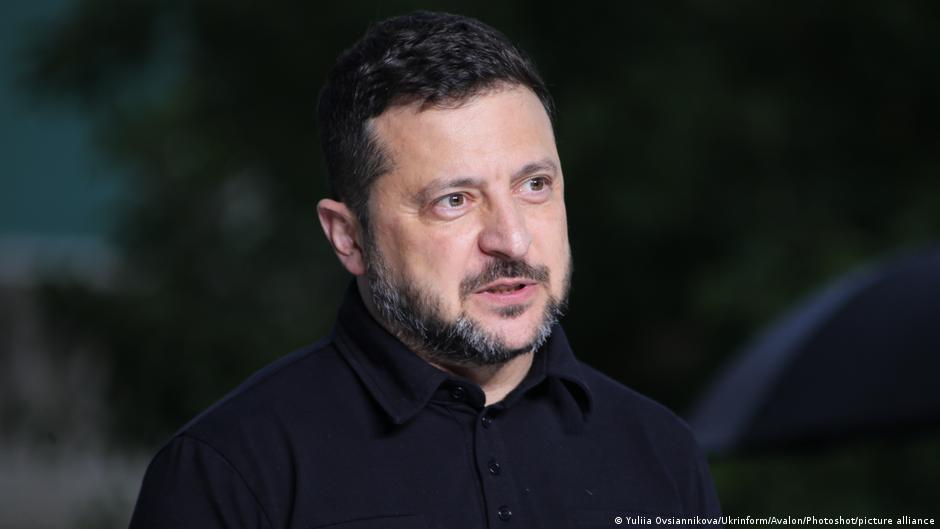
A Ukrainian delegation is set to hold talks in the United States on October 9 and 10 with special representatives of U.S. President Donald Trump over a new plan aimed at ending Russia’s war against Ukraine, according to President Volodymyr Zelensky.
Zelensky told journalists on Thursday, October 8, that the Ukrainian side would travel to the United States for meetings with Jared Kushner and Steve Witkoff. The talks are expected to focus on a new proposal described by a senior U.S. official, cited by the Ukrainian service of Voice of America, as covering all aspects of the conflict and pursuing the goal of ending the war.
For Kyiv, the composition of the delegation points to the breadth of the issues likely to be on the table. Ukraine will be represented by Kyrylo Budanov, head of the President’s Office; Serhiy Kyslytsia, deputy head of the President’s Office; Davyd Arakhamia, chair of the Servant of the People parliamentary faction; and Rustem Umerov, head of Ukraine’s Foreign Intelligence Service. Zelensky also said European representatives may join the negotiations.
A Negotiation Track With Strategic Stakes
The talks come at a moment when the diplomatic process is being shaped not only by military realities, but also by questions of leverage, technology access and economic pressure. From a business and strategy perspective, the meeting reflects the way modern war negotiations increasingly resemble complex stakeholder management: governments, defense establishments, technology providers, infrastructure operators and allied political blocs all influence the final bargaining position.
The involvement of Kushner and Witkoff places the discussions in a channel closely associated with Trump’s political network. For Kyiv, that means adapting its negotiating posture to a U.S. team that may prioritize deal architecture, enforceable commitments and economic incentives alongside military and security guarantees. The potential participation of European officials would add another layer, as Europe remains central to sanctions policy, reconstruction planning and long-term security support for Ukraine.
The plan itself has not been detailed publicly. The description that it covers “all aspects of the conflict” suggests a broad framework rather than a narrow ceasefire proposal. Such a framework could affect military positioning, economic sanctions, security guarantees, infrastructure protection and the terms under which any negotiations with Moscow would proceed. The source article does not provide specific provisions of the proposal.
“We are not in a diplomatic deadlock,” Zelensky said, criticizing the view that negotiated settlement prospects have disappeared.
Zelensky Challenges Rubio’s Deadlock Assessment
Zelensky also responded on October 8 to remarks by U.S. Secretary of State Marco Rubio, who said the war in Ukraine had reached a deadlock and that, in his view, there were no prospects for resolving the conflict through negotiations. Rubio made the comments in an interview with the Greek newspaper Kathimerini.
The Ukrainian president criticized Rubio’s position sharply, arguing that Western governments cannot simultaneously discuss future economic projects with Russia and describe diplomacy as exhausted. Zelensky said it was inconsistent to speak of a political or diplomatic impasse while leaving Russia’s economic channels open.
His message was framed around leverage. Zelensky called for the United States and its partners to close off Russia’s economy, stop feeding it through sales and impose sanctions on weapons. In corporate strategy terms, Kyiv’s argument is that the negotiating table cannot be separated from the supply chain of pressure: sanctions, export restrictions and technology denial are treated as instruments that shape Russia’s willingness to bargain.
The exchange with Rubio also highlights a growing divergence in how policymakers describe the state of the conflict. A deadlock narrative can reduce expectations for diplomatic movement and shift focus toward containment. Zelensky’s response sought to reject that framing and instead emphasize that additional pressure on Moscow could still change the strategic equation.
Starlink, Air Dominance and Technology Leverage
Zelensky also urged the United States to allow Ukraine to use Starlink over Russian territory. He said such permission would help Ukraine “dominate” in the air and ultimately force Russian President Vladimir Putin to sit at the negotiating table.
The request underscores the role of private-sector technology infrastructure in the war. Starlink has become a strategic communications asset, and decisions about where and how it can be used carry military, political and commercial implications. For U.S. policymakers and technology operators, such questions involve escalation risk, contractual control, export restrictions and the reputational consequences of being embedded in a live conflict.
For Ukraine, expanded access would be part of a broader pressure strategy: improve operational capabilities, raise the cost of continued Russian attacks and strengthen Kyiv’s hand before any settlement talks. That logic is consistent with Zelensky’s wider argument that diplomacy requires leverage rather than acceptance of a stalemate.
Data Centers Enter the Conflict Economy
Zelensky said Ukraine is responding symmetrically to Russian strikes, including attacks on data centers. “Data centers, you all know, they hit and are hitting our data centers. We responded to them. I cannot say all the details,” he said, according to RBC-Ukraine.
Ukraine’s Armed Forces struck a Yandex data center in the city of Sasovo in Russia’s Ryazan region with drones during the night of October 8. A fire broke out, and the data center completely stopped operating. No one was injured.
The incident adds a significant business dimension to the conflict. Data centers are not only physical facilities; they are nodes in the digital economy, supporting cloud services, storage, network operations and corporate continuity. Their disruption can ripple across customers, service availability and investor perceptions of operational risk.
For companies operating critical infrastructure in or near the conflict environment, the strike reinforces the need to treat geopolitical risk as a core management issue rather than a peripheral security concern. Business continuity planning, redundancy, insurance coverage and state-linked exposure are increasingly relevant to corporate decision-making in the region.
The U.S. talks scheduled for October 9 and 10 therefore arrive against a complex backdrop. Kyiv is seeking to influence a new diplomatic plan while pressing for stronger sanctions, broader technology access and recognition that economic and digital infrastructure are now integral to the war. The outcome of the discussions may depend less on one document than on whether Ukraine, the United States and potentially Europe can align military pressure, economic policy and political messaging into a coherent strategy for ending the conflict.