Kyiv Mayor Urges Temporary Relocation as Russian Strikes Test City Resilience
Vitali Klitschko says Kyiv is preparing backup heat, fuel, food and water supplies while warning that air defense remains the decisive risk.
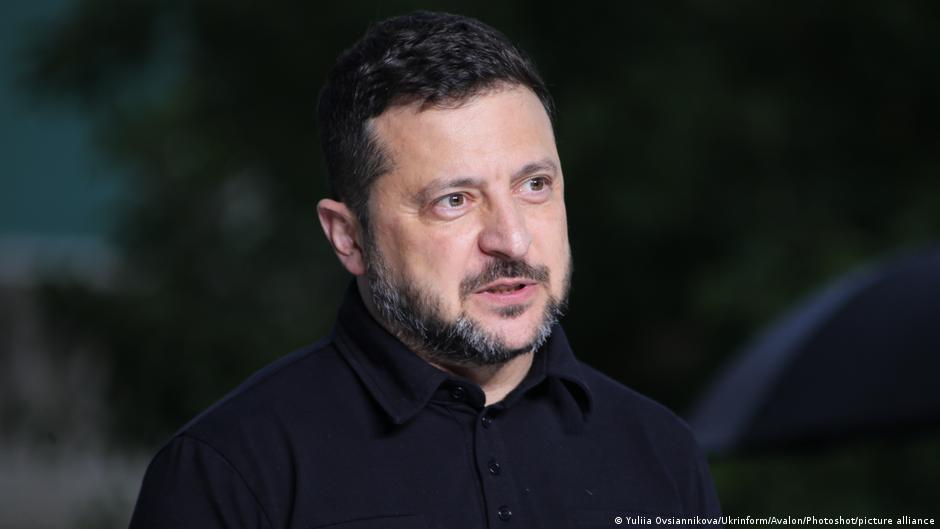
Kyiv Mayor Vitali Klitschko has urged residents with friends or relatives outside the Ukrainian capital to consider temporarily leaving the city, as intensified Russian attacks put new pressure on municipal services, emergency planning and the city’s winter resilience strategy.
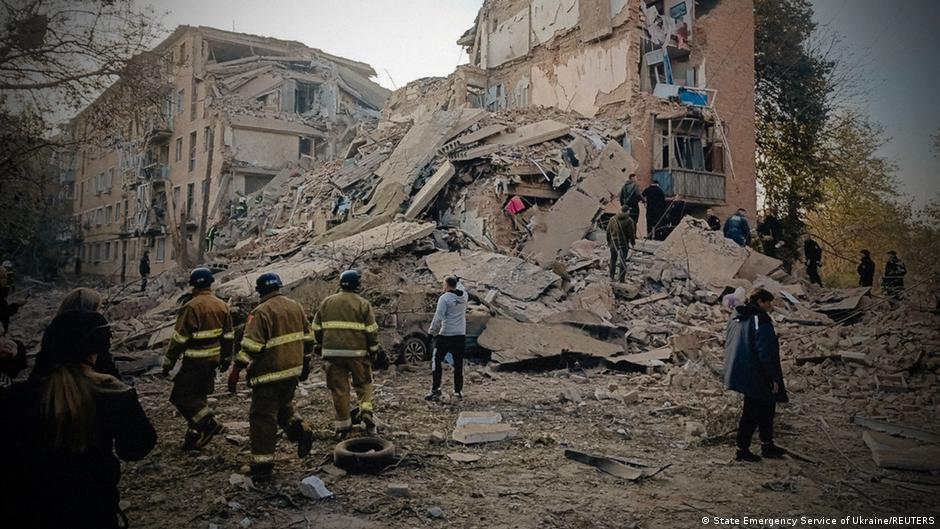
In an interview with AFP published on Wednesday, October 8, Klitschko framed the situation not as a political gesture but as a practical risk-management decision for households that have options elsewhere in Ukraine. The mayor said daily reports of destroyed buildings, wounded civilians and deaths had become part of a worsening security environment as shelling of the city intensifies.
“Today it is about survival,” Klitschko said, according to the interview.
For Kyiv’s administration, the message reflects a delicate management challenge. City leaders must prepare residents for severe disruption without triggering panic, preserve the capital’s operational continuity without underplaying danger, and manage infrastructure risk in a war environment where civilian systems remain exposed to aerial attack.
Continuity Planning Under Fire
Klitschko warned that if Russian attacks disrupt the water supply system, Kyiv could face a “fairly large-scale” crisis. That warning places water infrastructure at the center of the city’s winter planning problem, alongside heat, electricity, communications and transport. In business terms, the city is operating like a critical-services enterprise under repeated hostile stress: redundancy, запас capacity and rapid restoration are now core strategic priorities.
The mayor said Kyiv authorities are building reserve heating systems ahead of winter and accumulating fuel, food and drinking water. These measures point to a municipal strategy focused on contingency planning rather than full evacuation. The city is attempting to reduce single points of failure in essential services while buying time for emergency response teams if infrastructure is hit.
But Klitschko also made clear that local preparedness has limits. However well the authorities and residents prepare, he said, if air defense does not work, Kyiv could end up in a bad scenario. That statement identifies a key dependency in the capital’s resilience model: municipal planning can mitigate the impact of strikes, but it cannot substitute for effective protection from the air.
The mayor’s comments therefore reveal a layered governance problem. At the household level, residents must decide whether temporary relocation reduces their individual exposure. At the city level, officials must keep services functioning for those who remain. At the national level, Ukraine’s ability to defend urban infrastructure shapes the risk profile of every local plan.
No Call for Full Evacuation
Klitschko was careful to say he was not calling for a complete evacuation of Kyiv. That distinction is central to the political and strategic implications of his remarks. A mass departure from the capital would carry symbolic, administrative and economic consequences, potentially affecting public confidence, labor availability, supply chains and the functioning of national institutions.
The mayor said a full-scale emptying of cities would serve Russian President Vladimir Putin’s objective. “The best scenario for him is that we all leave and give him our empty cities and the whole country,” Klitschko said.
That framing turns the relocation question into more than a civil-defense advisory. It is also a matter of strategic messaging. Kyiv’s leadership is trying to preserve the city as a working capital while acknowledging that some residents, particularly those with safe alternatives, may reduce pressure on services and emergency systems by leaving temporarily.
For companies, public institutions and investors monitoring Ukraine, the comments underscore the growing operational complexity of maintaining activity in Kyiv. Even without a formal evacuation order, businesses face workforce continuity questions, contingency location planning, employee safety obligations and the possibility of service interruptions. The risk is not merely physical damage to assets, but the cascading effect of disrupted water, heating, transport, power and communications systems.
Changing Target Set
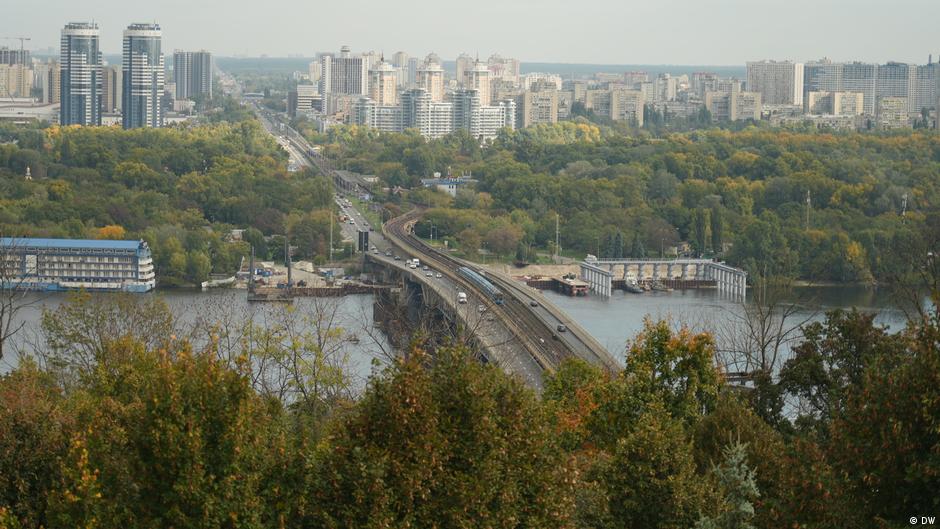
The intensified pressure follows a shift in Russian attacks reported in September and early October. In September, Russia stepped up attacks on Kyiv. At the beginning of October, Russian forces began striking bridges across the Dnipro River that connect the right-bank and left-bank parts of the city. These bridges had not previously been attacked.
The targeting of bridges broadens the strategic threat to Kyiv’s internal connectivity. For a city divided by a major river, transport links are not only civilian conveniences but essential arteries for commuting, emergency response, logistics and supply distribution. Damage to crossings could complicate the movement of people and goods between districts and increase the strain on alternative routes.
Other targets of strikes have included energy and communications facilities, as well as railway infrastructure. Taken together, those categories suggest an effort to disrupt the systems that allow a large city to function: power, information flow, mobility and supply. For city management, this expands the scope of resilience planning from individual facilities to interconnected networks.
On October 3, Ukrainian President Volodymyr Zelensky said Russia had adopted a new airstrike strategy aimed at forcing Ukrainians to leave Kyiv and other major cities. Klitschko’s remarks now show how that strategy is being felt at the municipal level. The capital is preparing for winter under conditions in which infrastructure, civilian morale and urban continuity appear to be central pressure points.
The business implications are significant. Kyiv remains a political, administrative and economic hub. Decisions about whether families stay, temporarily relocate or split across cities can affect labor markets, consumer activity, commercial operations and public-service demand. The mayor’s advice to those with alternatives is therefore both a humanitarian warning and an operational signal: the city is not shutting down, but it is preparing for scenarios in which normal service assumptions may fail.
Klitschko’s position balances resilience with realism. He is not asking Kyiv to empty itself, and he is not presenting municipal stockpiles as a guarantee. Instead, he is acknowledging that survival planning now includes private household decisions, city-level запас systems and the uncertain performance of air defense. For Ukraine’s capital, the coming winter is not only a military test. It is a test of urban management under sustained attack.