Latvian Citizens Detained at RAF Molesworth as UK Probes Base Breach
The incident underscores operational and reputational risk around strategic military sites hosting NATO and U.S. intelligence assets.
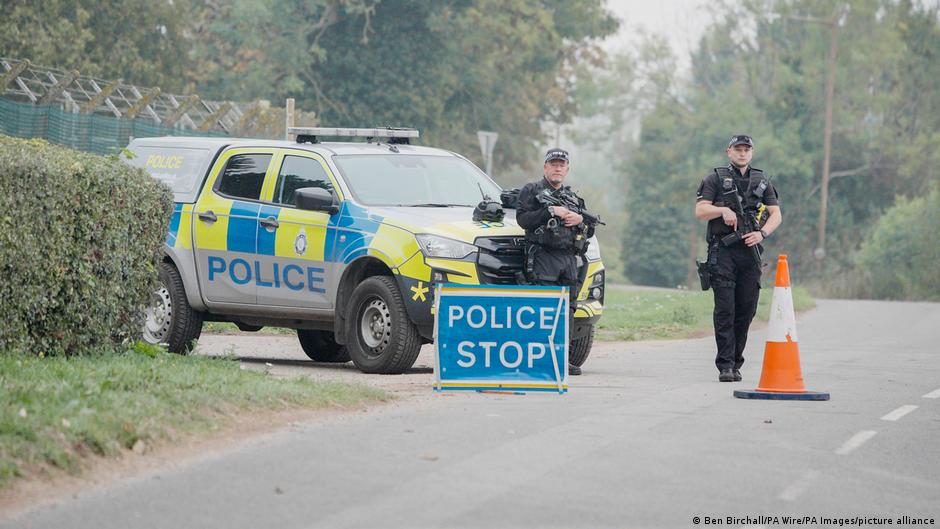
British counterterrorism police have detained two Latvian citizens after they entered the grounds of RAF Molesworth, a military air base in southeast England that hosts NATO and U.S. intelligence facilities. The two men, aged 32 and 36, damaged fencing around the site before being arrested, according to police information reported by AFP on Thursday, October 8.
The breach occurred during the night of October 8. Law enforcement officials said the men intended to “cause damage to the United Kingdom,” and an investigation is under way. Authorities have not publicly provided further detail on how far the individuals moved inside the site, what equipment they may have carried, or whether any operations at the base were disrupted.
RAF Molesworth is not a conventional commercial asset, but the incident has a clear business and strategic dimension. Major defense installations increasingly operate as complex ecosystems involving government agencies, allied military structures, intelligence functions, private contractors, technology suppliers, facilities managers and local logistics providers. A perimeter breach at such a site is therefore not only a policing matter. It is also a test of resilience across a security supply chain that depends on layered controls, rapid incident response and close coordination between public and private actors.
Security Risk Meets Strategic Infrastructure
For defense contractors and service providers connected to military bases, the episode highlights the growing importance of physical security as part of enterprise risk management. Companies supporting intelligence, communications, construction, transport, maintenance or cybersecurity operations around sensitive installations face heightened scrutiny when a breach occurs, even if no direct failure by a private supplier has been alleged.
The key management question is whether existing controls are designed only for routine access management or for deliberate hostile action. Damaged fencing may appear low-tech, but for operators of critical infrastructure it raises board-level questions about perimeter surveillance, response times, contractor vetting, coordination protocols and incident escalation. In industries where trust and continuity are core commercial assets, a single security event can influence procurement decisions and future contract terms.
Police said the suspected objective was to “cause damage to the United Kingdom.”
That statement gives the incident a different profile from an ordinary trespass case. Even without additional public evidence, the involvement of counterterrorism police signals that the authorities are treating the matter with seriousness. For companies operating in the defense and national security market, such language reinforces a trend already visible across Europe: security risk is becoming a strategic operating condition rather than a background compliance requirement.
The competitive landscape for defense and security suppliers is likely to reward firms able to demonstrate integrated protection capabilities. Physical security vendors, surveillance technology providers, perimeter systems manufacturers, risk consultants and incident-response specialists all operate in a market where demand is shaped by perceived threat. Incidents at high-profile bases can accelerate investment decisions by public agencies and prime contractors, particularly where existing infrastructure is aging or dispersed across allied facilities.
Management Decisions Under Pressure
The RAF Molesworth case also comes against a broader backdrop of heightened sensitivity around military sites in the United Kingdom. Police said that, for now, “nothing indicates” a connection between the Molesworth incident and a separate episode at RAF Fairford in late September. In that earlier case, a local resident reported “suspicious” activity near the base, and police found three vans containing “some quantity” of petrol.
The Fairford area was cordoned off, residents of a nearby village were evacuated, and seven suspects were detained. They were later released under certain conditions, according to dpa. The United States subsequently decided to withdraw American B-1 bombers that had been stationed at RAF Fairford. U.S. President Donald Trump explained the decision by citing “threats” from people he said were “connected with Iran.”
Even though police have not linked the two incidents, their proximity in time creates a management problem for defense organizations and companies working with them. Executives and public-sector leaders cannot wait for a definitive pattern before reviewing risk exposure. They must decide whether to treat each event as isolated or as part of an elevated threat environment requiring new spending, altered deployment choices, tighter supplier oversight and revised continuity plans.
Those choices carry financial and operational consequences. Increasing security at bases can mean higher costs for labor, technology, insurance, compliance and project delivery. Moving or withdrawing aircraft, as occurred after the Fairford episode, can affect logistics, maintenance planning, personnel assignments and allied coordination. For contractors, sudden changes in deployment posture can reshape workload, revenue timing and resource allocation.
At the same time, underreacting to a security breach can be more costly than overreacting. Defense procurement is built on reliability and confidence. Suppliers that cannot show they understand the physical and geopolitical dimensions of risk may find themselves disadvantaged against competitors offering broader security assurance. In that sense, incidents such as the RAF Molesworth breach can influence not only public safety policy but also market positioning across the defense services sector.
Implications for Defense-Sector Competition
The Molesworth case illustrates how the boundary between national security and corporate strategy is narrowing. Bases hosting NATO and U.S. intelligence centers depend on a wide network of companies, but those companies operate in an environment where reputational risk can shift quickly. A contractor may not be responsible for a perimeter breach, yet still face questions from clients about contingency planning, staff training and the robustness of its own controls.
For investors and executives watching the sector, the commercial signal is straightforward: demand for resilient infrastructure and security services is likely to remain strong where allied military assets are concentrated. The most competitive firms will be those that can support both everyday operations and crisis response, while adapting to fast-changing threat assessments.
The investigation into the two Latvian citizens detained at RAF Molesworth remains ongoing. British authorities have stated the suspected intent and the basic circumstances of the breach, but have not announced a wider connection to the Fairford case. Until more information is released, the event stands as a reminder that strategic sites are exposed not only to advanced cyber and intelligence threats, but also to direct physical intrusions that can force rapid decisions across government, military and commercial networks.