Abbas delays Palestinian elections, raising governance risks for PA
The postponement to September 2027 extends a two-decade democratic gap as the Palestinian Authority faces scrutiny over succession, legitimacy and Gaza governance.
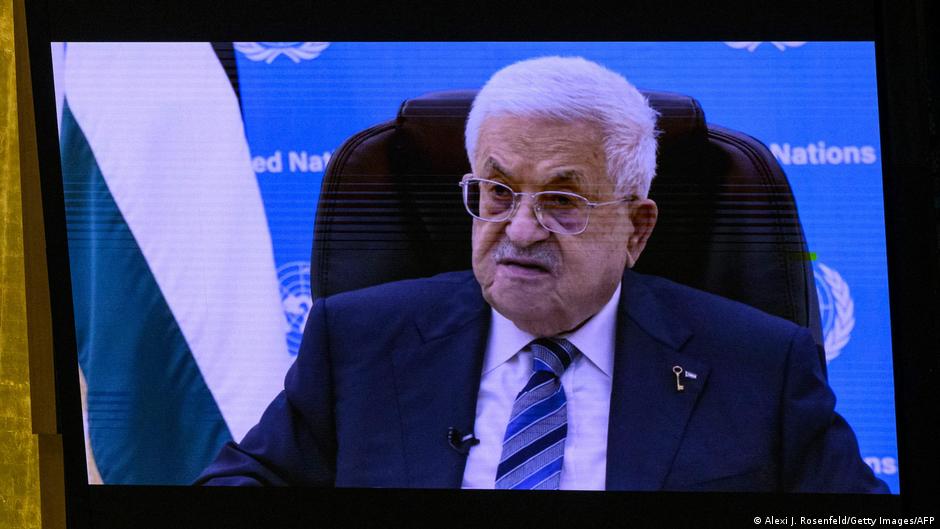
Palestinian Authority President Mahmoud Abbas has postponed parliamentary elections in the Palestinian territories from late November to September 11, 2027, according to the WAFA news agency, which cited a decree issued by the 90-year-old leader. Presidential elections are also scheduled for the same day, setting up what would be the first nationwide Palestinian vote in more than two decades.
The decision carries significance well beyond the mechanics of electoral scheduling. For the Palestinian Authority, the delay prolongs a governance model already under pressure from internal critics, Israeli officials and international stakeholders seeking a credible administrative framework for the West Bank, East Jerusalem and the Gaza Strip. For companies, donors, reconstruction planners and regional governments, the move deepens uncertainty around institutional continuity, leadership succession and who may ultimately be empowered to manage postwar Gaza.
WAFA said the postponement was linked to Israeli military restrictions, the expansion of Jewish settlements, attacks by armed settlers and the lack of freedom of movement in the West Bank, East Jerusalem and Gaza. With respect to Gaza, the agency also pointed to instability and the delayed deployment of international security forces.
Israeli Foreign Minister Gideon Saar accused Abbas of deceiving the international community and making false claims that Israel had created obstacles to voting.
Saar said Abbas was trying to evade responsibility and accountability. The criticism was not limited to Israel. Objections to the postponement also came from within the Fatah movement, the Palestinian national liberation movement to which Abbas belongs.
A strategic delay with institutional consequences
From a business and governance perspective, the postponement reinforces one of the central challenges facing the Palestinian Authority: the absence of a refreshed electoral mandate. The PA operates in an environment where political legitimacy has direct consequences for aid flows, reconstruction planning, security coordination and the confidence of outside parties. Extending the timetable to September 2027 keeps key questions unresolved at a moment when regional diplomacy is focused on whether the PA can eventually assume a larger role in Gaza.
The timing is especially important because the Palestinian political system is facing several overlapping pressures. Abbas, now 90, remains at the center of decision-making. The lack of nationwide elections for more than two decades has made succession and institutional renewal persistent sources of concern. A simultaneous parliamentary and presidential vote in 2027 could, in theory, create a new political mandate. But the delay also gives rivals and critics more time to question whether the PA leadership is committed to electoral accountability.
For Fatah, internal criticism of the delay indicates a management problem inside the ruling political movement itself. Fatah-linked and independent candidates were prominent in the first municipal elections in 20 years held earlier in April in Deir al-Balah in the Gaza Strip. That local vote offered a limited signal of electoral activity in a territory where broader national politics remain fragmented. The postponement of nationwide elections reduces the near-term opportunity to test support across the wider Palestinian electorate.
Gaza governance remains the competitive arena
The broader context is the war that began after October 7, 2023, when Hamas, designated a terrorist organization by the European Union and the United States, carried out a large-scale attack on Israel. Militants launched a massive rocket barrage, entered Israeli territory and carried out the deadliest massacre of civilians in the history of the modern Israeli state, killing about 1,200 people. They also seized around 250 hostages and took them to the Gaza Strip. Some hostages were exchanged or released, while others died.
Israel responded by declaring war on Hamas. In October 2025, Israeli authorities and Hamas agreed to a ceasefire under a peace plan developed by the administration of U.S. President Donald Trump. The United States, Turkey, Qatar and Egypt acted as guarantors of the arrangements between Israel and Hamas. During the first phase, Hamas militants returned all remaining living Israeli hostages in exchange for the release of Palestinian prisoners from Israeli jails.
In mid-January, the White House announced the start of the second phase of Trump’s plan to end hostilities in the Gaza Strip. Under that phase, a National Committee is supposed to take over governance of the region until the Palestinian Authority is ready to assume that role.
That structure makes the PA’s electoral calendar a strategic matter. If the National Committee is intended as an interim manager, the PA’s readiness to assume control becomes a question of capacity, credibility and political legitimacy. A postponed election may allow the PA leadership to argue that security and mobility conditions are not yet sufficient for a credible vote. But the same decision also gives opponents room to argue that the leadership is delaying accountability at a critical stage in Gaza’s political and administrative transition.
For regional actors and international backers, the competitive landscape is therefore not only between Israel and Palestinian factions, or between Fatah and Hamas. It is also a contest over which institution can present itself as a viable manager of Palestinian governance. Hamas has been weakened by war and remains internationally isolated by its terrorist designation in the EU and United States. The PA, however, faces its own challenge: proving that it can operate as more than an aging administrative structure without a renewed national mandate.
The delay to September 11, 2027, creates a longer planning horizon but also a longer legitimacy gap. For any future reconstruction, security or investment framework in Gaza and the West Bank, that gap matters. Management decisions inside the PA will now be judged not only by whether elections eventually take place, but by whether the authority can maintain coherence, answer internal dissent and persuade outside stakeholders that it remains the institution best positioned to govern when the interim arrangements in Gaza give way to a more permanent structure.