US Signals Russia Sanctions Relief Will Wait Until Ukraine War Ends
At the G20 finance ministers’ meeting, Washington paired a hard sanctions message with a refusal to separate broader economic talks from the war in Ukraine.
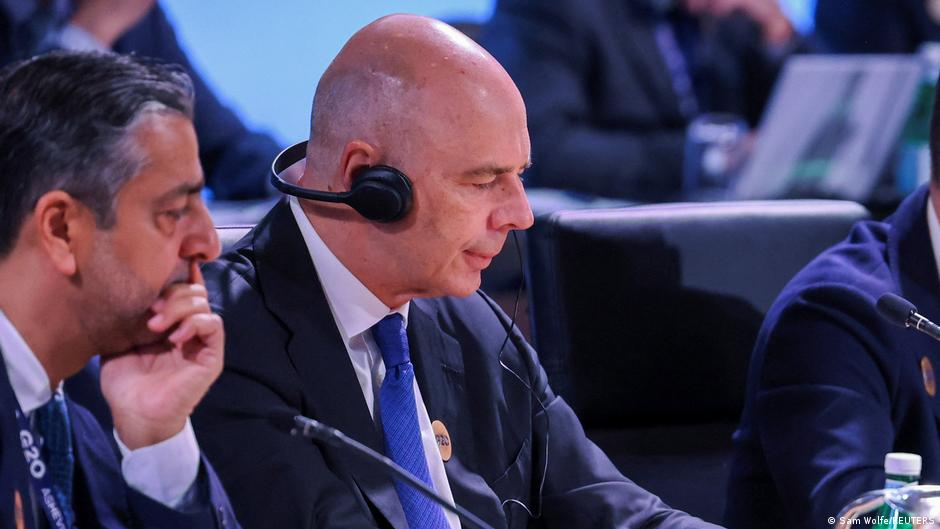
The United States has signaled that it will not ease economic pressure on Russia before the war in Ukraine is over, delivering a message with direct implications for corporate planning, sanctions compliance and the limits of any near-term thaw in cross-border business activity.
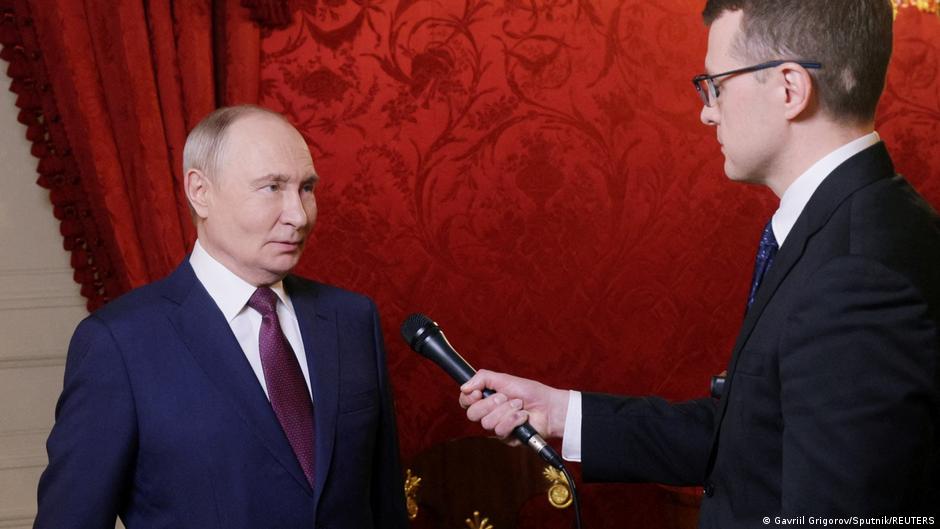
According to Reuters, US Treasury Secretary Scott Bessent told Russian Finance Minister Anton Siluanov during a conversation on the sidelines of a G20 meeting of finance ministers and central bank governors in Asheville, North Carolina, that Moscow should not expect any relaxation of economic pressure or agreements on other issues until the war in Ukraine has ended.
That formulation matters well beyond diplomacy. For companies, banks and investors watching for signs that selective deals or sector-by-sector carve-outs might emerge despite the conflict, the US position as described in the report points in the opposite direction. It suggests that Washington is not prepared to delink wider financial or economic engagement from the central geopolitical condition it continues to stress: an end to the war.
The message also narrows room for interpretation around what any bilateral contact between US and Russian officials might mean. Meetings can occur, but the existence of contact does not in itself signal a softer sanctions trajectory. From a market perspective, that distinction is critical. Executives looking for clues about future access, payment channels, trade normalization or the reopening of strategic transactions are being told, in effect, not to price in relief.
Sanctions policy and strategic signaling
The reported exchange took place against a backdrop of visible tension among US allies. Siluanov’s participation in the meeting drew criticism from European governments that are currently working on stronger sanctions against Russia because of the war. That reaction underscores a second business-relevant point: the competitive landscape for policy is not simply about Washington and Moscow, but about coordination within the Western alliance.
In particular, German Finance Minister and Vice Chancellor Lars Klingbeil described Siluanov’s presence at the event as a “troubling signal.” He also told colleagues from other European countries that he was prepared to boycott the traditional group photograph if Siluanov appeared in it.
“One can find space for clear criticism, discuss with one another, choose clear words about this war, but a group photo would be too big a step for me at this stage.”
According to Klingbeil, representatives of other European countries joined his position, and the final photograph was taken without the Russian minister. He also told journalists that during the morning plenary meeting he had told Siluanov that the war in Ukraine must end and reaffirmed Berlin’s support for Kyiv.
For multinational businesses, the European response is important because it indicates that even symbolic gestures remain highly contested. If governments are unwilling to normalize optics, they are even less likely to support a policy environment that could be read as normalizing economic relations. That has consequences for board-level scenario planning, especially in industries where sanction exposure intersects with reputational risk, financing constraints and long investment cycles.
The episode also highlights the management challenge facing policymakers themselves. The US Treasury appears to have used the encounter to set boundaries rather than open channels for broader compromise. European officials, meanwhile, sought to ensure that participation by a Russian cabinet minister did not create the appearance of diplomatic routine. Together, those moves point to a coordinated political instinct: maintain pressure, avoid symbolic concessions and keep any dialogue tightly controlled.
Implications for business and diplomacy
The Russian Finance Ministry, in a statement published on the evening of August 31, said Siluanov and Bessent had met on the sidelines of the G20 gathering. The ministry said the ministers discussed issues of Russian-American interaction on the financial track as well as cooperation within the Group of 20.
On the same day, August 31, CNBC reported on its website, citing the US Treasury, that Bessent had discussed US President Donald Trump’s “peace plan” for Ukraine with Siluanov in Asheville.
Taken together, those accounts suggest that the meeting had at least two layers: a diplomatic layer linked to the war and a financial-policy layer linked to bilateral interaction and the G20 agenda. Yet the Reuters account indicates that any expectation of parallel progress on other economic matters is being explicitly curtailed by Washington’s conditions.
For corporate strategists, that reduces the probability of incremental normalization through technical channels. In practical terms, it means that even if communication between officials continues, businesses should not assume that regulatory barriers, sanctions burdens or politically sensitive restrictions will ease in the absence of a broader end to the conflict. Companies with legacy exposure to Russia, deferred investment decisions or unresolved compliance issues are likely to read the signal as one favoring caution over optionality.
It also sharpens the competitive divide between companies that have already restructured around prolonged separation from the Russian market and those still holding out for a reopening. The former may now feel more justified in treating sanctions persistence as the base case. The latter face a more difficult argument internally if their assumptions depend on near-term political accommodation.
At the policy level, the encounter shows how finance ministries are functioning not just as economic administrators but as frontline actors in strategic statecraft. Conversations that might once have centered on macroeconomic coordination or multilateral process now carry immediate implications for sanctions architecture, alliance management and market expectations. That makes gatherings such as the G20 not merely venues for technical dialogue, but platforms where governments signal what kinds of commercial futures remain off the table.
For now, the message delivered to Moscow appears unambiguous: no sanctions relief before the war ends. For global business, that translates into a familiar but still consequential conclusion. The geopolitical constraint remains the primary variable, and no side agreement, procedural engagement or diplomatic contact should be mistaken for an imminent shift in the operating environment.