U.S. Senators Press Trump to Abandon Russian Diesel Deal With Putin
A bipartisan group argues the proposed sanctions relief would strengthen Moscow’s war financing while offering little relief to U.S. fuel consumers.
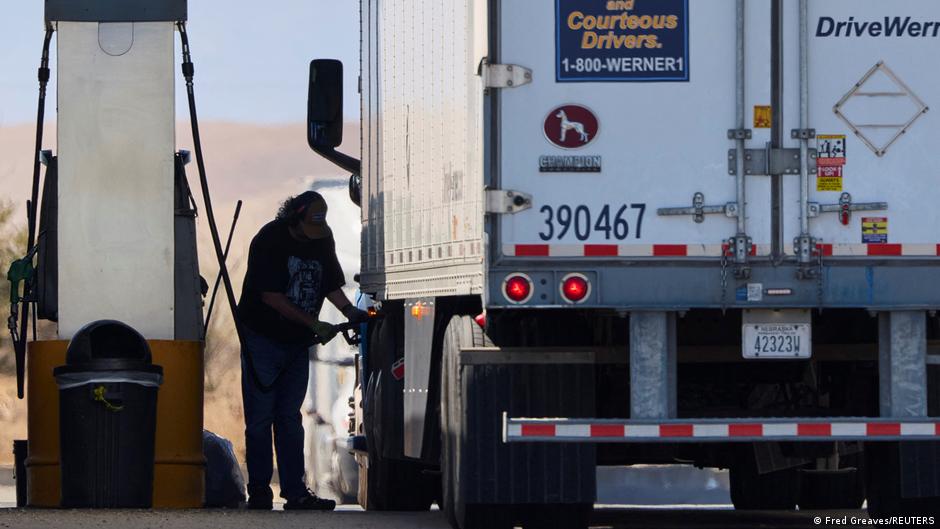
A bipartisan group of U.S. senators is urging President Donald Trump to abandon a diesel supply arrangement with Russian President Vladimir Putin, warning that the transaction would provide the Kremlin with new revenue while doing little to reduce fuel costs for American households.
The appeal, organized around Democratic Senator Richard Blumenthal and dated Tuesday, October 13, frames the proposed return of Russian diesel to the global market as a strategic error rather than an energy-market solution. The senators argue that Congress and the American public support an end to the war in Ukraine, now in its fourth and a half year and responsible for hundreds of thousands of deaths, but say any peace must be reached on “just terms.”
At the center of the dispute is a prospective easing of U.S. sanctions on Russian diesel exports. The senators contend that lifting restrictions would not deliver meaningful price relief to U.S. consumers, even as families continue to face high fuel costs. Instead, they say, the policy would redirect cash flow toward Moscow at a moment when Russia remains engaged in sustained attacks on Ukrainian civilians.
“This deal is a gift to our adversary and a betrayal of our allies; it must be canceled,” the senators wrote.
Energy Relief or Strategic Concession
For business and energy markets, the dispute highlights the political risk attached to commodity deals involving sanctioned states. Diesel is a core input for freight, agriculture, construction and industrial activity, and any change in supply expectations can influence market sentiment. Yet the senators’ letter argues that the proposed Russian volumes would not be sufficient, or sufficiently direct, to materially improve conditions for American families paying elevated fuel prices.
The senators’ concern is less about the mechanics of diesel supply than about the strategic consequences of allowing Russian companies back into a sanctioned market channel. Their argument is that even limited sanctions relief can create financial and reputational benefits for Russian energy exporters, giving Moscow additional resources while weakening the leverage of U.S. economic restrictions.
That framing places the Trump administration’s energy decision inside a broader corporate and geopolitical calculation. For refiners, traders, shippers and fuel distributors, any resumption of Russian diesel flows would require assessing not only price and availability, but also compliance exposure, reputational risk and the durability of U.S. policy. A temporary license may unlock a shipment, but it does not remove the uncertainty around future enforcement, congressional backlash or allied coordination.
Bipartisan Pressure Raises the Political Cost
The letter was signed by six Democratic senators and six Republican senators, increasing the pressure on the White House by presenting the issue as a cross-party national security concern. Alongside Blumenthal, the Democratic signatories are Jeanne Shaheen, Richard Durbin, Sheldon Whitehouse, Jack Reed and Christopher Coons. The Republican signatories are Mitch McConnell, Thom Tillis, Susan Collins, Alan Stuart Armstrong, Lisa Murkowski and John Cornyn.
Copies of the appeal were also sent to Secretary of State Marco Rubio and Treasury Secretary Scott Bessent, underscoring that the issue spans diplomacy, sanctions enforcement and energy policy. The senators call on Trump to increase economic pressure on Russia and on those they describe as playing a central role in enabling the war, particularly China. They specifically point to powers granted under Lindsey Graham’s sanctions legislation concerning Russia and Iran.
From a management and policy perspective, the letter signals that any White House attempt to reposition Russian diesel as a near-term price remedy may face resistance from lawmakers focused on sanctions integrity. It also suggests that companies considering transactions under the license could face a rapidly shifting political environment, especially if Congress moves to scrutinize the arrangement or press for renewed restrictions.
The Deal Trump Announced
The controversy follows Trump’s October 9 statement on Truth Social that he had held an “extremely successful” phone conversation with Putin. According to Trump, the two leaders agreed on supplies of Russian diesel fuel to the American and global markets.
Trump said Russian companies would “immediately” ship more than 300,000 tons of diesel, followed by another 500,000 tons in November and 1 million tons “immediately after that,” apparently in December. He also said a further 3 million tons could follow, depending on the condition of refineries, though the period for that additional volume was not specified.
The U.S. Treasury, for its part, issued a general license suspending the application of American sanctions against Russian diesel fuel until April 2027. That move is central to the senators’ objection because it would provide a defined window in which Russian diesel could re-enter sanctioned trade channels.
Russian state television program Vesti reported on October 12 that the first shipment of Russian diesel had left St. Petersburg for the east coast of the United States, with the vessel expected to arrive within 48 to 72 hours.
The business implications are immediate. If the cargo arrives, the administration would have to defend a policy that treats sanctioned Russian supply as a tool for market stabilization, while critics argue it weakens the financial pressure designed to constrain Moscow’s war effort. For companies in the fuel supply chain, the key question is whether the commercial opportunity created by the Treasury license is worth the political and regulatory uncertainty surrounding it.
The senators’ letter makes clear that the proposed diesel arrangement is no longer simply an energy procurement matter. It has become a test of U.S. sanctions strategy, alliance management and the administration’s willingness to trade limited fuel-market benefits for a broader geopolitical concession to Russia.