Drone Wave Toward Moscow Disrupts Airports and Tests Business Continuity
Russian officials said air defenses destroyed more than 100 drones as airport restrictions rippled through Moscow and regional transport hubs.
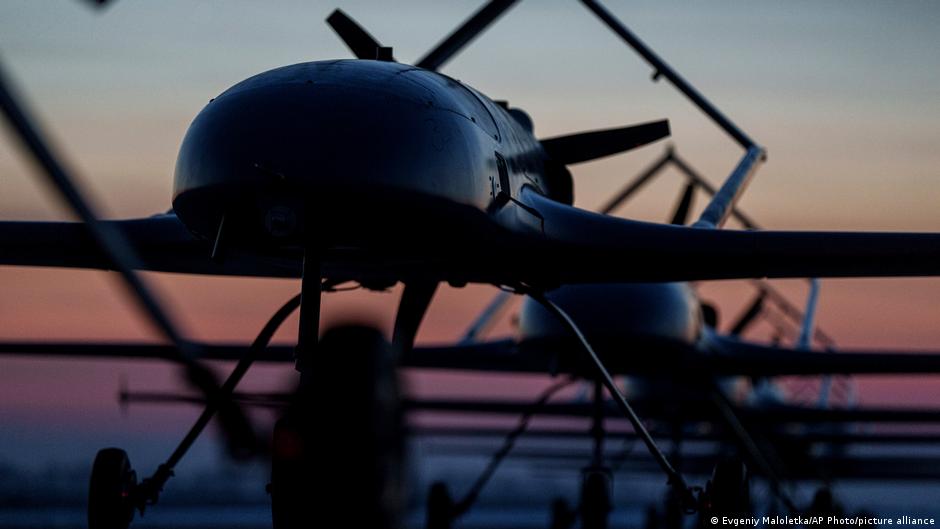
Russian air defenses destroyed more than 100 unmanned aerial vehicles heading toward Moscow overnight into Wednesday, October 14, according to a series of Telegram posts by Moscow Mayor Sergei Sobyanin. The scale of the reported attack, and the operational response it triggered across major airports, underscored how aerial threats are increasingly affecting transport infrastructure, corporate logistics and regional risk management inside Russia.
Sobyanin did not specify which districts of the Moscow region saw drones destroyed or what the potential targets may have been. The absence of detail leaves open key questions for business operators, insurers and transport planners assessing whether the incident was aimed at state, military, industrial or civilian infrastructure. Even without confirmed target information, the response across the aviation system demonstrated the breadth of disruption that can follow a large-scale drone alert near the capital.
Temporary restrictions on aircraft arrivals and departures were introduced on the evening of October 13 at Moscow’s Vnukovo, Domodedovo, Sheremetyevo and Zhukovsky airports, according to notices published by the Telegram channel Govorit Rosaviatsiya. Those four airports form the core of the Moscow aviation hub, serving domestic, international, passenger and cargo traffic. Restrictions across all of them at once can quickly create knock-on effects for airline schedules, crew positioning, aircraft utilization and passenger connections.
Airline Operations Face a Wider Risk Map
According to TASS, more than 30 aircraft bound for Moscow were diverted to other cities. The agency reported that 19 flights originally headed to Vnukovo landed instead in Nizhny Novgorod, St. Petersburg, Minsk, Pskov and Istanbul. The Telegram channel Ostorozhno, Novosti, associated with journalist Ksenia Sobchak, separately wrote that, based on data from St. Petersburg’s Pulkovo airport, 20 aircraft flying to Moscow were diverted there because of the restrictions.
For airlines, such diversions create costs that extend beyond fuel and airport handling fees. Aircraft and crews can end up out of position, onward rotations may be delayed, and carriers may need to rebook passengers or provide ground support in cities that were not part of the original itinerary. In a market already operating under geopolitical constraints, extended restrictions at Moscow and Volga region airports add another layer of uncertainty to network planning.
The disruption was not limited to the capital. Govorit Rosaviatsiya reported that restrictions overnight into October 14 were also introduced at airports in Volgograd, Nizhny Novgorod, Samara, Penza, Saratov and Yaroslavl. The low-cost airline Pobeda also reported schedule adjustments because of prolonged restrictions at airports in the Moscow aviation hub and the Volga region, according to Ostorozhno, Novosti.
“As a result of the UAV attack, several residential buildings in the city of Balakovo were damaged. Preliminary information: one person was killed. All emergency services are working at the scene,” Saratov region Governor Roman Busargin wrote on Telegram.
The reported death in Balakovo, in the Saratov region, shifts the business implications beyond transport disruption and into physical security, employee safety and regional contingency planning. Busargin said at least one person had died after a drone attack damaged several residential buildings. For companies with regional operations, the incident points to the need for crisis protocols that cover staff communications, site access, insurance documentation and coordination with local authorities during aerial alerts.
Industrial Zones and Competitive Exposure
Stavropol region Governor Vladimir Vladimirov also reported that air defense forces had repelled a drone raid directed toward the industrial zone of Nevinnomyssk. He did not specify which industrial facilities may have been targeted. That lack of specificity is significant for corporate risk assessment: industrial zones often concentrate energy, chemicals, manufacturing, logistics and utilities assets, making any reported targeting relevant to supply chain resilience even when individual companies are not named.
The pattern described by regional officials shows how the competitive landscape for transport and industrial companies in Russia is being shaped by security disruptions that management teams cannot treat as isolated events. Airports outside Moscow are no longer merely backup infrastructure; they become part of an emergency routing network when the capital’s airspace is constrained. Cities such as Nizhny Novgorod, St. Petersburg, Pskov, Minsk and even Istanbul can become temporary pressure valves for diverted traffic, altering airport workloads and airline recovery plans.
For corporate strategy, the incident highlights three management priorities. First, companies dependent on executive travel, time-sensitive deliveries or air cargo through Moscow need alternative routing plans that are practical rather than theoretical. Second, firms operating in regions mentioned in connection with restrictions or attacks may need to revisit site-level continuity planning, especially where staff housing, industrial facilities and transport links are close together. Third, insurers, lessors and lenders are likely to scrutinize exposure to repeated operational interruptions more closely if such incidents continue.
Moscow remains Russia’s dominant business and transport center, but the events of October 13 and 14 show how a large drone alert can redistribute disruption across a far wider geography. The reported destruction of more than 100 drones prevented, according to officials, a larger impact near the capital. Yet the restrictions, diversions, regional airport measures and fatality near Saratov illustrate that the economic and operational consequences of such attacks can extend well beyond the intended flight path.