Finland Pushes EU Visa Ban as Russia Policy Becomes Strategic Test
Foreign Minister Elina Valtonen is urging a bloc-wide halt to Russian tourist visas, putting pressure on the EU to align sanctions policy and border controls.
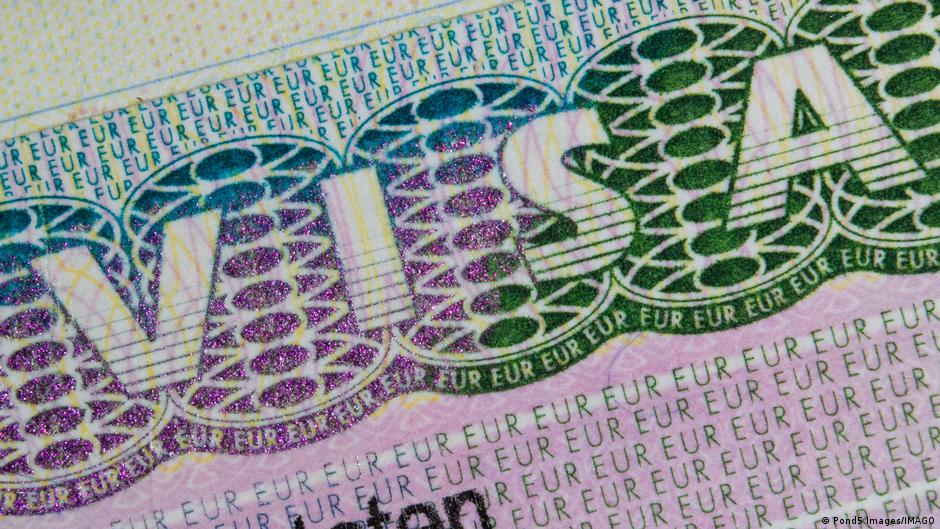
Finland’s foreign minister, Elina Valtonen, has called on European Union member states to stop issuing tourist visas to Russian citizens while Moscow continues its war against Ukraine, sharpening a policy debate that has moved from border management into the wider arena of European strategy.
Valtonen said on X on Monday, October 12, that she had invited other EU member states to join her appeal to the European Commission on the issue. Her message framed the question not simply as a matter of consular procedure, but as a test of whether the bloc can match its political stance on Russia with practical restrictions on mobility.
“It is wrong that Russians can travel to Europe to enjoy the lifestyle and freedoms here while their country bombs Ukrainians’ homes,” Valtonen said.
She added that Finland had already banned the issuance of visas to Russians for non-essential travel in 2022, and argued that the same approach should now be adopted at EU level. For Helsinki, the issue reflects both national security concerns and a broader effort to keep pressure on Moscow through measures that are visible to ordinary Russian citizens as well as to the Kremlin’s political and economic networks.
A National Measure Becomes an EU Governance Question
Finland’s position is significant because it turns a national restriction into a demand for collective EU action. A bloc-wide approach would reduce the scope for divergent national policies, where Russians denied access through one country may still seek entry through another Schengen state. For businesses, transport operators, tourism companies and border regions, such a shift would also clarify the operating environment, even as it further reduces Russian consumer flows into Europe.
The proposal also illustrates the increasingly strategic use of visa policy. Since Russia’s full-scale invasion of Ukraine, European sanctions have targeted banks, energy flows, industrial goods, officials and politically connected individuals. Tourist visas occupy a different place in the sanctions architecture: they affect people-to-people movement and the practical experience of access to Europe. That makes the policy politically sensitive, but also potentially powerful as a signal of long-term separation between Russia and the EU market.
Valtonen also called for a ban on issuing Schengen visas to people belonging to the close circle of Russian President Vladimir Putin. In addition, she urged restrictions on visas for Russian athletes and effective enforcement of the ban on visas for Russian participants in the war against Ukraine. “EU countries must act together,” she stressed.
From a management perspective, the appeal points to one of the EU’s recurring challenges: aligning 27 national systems around a single strategic posture. Visa issuance is administered through national authorities, while the Schengen area depends on shared rules and mutual trust. A tougher EU-level framework would therefore require coordination not only among foreign ministries, but also among interior ministries, border agencies and consular services.
Pressure Builds Across Northern and Baltic Europe
Valtonen’s initiative follows similar calls from other European officials. In September, the EU’s High Representative for Foreign Affairs and Security Policy, Kaja Kallas, said that in response to Moscow’s “hybrid attacks,” the EU needed to tighten restrictive measures against the Kremlin, including by reducing the number of tourist visas.
Estonia has also advocated a visa ban for former Russian participants in the war against Ukraine. That measure was later supported by other countries in the Baltic region and Northern Europe, underlining how states closest to Russia are pushing the debate toward stricter controls. These countries have generally treated travel access as part of a broader risk-management framework that includes security, public sentiment and the integrity of sanctions policy.
For the EU’s internal politics, the emerging coalition matters. Northern and Baltic states have often been among the strongest advocates of tougher measures against Moscow. Their strategy has been to move the center of EU decision-making by keeping concrete policy proposals on the table, from energy diversification to sanctions enforcement and now visa restrictions.
In June, a group of EU countries issued a joint call to stop granting tourist visas to Russians. A letter signed by those countries said that in 2025, Russians were issued 470,000 visas to visit 29 Schengen countries. Many of those visas allowed multiple entries, according to AFP. The number gives the debate a commercial and operational dimension: a visa ban would not be symbolic alone, but would affect a substantial volume of travel permissions across the Schengen area.
For companies exposed to cross-border travel, the implications would vary. Airlines, hospitality businesses and retail operators in destinations historically visited by Russian travelers could see further limits on demand. At the same time, the EU’s policy direction since 2022 has increasingly prioritized security and geopolitical leverage over prewar patterns of consumer access. In that context, the business environment is being reshaped less by short-term tourism revenue than by the long-term decoupling of European institutions and markets from Russia.
The Competitive Landscape of Sanctions Policy
The visa issue also fits into a wider competitive landscape in which governments use access to markets, financial systems, technology and mobility as instruments of power. For the EU, consistency is an important asset. If some countries impose strict limits while others continue to issue large numbers of tourist visas, the bloc risks appearing fragmented and creates channels that weaken the practical impact of restrictions.
Valtonen’s proposal therefore functions as both a foreign policy demand and a management challenge for the European project. The question is whether the EU can convert pressure from member states into a coherent rule that can be implemented across national systems without creating legal or administrative gaps.
According to information published on the website of the Austrian parliament, a discussion of EU visa policy toward Russia is scheduled in the Council of the EU for October 14. That meeting will indicate whether the push from Finland, Estonia and other Northern and Baltic countries is gaining enough institutional momentum to become a broader European position.
For now, the direction of travel is clear: visa policy is becoming another front in Europe’s attempt to define the economic, political and social boundaries of its relationship with Russia. Valtonen’s intervention raises the stakes by asking whether access to Europe’s freedoms should remain available to Russian tourists while the war against Ukraine continues.