EU Agrees to Open Key Accession Clusters for Ukraine and Moldova
The decision advances Ukraine and Moldova into talks on the internal market and competitiveness after Kyiv moved to address Hungary’s concerns.
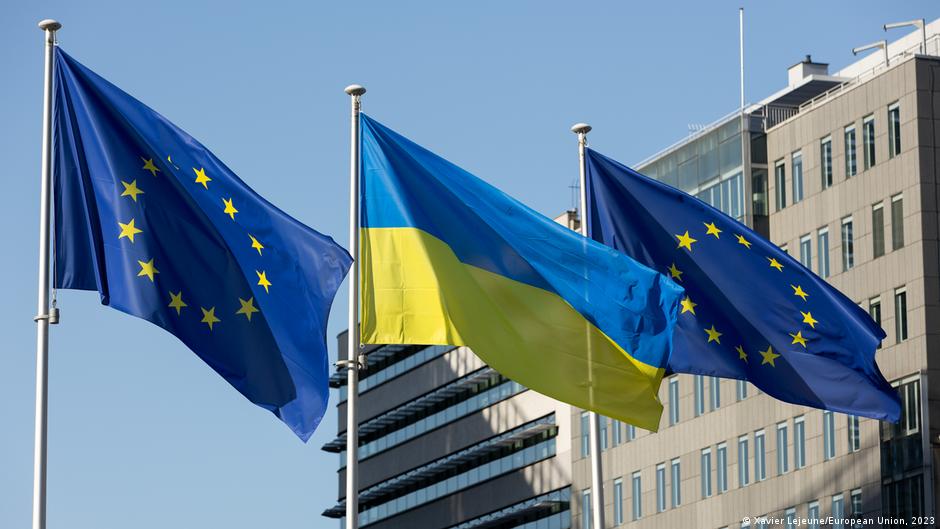
European Union member states have agreed to open negotiation clusters 2 and 3 in the accession talks with Ukraine and Moldova, Irish Minister of State for European Affairs Thomas Byrne said on Monday, October 12, marking a significant procedural advance for both candidate countries.
The decision concerns two thematic areas central to the EU’s economic architecture: the “Internal Market” cluster and the “Competitiveness and Inclusive Growth” cluster. For Ukraine and Moldova, opening these chapters moves the accession process from broad political alignment into more detailed scrutiny of market rules, competition policy, institutional capacity and reform delivery.
Byrne announced the agreement in a post on X, framing the move as part of a wider enlargement agenda involving several candidate countries.
“After ‘Montenegro Monday’ there will also be a ‘Super Tuesday’ for Albania, Moldova and Ukraine. I can confirm that all EU member states have agreed to open clusters 2 and 3 for Ukraine and Moldova, close chapters 17, 18 and 19 for Albania and chapter 20 for Montenegro,” Byrne wrote.
For Brussels, the opening of these clusters is not merely a diplomatic signal. It creates a more structured route for assessing whether candidate countries can apply EU rules and standards across core areas of legislation and public policy. For Kyiv and Chisinau, it raises the pressure to demonstrate that political commitments are being converted into institutional and regulatory changes.
Hungary’s Concerns and Ukraine’s Legislative Move
The agreement followed a domestic legislative step in Ukraine earlier on October 12. The Verkhovna Rada approved, in two readings and as a whole, amendments to the education law concerning the rights of national minorities. The document was needed to secure Hungary’s consent to open the second and third negotiation clusters in Ukraine’s EU accession process.
Later that evening, Ukrainian lawmaker Yaroslav Zhelezniak said on Telegram that the adopted law had been signed by President Volodymyr Zelensky.
From a management and governance perspective, the sequence underlines how accession talks force candidate governments to treat domestic policy changes as part of a broader negotiating strategy. In Ukraine’s case, the education amendments were tied directly to unlocking a specific stage of talks, illustrating how individual member states can influence the timing and pace of the enlargement process.
The development also reflects the competitive dynamics among EU candidates. Byrne’s message placed Ukraine and Moldova alongside Albania and Montenegro, both of which are moving through their own negotiation tracks. Albania is set to close chapters 17, 18 and 19, while Montenegro is to close chapter 20. These parallel milestones reinforce the sense that enlargement is being managed as a portfolio of candidate-country processes, with each government judged on reform progress, political obstacles and readiness to apply EU law.
Clusters as a Framework for Reform
EU accession negotiations are organized into six broad thematic sections, known as clusters. They cover different areas of law and state policy, allowing the EU to assess how prepared each candidate country is to implement the bloc’s rules and standards.
The six clusters are “Fundamentals,” “Internal Market,” “Competitiveness and Inclusive Growth,” “Green Agenda and Sustainable Connectivity,” “Resources, Agriculture and Cohesion,” and “External Relations.”
The first of the six clusters, “Fundamentals,” was opened for Ukraine on June 15. That initial cluster typically carries particular importance because it covers the institutional and governance base on which other reforms depend. The opening of clusters 2 and 3 therefore expands the negotiation agenda into areas with direct relevance for companies, investors and state economic management.
The “Internal Market” cluster is especially consequential for business because it concerns the rules that allow goods, services, capital and people to move across the EU’s single market. The “Competitiveness and Inclusive Growth” cluster carries implications for industrial policy, labor-market alignment, education, taxation-related frameworks and broader economic modernization.
For Ukrainian and Moldovan policymakers, the business significance is clear: progress in these clusters can shape the long-term regulatory environment in which domestic companies operate and foreign investors assess risk. While opening clusters does not complete accession, it begins a deeper process of benchmarking candidate countries against EU standards in areas that directly affect market access, competition and growth.
Reform Pressure Under Wartime Conditions
On October 5, EU Enlargement Commissioner Marta Kos said at a press conference after a Moldova-EU Association meeting that the EU could open two negotiation clusters for Ukraine and Moldova during an intergovernmental conference on the margins of the EU General Affairs Council, scheduled for October 13 in Luxembourg.
Kos said Ukraine and Moldova were carrying out systemic reforms “in very difficult conditions” while belonging to the group of four states leading the accession negotiations. She also noted that the European Commission would publish a detailed assessment of reforms across all candidate countries on October 28 in its annual enlargement report.
Her comments point to a central tension in Ukraine’s corporate and public-sector environment: the country is pursuing institutional transformation while also fighting for survival. Kos urged observers not to forget that Ukraine is at war while simultaneously going through the EU accession process and must implement reforms, including to obtain additional funds for the budget and the needs of the army.
For business leaders, lenders and policy advisers watching the region, the opening of clusters 2 and 3 is a signal that the EU process remains active despite geopolitical strain. But it also means closer scrutiny of how Ukraine and Moldova manage market regulation, competition and inclusive growth. In practical terms, accession talks are becoming a governance test as much as a diplomatic process.
The decision by all EU member states to move forward gives Ukraine and Moldova a new stage on which to demonstrate reform capacity. The next major reference point will be the European Commission’s annual enlargement report on October 28, which is expected to provide a detailed assessment of the state of reforms in candidate countries across all directions.