Dmitriev Returned to Penal Colony After Stroke Concerns, Rights Group Says
The handling of historian Yuri Dmitriev’s hospitalization underscores institutional risk, management failures and reputational pressure on Russia’s prison system.
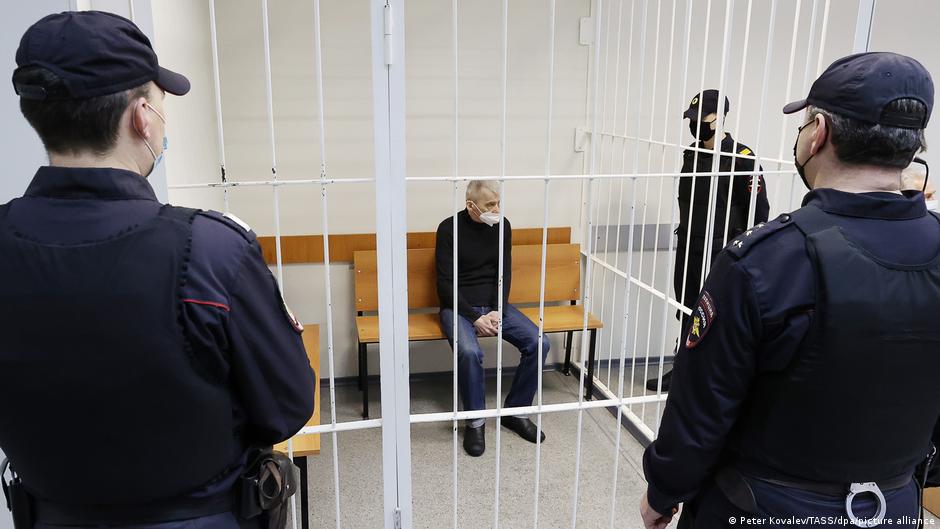
Russian historian Yuri Dmitriev, the former head of Memorial’s branch in Karelia, has been returned from a prison hospital to his penal colony without a diagnosis after he was reportedly sent for treatment with signs of a possible stroke, according to a human rights project.
The case, while rooted in Russia’s criminal justice and human rights landscape rather than a conventional corporate setting, carries many of the same features that business leaders and institutional analysts recognize: a high-risk operating environment, opaque decision-making, weak accountability systems and reputational exposure that can intensify when management structures fail to respond credibly to health and safety risks.
The rights project Za Prava Cheloveka, or For Human Rights, said on Telegram on Tuesday, October 13, citing an unnamed representative of Dmitriev’s support group, that the historian had been sent to a prison hospital with symptoms suggesting a stroke. The facility, however, was reportedly unable to establish a diagnosis because it lacked the necessary equipment.
“His condition is not very good. There was a suspected stroke, but no diagnosis was made: the hospital has no diagnostic equipment,” the representative was quoted as saying.
The same person said Dmitriev had received a course of injections, but that it was not known what medication had been administered. She also said he had been prescribed bed rest until October 28, but that staff at the penal colony were apparently unaware of the order and were not allowing him to lie down. She later added that the information about bed rest may have since reached the colony.
Operational Gaps Inside a High-Risk System
For institutions under scrutiny, the Dmitriev case highlights how operational weaknesses can become strategic liabilities. A prison medical system unable to diagnose a suspected stroke raises questions about resource allocation, internal communication and duty-of-care procedures. In business terms, this is a failure of risk controls in an environment where the consequences are immediate and potentially severe.
Dmitriev was reportedly hospitalized urgently on September 25 from Penal Colony No. 18 in Potma, Mordovia, and transferred to a medical correctional facility in the settlement of Barashevo. According to the online outlet Current Time, he had severe weakness, impaired coordination and was unable to stand on his own.
The unnamed representative also said Dmitriev had been placed several times in a punishment cell. She described the stated reasons as minor disciplinary issues: an upper shirt button not being fastened, sitting on a bed, and feeding a cat.
Such details matter because they point to a management culture in which disciplinary enforcement may coexist with inadequate medical response. For any large institution, whether public or private, that combination creates an unfavorable governance profile: rules appear rigorously enforced at the lowest level, while the systems needed to manage serious risk appear underdeveloped or poorly coordinated.
A Case With International Reputational Impact
Dmitriev is known for compiling and publishing Books of Remembrance for victims of political repression in Karelia during the 1930s and 1940s, as well as materials on the history of the construction of the White Sea-Baltic Canal. He also discovered mass burial sites of repression victims in Sandarmokh and Krasny Bor.
His prosecution began in 2016, when the first criminal case was opened against him on suspicion of producing pornographic images of his adopted daughter. A court acquitted him, but a new case was opened in 2018.
On July 22, 2020, a court in Petrozavodsk sentenced Dmitriev to three and a half years in a high-security penal colony on charges of sexual violence against a minor. In September 2020, the Supreme Court of Karelia toughened the sentence to 13 years in a high-security colony. Dmitriev was also accused of producing child pornography, committing lewd acts and illegally possessing a weapon.
On December 27, 2021, the Petrozavodsk City Court issued what became the final sentence for Dmitriev, then 65 years old: 15 years in a high-security penal colony, taking into account the previously imposed term.
Dmitriev has denied guilt. On March 15, 2022, the Supreme Court of Karelia rejected his appeal. His supporters have argued that the prosecution was connected to his human rights activity and his work recovering the memory of victims of repression. The European Union, as well as scholars and artists from various countries, have called for his release.
For Russia’s state institutions, this history means the health-management issue does not exist in isolation. It lands on top of years of international attention, legal controversy and sustained advocacy. In corporate strategy terms, the matter resembles a legacy reputational risk that continues to generate new events, each of which can renew external pressure and deepen stakeholder skepticism.
Legal Exposure and Strategic Signaling
In March 2026, the European Court of Human Rights in Strasbourg ordered Russia to pay Dmitriev, who remains imprisoned, 2,000 euros in compensation for moral damage caused by excessively long pretrial detention and the absence of a fair trial. Kremlin spokesman Dmitry Peskov, commenting on the ECHR decision at the time, said Moscow did not recognize it.
That response reflected a broader strategic posture: Russia has signaled that it does not accept external judicial pressure in the case. Yet non-recognition does not eliminate reputational consequences. For governments, state-controlled systems and institutions operating in contested legal environments, outside rulings can still influence diplomatic relations, investor perception, sanctions debates and broader assessments of rule-of-law risk.
The latest reports about Dmitriev’s health add a new operational dimension to an already sensitive case. The central factual issue is narrow: a prisoner with signs consistent with a possible stroke was reportedly sent to a facility that lacked diagnostic equipment and then returned to the colony without a diagnosis. But the implications are broader. They raise questions about whether Russia’s penal infrastructure can manage high-risk medical events, whether internal directives are communicated effectively, and whether disciplinary practices are aligned with medical obligations.
For Biz Review readers, the case is a reminder that institutional strategy is not only measured in formal policy statements or executive messaging. It is also revealed in resource choices, local management behavior and the ability of a system to respond coherently when a serious health risk emerges. In Dmitriev’s case, the reported absence of a diagnosis after stroke concerns has turned a medical episode into another test of institutional credibility.