U.S. Says It Destroyed Five Iranian Oil Tankers After Missile Attacks
CENTCOM’s latest strikes signal a renewed effort to disrupt Iran’s oil-linked financing channels while keeping pressure on Tehran in the Strait of Hormuz dispute.
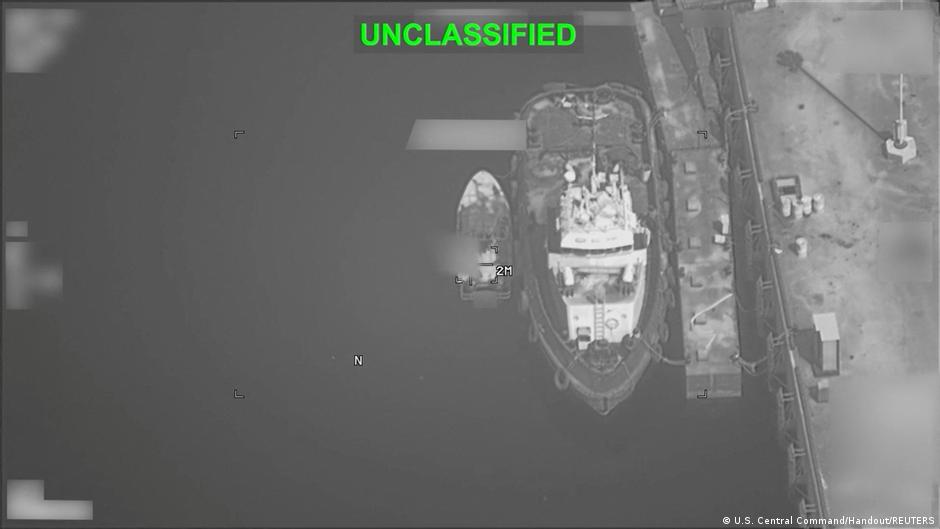
The U.S. military said it destroyed five Iranian oil tankers on Tuesday, September 8, after the Islamic Revolutionary Guard Corps twice attacked a U.S. Navy ship with ballistic missiles over the preceding two days, according to U.S. Central Command.
CENTCOM said the American vessel successfully evaded the Iranian attacks and continued patrolling regional waters. No U.S. personnel were injured, the command said in a statement posted on X.
The operation targeted four IRGC-linked oil tankers in the Gulf of Oman — M/T Kaviz, M/T Charminar, M/T Horizon 1 and M/T Riesco — as well as the M/T Derya near Kharg Island in the Persian Gulf. U.S. forces instructed the crews to leave the ships before the vessels were struck and disabled, according to CENTCOM.
U.S. forces instructed crews to abandon the vessels before the tankers were hit and put out of operation, CENTCOM said.
For energy markets and corporate risk teams, the immediate military facts point to a broader strategic contest: Washington is trying to impose costs not only on Iranian military assets, but also on the commercial infrastructure that U.S. officials say supports Tehran’s regional power projection.
Shadow Fleet Becomes A Strategic Target
CENTCOM said Iran used the tankers as part of a multibillion-dollar “shadow” network that finances the IRGC and its regional proxies. That framing is important. Rather than treating the tankers as ordinary commercial vessels, the U.S. command is presenting them as components of a corporate-style logistics and financing system that underwrites military operations.
From a business strategy perspective, the strikes underscore how energy shipping, sanctions enforcement and military deterrence have become inseparable in the Gulf. Oil tankers linked to sanctioned networks are no longer just compliance liabilities for insurers, brokers, ports and commodity traders. They are becoming direct targets in a widening conflict over financing channels, maritime control and leverage in negotiations.
The U.S. military also said Tehran lacks the means to protect the vessels. If that assessment proves durable, it could alter the risk calculation for Iran’s oil-linked networks. A shadow fleet depends on continuity: ships, crews, buyers, intermediaries, insurance workarounds and predictable routing. The destruction of multiple named vessels in a short period disrupts not only cargo movement but also the confidence of counterparties that enable such networks to function.
The latest operation followed a similar strike on September 5, when CENTCOM forces destroyed three Iranian oil tankers after the IRGC attempted to attack a U.S. aircraft carrier and a missile destroyer. Taken together, the two episodes suggest an operational pattern in which attempted attacks on U.S. naval assets are met with strikes against Iranian maritime oil infrastructure.
Management Decisions Under Military Pressure
The strikes also complicate the management choices facing governments and companies exposed to Gulf shipping. Before late July, U.S. forces had not been striking Iran. President Donald Trump had explained the pause as part of an effort to continue negotiations with Tehran over the fate of the Strait of Hormuz, sanctions and Iran’s nuclear program.
That restraint ended on August 30, when the United States carried out its first strike after a month-long lull, targeting two Iranian missile launchers on Larak Island in the Strait of Hormuz. Tehran said it responded with attacks on U.S. targets in the United Arab Emirates. According to the Russian-language source report, dozens of drones attacked “American helicopters and personnel at the Al Minhad base” in the UAE.
For corporate leaders, the issue is not only whether oil prices move after each military exchange. It is whether the operating assumptions behind Gulf exposure are changing. Shipping companies, energy producers, insurers and refiners must now weigh a setting in which the same vessels can be viewed by different actors as commercial assets, sanctions-evasion tools or military-financing infrastructure.
The competitive landscape in energy transport may also shift. Operators with lower exposure to Iranian-linked routes, stronger compliance systems or alternative sourcing channels may gain relative resilience. By contrast, companies dependent on Gulf transit, opaque intermediaries or spot-market flexibility face a more difficult environment for risk pricing and contract execution.
The Strait of Hormuz remains central to the confrontation. The waterway plays a major role in global oil supply and has become one of the main points of dispute in the U.S. and Israeli war against Iran. Before the fighting began in late February, the strait was open to shipping. Today, both Iranian and U.S. armed forces claim control over it.
That dual claim matters commercially. Control over Hormuz is not just a military symbol; it affects the credibility of supply chains, freight pricing, insurance availability and the negotiating leverage of states that rely on energy flows through the Gulf. If neither side can establish uncontested authority, businesses may face a prolonged period of unstable rules and unpredictable enforcement.
The destruction of five tankers therefore has significance beyond the immediate battlefield. It signals that Washington is willing to target the maritime assets it says finance the IRGC, even while broader disputes over sanctions, nuclear policy and Hormuz remain unresolved. For Tehran, the challenge is to preserve both deterrence and revenue networks under escalating pressure. For companies, the core management question is how much Gulf risk can still be treated as routine operating exposure.