Novorossiysk Drone Attack Highlights Risks to Russia’s Export Infrastructure
A reported fire at a fuel oil terminal underscores the business exposure of a port that anchors Russian grain, oil and metals flows.
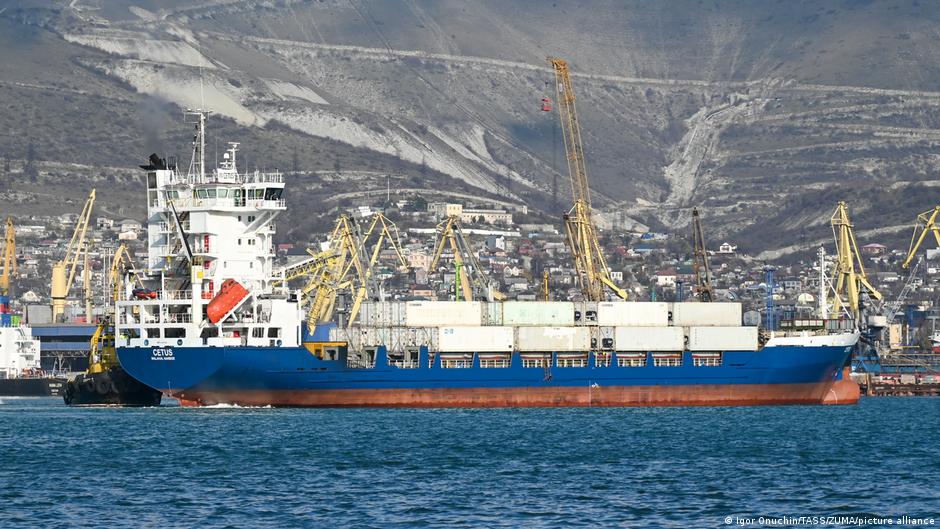
A drone attack on Novorossiysk, one of Russia’s most important export gateways, has triggered a major fire and renewed attention on the vulnerability of strategic logistics assets on the Black Sea. According to OSINT analysis cited by ASTRA, a fuel oil terminal was burning after strikes on the city. ASTRA also reported a fire in a residential apartment building on Volgogradskaya Street.
Novorossiysk Mayor Andrei Kravchenko said in a Telegram post overnight on Wednesday, September 9, that the city had been attacked using unmanned aerial vehicles. According to him, debris from drones was known to have fallen on the territory of enterprises and near a residential building. Preliminary information indicated there were no casualties, and emergency services were working to deal with the consequences.
According to preliminary information, there are no casualties, and operational services are eliminating the consequences.
The immediate operational impact was not fully detailed in the source report, but the location matters. Novorossiysk is not simply a regional port city; it is a major node in Russia’s external trade infrastructure. It is described as one of the largest ports in Europe and a key hub for Russian foreign trade, handling flows that include grain, oil, metals and container cargo.
A Strategic Asset Under Pressure
For businesses exposed to Russian commodity flows, the reported fire at a fuel oil terminal raises questions beyond the physical damage at the site. A terminal fire in a port complex can affect scheduling, safety procedures, inspections, insurance assessments and the confidence of commercial counterparties. Even when individual facilities remain operational, repeated attacks can introduce uncertainty into planning for shippers, traders, port service providers and buyers relying on predictable loading windows.
The fuel oil terminal reportedly affected is described by ASTRA as one of the leading enterprises of the Novorossiysk transport hub within Russia’s largest port. That positioning gives the incident a strategic dimension. In corporate terms, this is not a peripheral asset: it is part of a logistics platform that helps connect Russian producers with global markets.
The incident follows an earlier pattern. In August, an intensification of strikes on Novorossiysk caused noticeable disruptions in oil and grain shipments, according to the source article. That prior disruption is important for assessing the business risk. A single incident may be absorbed as an exceptional event; repeated disruptions can begin to change how market participants price reliability, route risk and operational contingency.
Grain, Oil and the Competitive Landscape
Novorossiysk’s role in grain exports is especially significant. The port handles up to a third of all Russian grain exports, a position explained by its proximity to the country’s main agricultural regions. That geographic advantage is a core element of its competitive position: lower inland transport distances can support efficient export economics and make the port a preferred outlet for producers and traders moving grain to international customers.
Any recurring threat to port operations therefore has implications for the competitive landscape. Russian exporters depend on Novorossiysk’s scale and location, while global buyers monitor whether shipments can move reliably through Black Sea infrastructure. Disruptions do not automatically eliminate the port’s advantages, but they can increase the value of redundancy, alternative routing and stronger inventory management.
The same logic applies to oil, metals and container cargo. These flows depend on coordinated infrastructure, including terminals, storage, transport links, crews, customs processes and security protocols. When drone debris is reported on enterprise territory and near residential areas, management teams face overlapping responsibilities: restoring operations, protecting staff, coordinating with authorities and assessing whether additional security or operational changes are required.
Management Decisions and Risk Controls
For port operators and enterprises based in the transport hub, the latest incident sharpens the management challenge. The immediate task is incident response, but the strategic issue is resilience. Companies linked to the port may need to review continuity plans, emergency response procedures, asset protection measures and communication with clients. Even without confirmed casualties, the reported fires in both industrial and residential settings broaden the risk profile around the city.
From an M&A and corporate strategy perspective, infrastructure exposed to repeated strikes can become harder to value. Buyers, lenders and insurers typically look at asset quality, throughput, location and earnings capacity. Security risk adds another layer. If disruptions become more frequent, counterparties may demand higher risk premiums, more flexible contracts or contingency clauses. Investors may also look more closely at whether companies have diversified logistics access rather than relying heavily on a single export corridor.
The episode also illustrates how military and security risks can spill into commercial networks. Novorossiysk’s importance rests on concentration: it gathers major commodity flows through a large, efficient port. That concentration creates economies of scale, but it also creates exposure. When a key node faces disruption, the effects can extend across supply chains even before the full damage assessment is known.
For now, the confirmed public details remain limited to the mayor’s statement on the drone attack, reported drone debris impacts, preliminary information of no casualties, and ASTRA’s OSINT-based reporting of fires at a fuel oil terminal and an apartment building. But for companies that depend on the port, the strategic conclusion is already clear: Novorossiysk remains a central asset in Russian trade, and that centrality is precisely why disruptions there carry business significance.