US Military Strikes Iranian Infrastructure Amid Escalating Gulf Tensions Impacting Global Shipping
US forces target Iranian military assets in response to attacks on commercial vessels, intensifying regional instability near Strait of Hormuz.
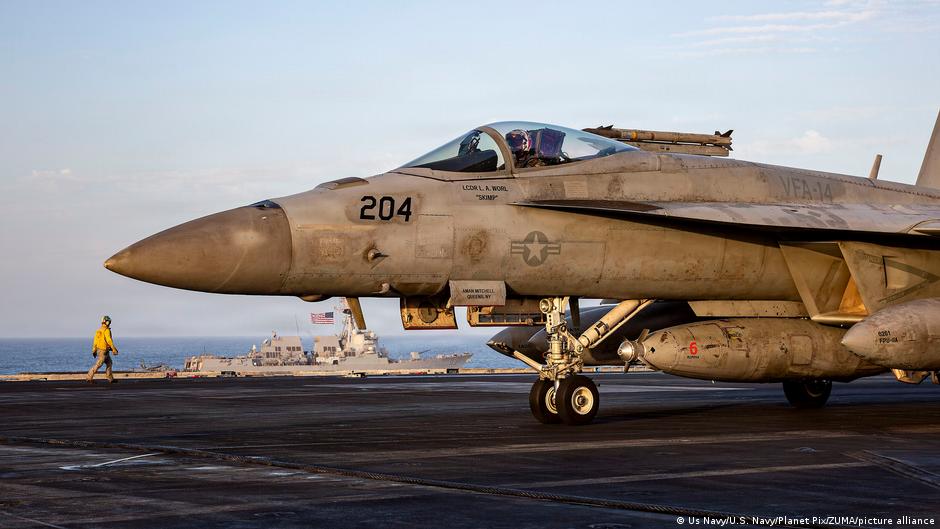
On June 27, US military forces launched precision strikes against key Iranian military infrastructure, including surveillance systems, communications networks, air defense installations, drone storage facilities, and mining capabilities. The operation was carried out as a direct response to recent Iranian attacks on commercial shipping vessels traversing the strategically vital Strait of Hormuz.
Strategic and Commercial Implications of the US-Iran Escalation
The US Central Command (CENTCOM) reported that, following an Iranian assault on the tanker Ever Lovely, the United States issued a clear ultimatum for Iran to respect a ceasefire agreement signed on June 17. Despite this, Iranian forces deployed a suicide drone on June 27, striking the Panama-flagged tanker Kiku, which was carrying over two million barrels of crude oil in close proximity to the Strait.
"The passage of commercial vessels through the Strait of Hormuz continues uninterrupted," CENTCOM emphasized, noting that American forces remain vigilant and ready to apply further military force if necessary. This volatile environment underscores the critical importance of maritime security for global oil markets and international trade routes.
Regional defensive responses have also escalated. Kuwait's air defense systems reportedly intercepted missile and drone attacks, while Bahrain experienced multiple explosions prompting nationwide air raid sirens and safety warnings. Iranian Revolutionary Guard Corps (IRGC) claimed responsibility for attacks on US military targets in Kuwait and Bahrain, framing these as retaliatory measures for the recent US strikes.
"If aggression repeats, Iran has vowed to deliver an even larger response," signaling a dangerous spiral in hostilities between Tehran and Washington.
This cycle of strikes and counterstrikes follows the June 17 framework agreement intended to halt hostilities and ensure safe navigation through the Gulf's strategic waterways. Notably, Iran declared that shipping lanes would only be guaranteed along routes it controls, raising concerns about Tehran’s intentions and the stability of this critical maritime corridor.
US President Donald Trump publicly confirmed the strikes and condemned Iran for violating the ceasefire, warning that continued provocations could force the US to pursue a military resolution to the conflict. "The Islamic Republic of Iran will cease to exist" if hostilities escalate, he stated.
The unfolding confrontation has significant implications for global energy markets, regional security dynamics, and international corporate strategies involving shipping, oil extraction, and supply chain management. Companies operating in or near the Gulf must now navigate a persistently unstable environment, balancing risk mitigation with operational continuity.