U.S. Caribbean Boat Strike Signals Strategic Escalation in Drug War
The latest lethal operation highlights a yearlong U.S. campaign whose legal, political and regional risks are mounting for Washington.
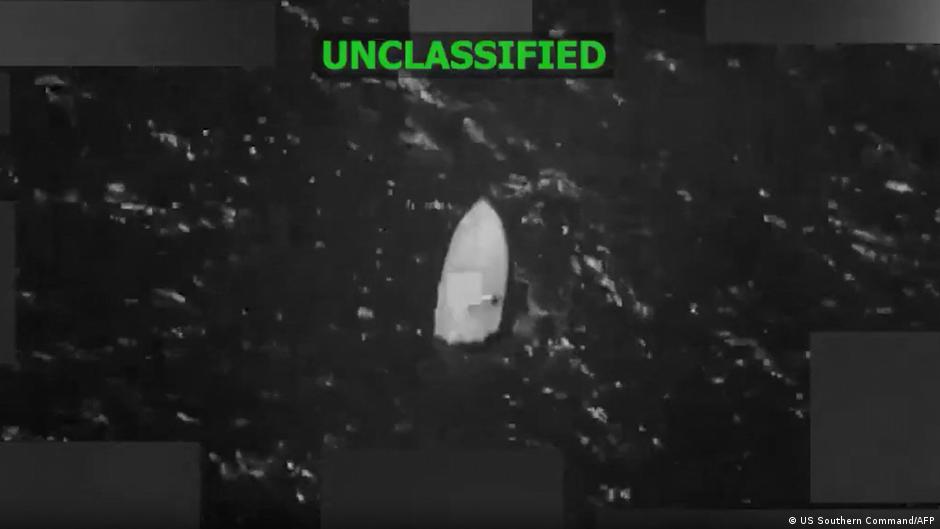
U.S. forces have reported another lethal strike on a vessel in the Caribbean Sea that they said was carrying narcotics, an operation that killed four people and underscored the expanding strategic costs of Washington’s military-led campaign against suspected drug trafficking routes.
The U.S. Southern Command said on Saturday, September 19, that American forces had carried out a “lethal strike” against a speedboat traveling along routes used for illegal drug transport in the Caribbean. The command said intelligence had confirmed the vessel’s involvement in drug trafficking and described the four people killed as “narcoterrorists.”
“Credible intelligence confirmed this vessel’s involvement in narcotics trafficking,” the military said, according to the source account.
A video published on X showed a moving vessel that then disappeared in a bright flash. The U.S. side did not present evidence publicly proving the boat’s involvement in narcotics trafficking. That absence of disclosed proof is central to the business and policy implications of the campaign: a military enforcement model can project decisiveness, but it also raises legal, reputational and operational risk when transparency is limited.
A Campaign With Rising Strategic Exposure
According to the Associated Press, including this latest incident, the total number of people killed in U.S. military strikes on vessels suspected of drug trafficking in the Caribbean has reached at least 231. The agency calculated that 69 such strikes have been carried out as part of a campaign that has continued for more than a year.
For policymakers and defense planners, the figures point to a campaign that has moved beyond isolated interdiction and into a sustained operational posture. That shift has strategic consequences. Sustained strikes require intelligence collection, surveillance assets, command approvals, legal review, and regional basing or access arrangements. They also reshape the competitive environment for criminal networks, which may adapt routes, vessels, financing methods and risk allocation in response to U.S. pressure.
From a corporate strategy perspective, the campaign resembles a high-intensity disruption model: rather than focusing only on seizures, arrests or prosecutions, Washington is using force to raise the cost of moving narcotics by sea. The intended effect is deterrence and network degradation. The management challenge is whether such an approach can be sustained without eroding legitimacy, straining alliances, or creating new incentives for traffickers to diversify through harder-to-monitor channels.
The policy also sits at the intersection of security, diplomacy and domestic political messaging. On October 23, 2025, U.S. President Donald Trump said at a White House press conference that American forces would “kill people” bringing drugs into the country from Venezuela. That statement framed the campaign in blunt executive terms and linked maritime enforcement directly to Venezuelan-origin trafficking threats.
For regional governments and businesses operating across the Caribbean basin, such rhetoric and action can alter risk calculations. Shipping, energy, tourism, insurance and port operations all depend on predictable maritime security conditions. While anti-trafficking operations may be welcomed by governments concerned about organized crime, repeated lethal strikes also raise questions about escalation, jurisdiction and the possibility of mistaken targeting.
Legal Risk as a Strategic Variable
The legal criticism has been explicit. On October 31, 2025, the United Nations High Commissioner for Human Rights, Volker Türk, said U.S. attacks on vessels “allegedly linked to drug trafficking” violated international law. Türk called for immediate, independent and transparent investigations into the attacks.
That intervention matters because legal risk can become strategic risk. If allies, regional partners or international institutions challenge the basis for the campaign, Washington could face pressure to disclose more intelligence, adjust rules of engagement, or shift back toward law-enforcement-led interdiction. Each option carries trade-offs: more disclosure may protect legitimacy but expose sources and methods; tighter rules may reduce controversy but limit operational speed; a return to interdiction may generate fewer immediate tactical outcomes.
The lack of publicly presented evidence in the latest strike reinforces that tension. Governments often withhold intelligence for security reasons, but lethal operations without visible substantiation invite scrutiny. In a conventional business setting, management decisions are judged not only by outcomes but by governance, documentation and risk controls. The same logic applies to state operations that have long timelines and international exposure.
The competitive landscape is also changing. Criminal trafficking groups operate like adaptive enterprises, responding to enforcement pressure by reallocating routes, assets and partnerships. A maritime strike campaign may reduce activity on some known corridors, but it can also push networks toward alternative geographies or more fragmented logistics. That creates a moving target for U.S. planners and complicates any simple measurement of success.
For the Trump administration, the campaign offers a clear political message: the U.S. is using force against organizations accused of moving drugs toward American consumers. For critics, the same campaign raises concerns over evidence standards, due process and the boundaries of military power outside traditional battlefields.
The latest Caribbean strike therefore represents more than another tactical action. It is a data point in a broader management decision by Washington to treat parts of the drug trade as a military target set. The question now is whether that strategy can deliver durable disruption while withstanding legal challenge, diplomatic pressure and the adaptive capacity of the trafficking networks it seeks to destroy.