Melania Trump to Host Russia-Ukraine Talks on Oleshky Ceasefire
The White House meeting will examine a temporary ceasefire and the results of a humanitarian operation in the occupied city.
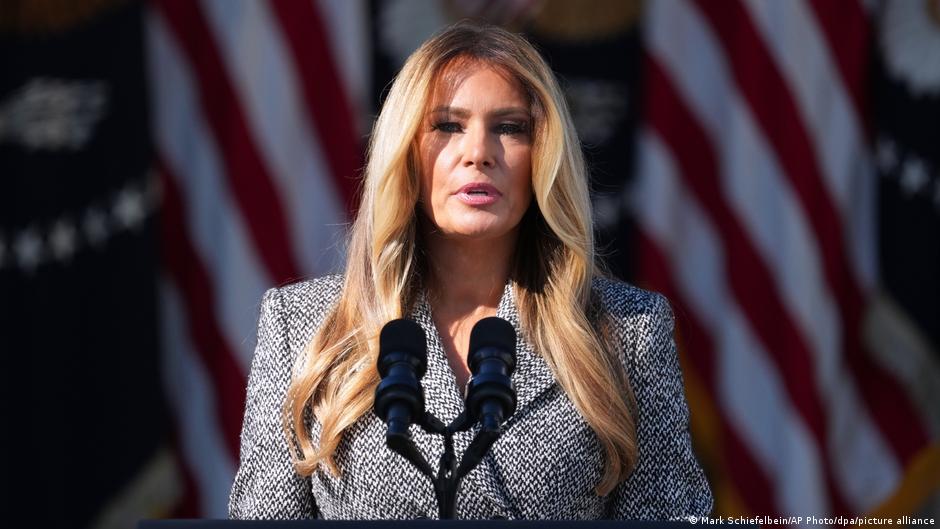
US First Lady Melania Trump is expected to meet Ukrainian and Russian representatives in Washington to discuss the temporary ceasefire in Oleshky, a Russian-occupied city in Ukraine’s Kherson region, and the humanitarian operation conducted during the pause in hostilities.
The White House announced the planned engagement on Tuesday, November 3. It also said the first lady would deliver an official statement on Thursday, November 5, at 11 a.m. Eastern Time concerning the results of the humanitarian mission in the city. The announcement did not specify whether her meeting with representatives of Kyiv and Moscow would take place on the same day.
For governments and organizations assessing the management of humanitarian access in an active conflict zone, the meeting offers a case study in limited-purpose negotiation. The arrangement did not constitute a broad political settlement. Instead, it created a defined operating window in which civilians could be evacuated and aid could be delivered.
A Narrow Deal With Measurable Humanitarian Objectives
The ceasefire in Oleshky and neighboring areas began early on October 27 and ended at 10:59 p.m. on November 1. It resulted from agreements between the parties reached with Melania Trump’s participation. Both Moscow and Kyiv have described the US first lady as a key mediator in organizing the cessation of hostilities.
During the humanitarian operation, hundreds of civilians were evacuated from the city. Humanitarian supplies were also delivered to Oleshky. Those outcomes give the White House meeting a concrete agenda: reviewing how the temporary arrangement was negotiated, examining its implementation and discussing whether a similar mechanism can support further humanitarian activity.
The ceasefire created a limited window for civilian evacuations and the delivery of humanitarian cargo to Oleshky.
The structure of the expected delegation suggests that the talks will combine political coordination with a focus on rights and humanitarian protections. According to RBC-Ukraine, the Ukrainian side will be represented by David Arakhamia, head of the Servant of the People parliamentary faction, and Dmytro Lubinets, the Ukrainian parliament commissioner for human rights.
Russia is expected to send Kirill Dmitriev, a special representative of President Vladimir Putin, and ombudswoman Yana Lantratova. Their participation places political representatives and human-rights officials in the same forum, potentially allowing operational questions about civilian protection to be considered alongside the higher-level management of contacts between the two sides.
White House Role Expands Beyond Traditional Diplomacy
Melania Trump’s involvement is notable because the initiative is being managed through the office and public profile of the first lady rather than exclusively through conventional diplomatic channels. The planned statement on the mission’s results also indicates that the White House intends to present the humanitarian outcome as a distinct initiative with identifiable participants, a defined timeframe and reported deliverables.
From a management perspective, the temporary ceasefire depended on coordination among parties whose broader objectives remain in direct conflict. Its narrow humanitarian scope may have made agreement possible by separating the immediate operational task—moving civilians and supplies—from larger political and territorial disputes.
The Washington discussion will therefore be closely watched for evidence that the model can be repeated. Any extension would require renewed agreement on geography, timing, implementation and the roles assigned to intermediaries and humanitarian participants. The source announcement, however, did not disclose plans for another ceasefire or identify additional locations under consideration.
The competitive landscape surrounding mediation is also significant. By identifying Melania Trump as a central intermediary, both Russia and Ukraine have attached the Oleshky arrangement to a high-profile White House figure. That may increase political visibility and accountability, while also concentrating expectations around whether the engagement can produce further practical outcomes.
For the Trump administration, the episode creates an opportunity to demonstrate results through a humanitarian initiative without claiming a wider breakthrough that has not been announced. The evacuation of hundreds of civilians and the delivery of aid provide measurable outcomes, but the ceasefire’s conclusion on November 1 underscores its temporary and geographically limited nature.
Execution Will Define the Initiative’s Strategic Value
The immediate importance of the White House meeting lies less in ceremonial diplomacy than in the review of execution. Participants can assess how commitments were communicated, how the ceasefire window was maintained and what operational constraints affected evacuations and deliveries. Such details would determine whether the approach could function again under different conditions.
The meeting also brings together officials with different institutional mandates. Arakhamia and Dmitriev provide access to senior political decision-making, while Lubinets and Lantratova bring formal human-rights responsibilities. That combination could help connect strategic approval with the practical requirements of civilian protection.
Still, the available information supports only a limited conclusion: a temporary ceasefire was agreed, hundreds of civilians were evacuated, humanitarian cargo entered the city and representatives of both sides are expected in Washington to discuss the arrangement. Whether that engagement develops into a repeatable humanitarian framework will depend on decisions made after the mission’s results are reviewed.