Abu Dhabi Talks Put Ukraine Security and Reconstruction in Focus
US-mediated working groups will address security guarantees, de-escalation and the economic framework for Ukraine’s recovery.
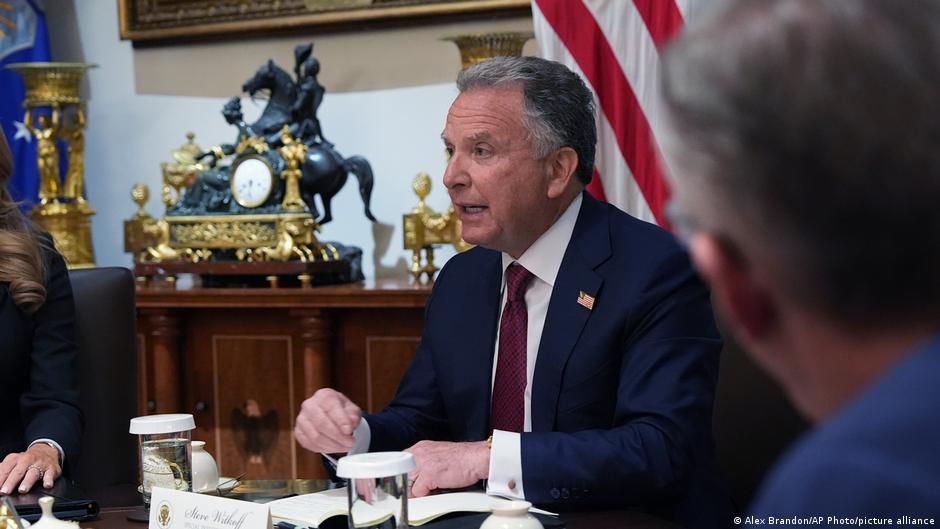
Russia and Ukraine will hold a new round of US-mediated negotiations in Abu Dhabi on November 10 and 11, placing postwar security and Ukraine’s reconstruction alongside immediate diplomatic and humanitarian priorities. The talks in the capital of the United Arab Emirates will take place at the working-group level, according to Steve Witkoff, US President Donald Trump’s special envoy.
Witkoff said on Tuesday, November 3, that the agenda would concentrate on “postwar security, de-escalation, humanitarian initiatives and next steps toward peace.” He described the meetings as part of Trump’s efforts to end Russia’s war against Ukraine.
For businesses and investors, the scope of the agenda is significant. A settlement process that addresses both security arrangements and economic recovery could begin defining the conditions under which companies, financial institutions and governments assess their future involvement in Ukraine. However, the talks remain at the working-group stage, and no agreement, financing package or timetable for reconstruction has been announced.
Security architecture shapes the investment outlook
US negotiators are also due to meet representatives of France, Germany, the United Kingdom, the European Union and NATO in Brussels this week. Those discussions will cover security guarantees for Ukraine, Europe’s postwar security architecture and potential economic support for Ukraine’s reconstruction.
The combination of those subjects reflects the close relationship between political risk and economic recovery. Decisions on security guarantees and de-escalation could influence how governments and private-sector executives evaluate long-term commitments, including rebuilding projects and other capital-intensive activity. The Brussels consultations also indicate that any prospective reconstruction framework would involve coordination among multiple governments and institutions rather than decisions by the three parties meeting in Abu Dhabi alone.
From a corporate-strategy perspective, the process is still focused on establishing the political and security foundations that would precede large-scale commercial decisions. Management teams considering future exposure to Ukraine would need clarity on the durability of any peace agreement, the structure of security commitments and the form of international economic support. The source announcement did not identify particular industries, companies or investment programs, leaving the commercial implications dependent on the outcome of the diplomatic talks.
“We hope to consolidate the progress achieved in Kyiv, Oslo and St. Petersburg on the path toward a comprehensive and lasting peace agreement that will ensure long-term security for future generations,” Witkoff said.
His reference to several negotiating locations suggests the Abu Dhabi meetings are intended to build on an existing diplomatic sequence rather than open a separate initiative. In October, Witkoff met Ukrainian President Volodymyr Zelensky in Oslo. He subsequently traveled to St. Petersburg, where he held talks with Russian President Vladimir Putin.
Working groups signal an operational phase
The decision to conduct the November meetings through working groups points to a more technical phase of engagement. The stated agenda spans several interconnected areas: reducing tensions, advancing humanitarian measures, defining postwar security and determining further steps toward peace. Each area may affect the broader operating environment, although Witkoff did not disclose the composition of the groups or specific proposals under consideration.
Abu Dhabi’s role as the venue also places the UAE at the center of the next stage of US-mediated discussions. The announcement did not describe a separate Emirati mediation role, stating only that the talks would be held in the UAE capital.
The previous round of US-mediated negotiations between Russia and Ukraine took place in February 2026, shortly before the start of the US and Israeli war against Iran. The gap between that meeting and the November session underscores the importance of the preparatory contacts in Kyiv, Oslo and St. Petersburg cited by Witkoff.
For the competitive landscape surrounding reconstruction, the most consequential development this week may be whether the parallel tracks in Abu Dhabi and Brussels produce a shared approach. The Abu Dhabi talks will bring Russian and Ukrainian representatives into a US-mediated format, while the Brussels meetings will involve major European governments, the EU and NATO. Together, the two tracks address both the terms of a possible peace process and the international structures that could support it.
No final settlement is expected in the announcement, and Witkoff framed the meetings as steps toward a comprehensive and durable agreement. For corporate leaders, that distinction matters: the negotiations may clarify strategic direction, but they do not yet remove the political, security and execution risks attached to rebuilding Ukraine. The immediate business relevance lies in the agenda itself, which formally links peace diplomacy with security guarantees and economic support for reconstruction.