France Opens Taliban Talks in Strategic Shift on Afghan Deportations
Paris is pursuing technical coordination with Kabul’s unrecognized rulers as European governments seek to accelerate migrant returns.
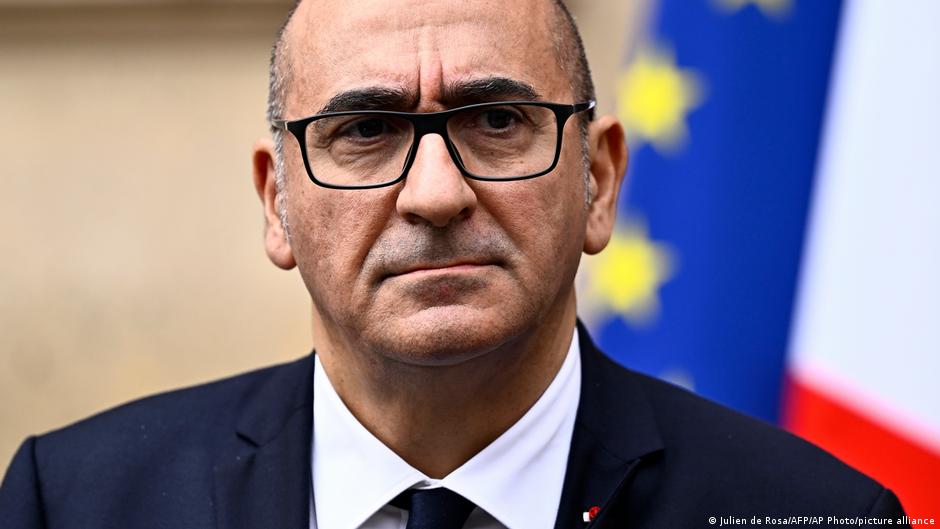
France has opened technical negotiations with representatives of the Taliban over the return of some Afghan migrants who lack permission to remain in the country, marking a significant operational shift for a government that neither recognizes Afghanistan’s rulers nor maintains diplomatic relations with Kabul.
French Interior Minister Laurent Nuñez disclosed the talks during an appearance in parliament on Monday, November 2. The initiative reflects a broader European effort to make deportation policy executable despite the absence of conventional state-to-state channels.
“We are trying to secure the possibility of returning a certain number of Afghans who are in the country illegally. These are technical discussions,” Nuñez said, according to AFP.
The minister said other European countries, including Germany, maintain similar contacts with the Taliban. France is also among a group of roughly 20 European Union states—including Germany, Belgium and Sweden—that want to accelerate the return of Afghan nationals, particularly people convicted of crimes.
Operational necessity confronts political risk
For Paris, the negotiations represent a management decision shaped by a gap between policy objectives and operational capacity. France can order an Afghan national to leave, but carrying out that decision requires some level of cooperation from the authorities controlling the destination country. With the Taliban in power since 2021, technical engagement has become the mechanism through which France is attempting to implement its migration and public-order priorities.
Nuñez said some Afghans in France “may represent a threat to public order,” making their deportation a priority for the authorities. That emphasis narrows the immediate focus toward cases the government considers particularly sensitive, including people with criminal convictions, rather than indicating a comprehensive return program for all Afghans without residence rights.
The strategy nevertheless carries a substantial political cost. Even when described as purely technical, sustained contact can provide the Taliban with a practical role in European migration management. The French government must therefore distinguish operational coordination from diplomatic recognition while demonstrating that its approach does not amount to a wider normalization of relations.
That distinction is already being challenged. Léa Balage El Mariky, a lawmaker from the Ecologists party, accused the government of beginning the “normalization of diplomatic relations” with the Taliban regime. She said the authorities commit crimes against humanity through a policy of so-called “gender apartheid.”
European coordination changes the negotiating landscape
France’s position is not developing in isolation. The involvement of about 20 EU countries gives the issue a coordinated European dimension, even if individual governments retain responsibility for deportation decisions and their implementation. Germany’s contacts are particularly relevant because they indicate that Paris is following an emerging model in which governments separate limited administrative engagement from formal diplomatic recognition.
This collective interest could strengthen European leverage by presenting the Taliban with multiple governments seeking similar arrangements. At the same time, it may deepen the regime’s functional integration into international processes without resolving the underlying questions of recognition, human rights or accountability.
The competitive political landscape within Europe also matters. Governments seeking faster removals face pressure to show that deportation orders have practical consequences, particularly where criminal convictions or public-order concerns are involved. Opposition parties and human-rights advocates, however, can argue that implementation targets are being prioritized over the risks awaiting returnees and the reputational consequences of working with Kabul’s rulers.
Human-rights warnings complicate execution
The proposed returns face direct scrutiny from international human-rights institutions. In September, UN High Commissioner for Human Rights Volker Türk called for an end to forced returns to Afghanistan, citing the continuing humanitarian crisis and the deteriorating human-rights situation in the country.
Since returning to power, the Taliban has imposed a series of restrictions on women and girls, including a prohibition on secondary and higher education for most of them. The International Criminal Court has also issued arrest warrants for several senior Taliban figures over allegations of crimes against humanity connected to the persecution of women and girls.
These conditions create a strategic constraint for France. The government is attempting to reconcile domestic enforcement priorities with international warnings against forced returns, while avoiding steps that could be interpreted as conferring legitimacy on the Taliban. The success of the policy will therefore depend not only on whether deportations can be arranged, but also on whether Paris can maintain the boundary it has drawn between technical cooperation and political recognition.
The negotiations illustrate a wider governance dilemma: European states want to enforce migration decisions involving Afghanistan, yet the only authority capable of facilitating returns is a regime they do not formally recognize. France’s approach seeks to manage that contradiction through narrowly defined contacts, but opposition criticism and the UN warning show that the operational solution may generate political and legal exposure of its own.