US and Iran Exchange Military Strikes Following Attack on Commercial Vessel in Strait of Hormuz
The US launched targeted strikes on Iranian missile and drone storage sites after a drone attack on a Singapore-flagged cargo ship, prompting retaliatory fire from Iran's Revolutionary Guards.
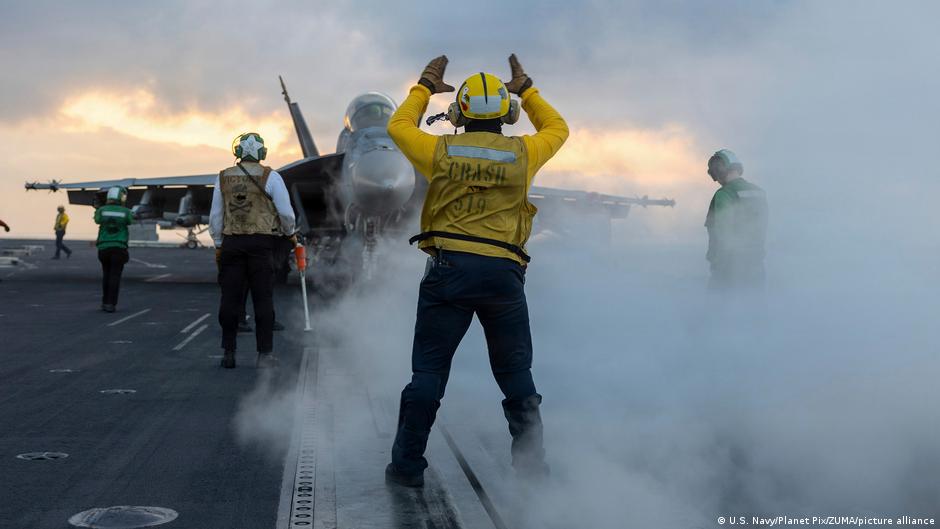
In a significant escalation of regional tensions, the United States military conducted airstrikes on Iranian missile and drone storage facilities, as well as coastal radar installations, following an attack on a commercial vessel passing through the Strait of Hormuz. This series of military actions highlights the fragile nature of recent agreements aimed at stabilizing this strategically vital maritime corridor.
Background and Strategic Context
On June 25, the Singapore-flagged cargo ship Ever Lovely was targeted by an Iranian kamikaze drone while transiting near Oman's coast after exiting the Strait of Hormuz. The attack marked the first hostile incident in the Strait since the June 17 framework agreement between the US and Iran, which promised a cessation of hostilities and safe passage for commercial vessels.
The US Central Command (CENTCOM) swiftly responded on June 26, announcing precision strikes against Iranian military assets involved in drone and missile operations. The strikes were described as a "decisive response" to Iran's aggression, which CENTCOM highlighted as a clear violation of the ceasefire regime.
"American aviation struck Iranian missile and drone storage sites along with coastal radar posts following Iran's drone attack on the Singapore-flagged Ever Lovely." — US Central Command statement
In retaliation, Iran's Islamic Revolutionary Guard Corps (IRGC) launched artillery strikes on US military bases in the Middle East, warning of more extensive responses should provocations continue. Iranian officials maintain that the strike on the vessel was legitimate, citing a Washington-signed agreement that purportedly affirms Iran's rights to control navigation routes within the Strait.
This contention underscores a complex competitive landscape where legal interpretations of maritime control collide with international commercial interests and US military presence. The IRGC also declared their commitment to ensuring the safe passage of vessels only along Iranian-controlled routes, a stance that further complicates freedom of navigation principles upheld by global maritime law.
Implications for Regional Stability and Global Energy Markets
The attack and subsequent military exchanges have led the International Maritime Organization (IMO), a United Nations agency, to pause evacuation operations for hundreds of ships and over 11,000 seafarers trapped in the Persian Gulf region. This development exacerbates logistical challenges for global shipping and raises insurance costs for vessels transiting the area.
Moreover, the renewed hostilities have contributed to upward pressure on global oil prices, underscoring the Strait of Hormuz’s critical role as a chokepoint for approximately a fifth of the world's petroleum supplies. Disruptions in this corridor ripple through international markets, impacting energy security and corporate risk assessments for companies dependent on stable oil prices.
US President Donald Trump condemned Iran’s actions as a "foolish" breach of the ceasefire, emphasizing that Iran deployed at least four drones targeting vessels in the Strait, as communicated via his social media platform Truth Social.
Corporate and Strategic Considerations
For multinational corporations operating in maritime shipping, energy extraction, and related sectors, the resurgence of conflict in the Strait of Hormuz presents heightened operational risks. Shipping companies must navigate increased insurance premiums and logistical hurdles, while energy firms face volatility in supply chains and commodity prices.
The incident also signals potential challenges for any future US-Iran diplomatic engagements or business negotiations, given the apparent mistrust and conflicting interpretations of maritime rights. Stakeholders in defense contracting, logistics, and energy markets will need to monitor developments closely to adjust strategies amid a volatile security environment.