Russia Shuts Romanian Consulate in St. Petersburg Amid Diplomatic Retaliation
Moscow closes Romanian consulate and declares acting consul persona non grata in response to Bucharest's closure of Russian consulate in Constanța.
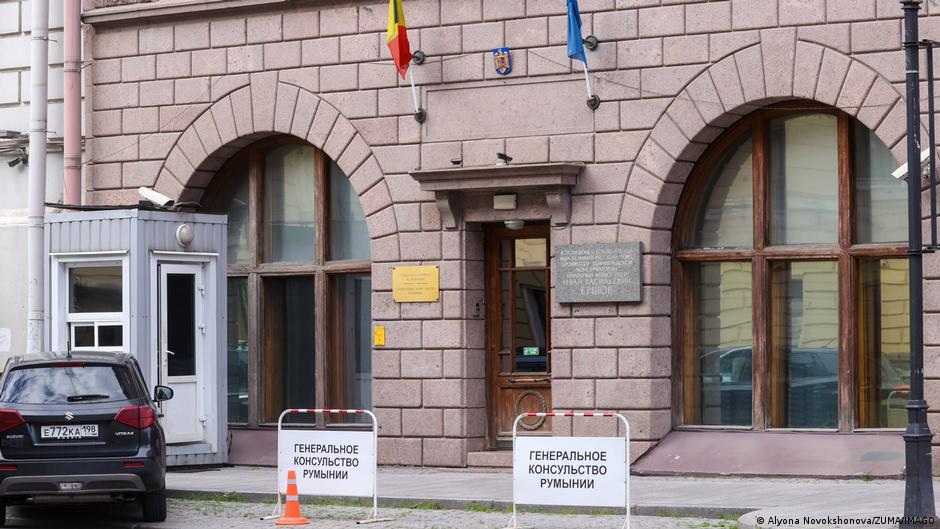
Russia has announced the closure of the Romanian consulate in St. Petersburg and declared the acting consul, Laurențiu Constantin, persona non grata. This move, communicated to the Romanian ambassador to Russia, Cristian Istrate, on June 25, is described by the Russian Ministry of Foreign Affairs as a direct retaliation for Bucharest's earlier decision to close the Russian general consulate in Constanța and expel its head.
Diplomatic Escalation Following Drone Incident
The closure of the Russian consulate in Constanța and the expulsion of its consul were actions taken by Romanian President Nicolae Ciucă in late May. This followed a significant security incident in Galați, eastern Romania, where a Russian drone crashed onto the roof of a multi-story residential building. Fourteen-year-old and 53-year-old residents were injured, and a fire broke out in an apartment on the 10th floor.
"This measure represents a response to the unjustified withdrawal by Bucharest of consent for the Russian General Consulate's operation in Constanța," stated the Russian Ministry of Foreign Affairs.
Romanian emergency services confirmed that the drone's explosive charge detonated upon impact, causing injuries to two people and necessitating the evacuation of 70 residents before extinguishing the resulting fire. The Romanian Ministry of Defense identified the drone as Russian, further escalating tensions. Bucharest characterized the incident as a breach of international law and consequently requested NATO to enhance its air defense systems within Romania.
According to Reuters, the drone incident marks the first instance where a Russian unmanned aerial vehicle used in the ongoing conflict against Ukraine has caused harm within a densely populated area of a NATO member state. This event has significantly influenced Romania's diplomatic posture toward Russia.
Strategic Implications for Bilateral Relations and Regional Security
The tit-for-tat expulsion of consular officials and closure of diplomatic missions underscore deteriorating relations between Russia and Romania. These actions not only reduce diplomatic channels but also contribute to heightened regional tensions amid the broader geopolitical conflict involving Russia and Ukraine.
From a strategic perspective, the closure of consulates restricts Russia's and Romania's capacities for diplomatic engagement, consular services, and intelligence activities within each other's territories. The incident reveals how military events on the ground can rapidly impact diplomatic relations and influence broader security alliances such as NATO.
Experts analyzing this situation point out that Romania's request for enhanced NATO air defenses reflects growing concerns over sovereignty and vulnerability to spillover effects from the Ukraine conflict. For Russia, the reciprocal measures serve as a signal of resistance to Western-aligned diplomatic pressures.
In the larger scheme, these developments may complicate future negotiations and require recalibrated diplomatic strategies from both nations. Companies and investors monitoring Eastern European markets should be aware of the heightened political risk environment, which may affect cross-border trade, security cooperation, and investment climate.
This episode exemplifies how geopolitical conflicts influence state-level corporate governance and management decisions, particularly for enterprises operating in sensitive sectors such as logistics, energy, and defense within affected countries.