Saratov Refinery Halts Operations After UAV Attacks Amid Russia’s Fuel Shortage
Ukrainian drone strikes have forced the Saratov oil refinery to stop processing, disrupting Russia’s petroleum output during an ongoing fuel crisis.
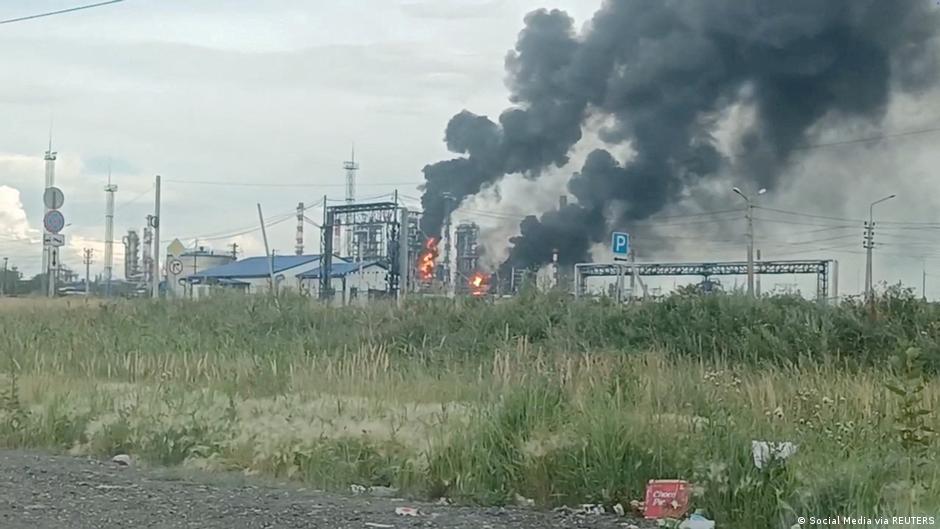
The Saratov oil refinery in Russia has ceased operations indefinitely following damage sustained from Ukrainian unmanned aerial vehicle (UAV) attacks, Reuters reported on July 9, citing insider sources. This incident compounds the strained fuel supply situation in Russia amid escalating conflict and infrastructural sabotage.
Impact on Refining Capacity and Market Supply
The targeted facility's primary crude distillation unit, CDU-6, responsible for processing up to 20,000 tons of crude oil daily, was the sole unit of its kind at the plant. Damage to this unit effectively halted the refinery’s entire processing capacity, marking another significant disruption to Russia’s oil refining capabilities.
"The Ukrainian UAV strikes have significantly curtailed Russia’s refining throughput, removing critical capacity from an already strained system," industry insiders noted.
Governor Roman Busargin of the Saratov region confirmed the attacks damaged "civil infrastructure objects" but refrained from detailed disclosures. The Ukrainian General Staff explicitly identified the Saratov refinery, operated by Rosneft, as the strike target on July 8. Since the full-scale invasion of Ukraine by Russia, this refinery has been repeatedly targeted by drone strikes.
Rosneft has not provided comments regarding the incident in response to media inquiries.
Broader Context of Refinery Disruptions and Fuel Shortages
Data compiled by Novaia Gazeta Europe indicates that at least 13 Russian refineries have partially or fully suspended operations in the first half of 2026 due to UAV attacks. This has led to a cumulative loss of roughly 25% of Russia’s refining capacity and a 30% reduction in gasoline and diesel fuel production nationwide.
The resultant fuel shortage has prompted regional authorities to impose gasoline sales restrictions in most Russian territories. Financial Times estimates that approximately 50 million Russians—around 35% of the population—are impacted by the fuel scarcity as of early July.
Some areas, including Zabaykalsky Krai, Penza, and Irkutsk regions, have escalated to "high alert" statuses. Additionally, the Russian government has extended its ban on diesel fuel exports until at least July 31, a measure initially implemented in late January 2026 but previously not applied directly to producers.
The refinery in Kapotnya near Moscow, also hit by attacks in mid-June, is not expected to resume full capacity before December, further exacerbating supply constraints.
Industry Response and Operational Adjustments
Russian Deputy Prime Minister Alexander Novak outlined adaptive measures taken by domestic oil refining companies in response to these challenges. These include maximizing operational loads at existing refineries, releasing previously stockpiled fuel volumes to the market, shortening scheduled maintenance periods, postponing planned repairs, and leveraging capacity at medium and small refineries.
These strategic adjustments aim to mitigate the impact of infrastructure damage on Russia’s fuel supply, though the ongoing attacks and related restrictions continue to strain the sector.