Russian Petroleum Product Output Falls Nearly 22% in June Amid Industry Disruptions
June production of petroleum products in Russia declined sharply compared to last year despite government claims of partial market stabilization.
In June 2026, Russia's petroleum product production index fell by nearly 22% year-on-year, according to data released by Rosstat on July 22. This significant downturn reflects the ongoing challenges faced by the Russian oil refining sector amid geopolitical tensions and infrastructure disruptions.
The petroleum product production index, a component of the overall industrial production index, registered a 21.8% decline compared to June 2025. This marks a notable acceleration in the contraction from May 2026, when the year-over-year decrease was 13.5%. Rosstat calculates monthly production indices by comparing the cost of a basket of representative goods (volume produced multiplied by price) at constant prices based on the 2023 baseline.
Notably, Russia's government has chosen not to publish production volumes in physical terms, limiting transparency on actual output figures.
Market Pricing Trends and Supply Constraints
Despite the production drop, fuel price inflation in Russia has shown signs of slowing. For the week ending July 20, gasoline prices increased by 1.7%, down from a 2.3% rise the previous week. Similarly, diesel prices grew by 1.9%, compared to a 3.2% increase during the prior period.
"The partial stabilization of the fuel market as claimed by authorities contrasts with the underlying production data signaling a contraction in output."
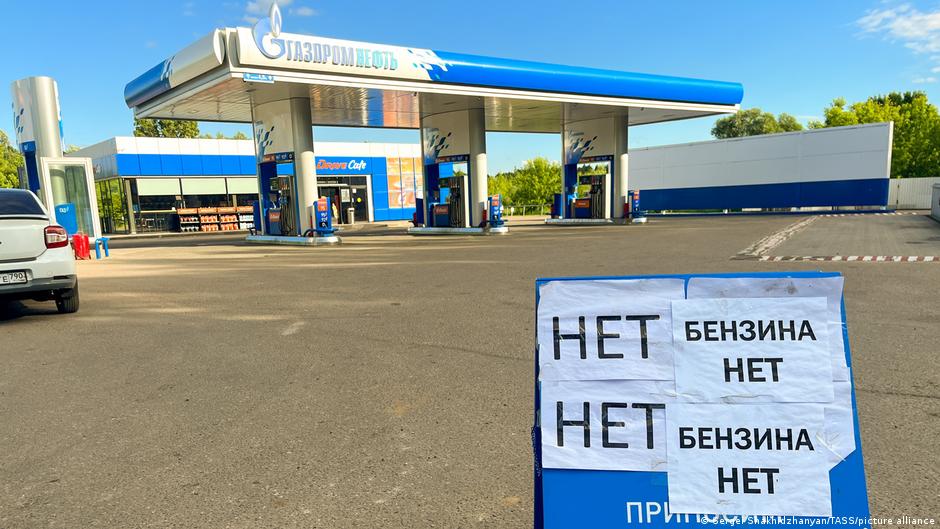
These pricing trends occur amid a backdrop of significant disruptions caused by intensified Ukrainian attacks targeting Russian oil storage facilities and refineries. Since the escalation of the conflict, approximately 25% of Russia’s refining capacity has been reported as fully or partially inoperable, according to Reuters. These operational losses have translated into fuel shortages in various regions, leading to imposed restrictions on fuel sales to manage supply scarcity.
Strategic and Market Implications for Russian Oil Refining
The steep drop in petroleum product output highlights the vulnerability of Russia’s refining infrastructure to targeted attacks and underscores strategic risks in its oil sector management. The reduced refining capacity disrupts domestic fuel supplies, creating market imbalances and contributing to price volatility.
From a corporate strategy perspective, Russia’s oil industry faces the challenge of balancing short-term operational resilience with longer-term investments in infrastructure security and diversification. The refusal to disclose physical production volumes may be aimed at controlling market perceptions but also limits investor and stakeholder insight into the sector's real performance.
Moreover, the partial price stabilization observed suggests that market mechanisms and regulatory interventions are currently mitigating some supply shocks. However, sustained disruptions could force companies to reconsider operational strategies, supply chain logistics, and market positioning, potentially accelerating consolidation or prompting new partnerships to enhance resilience.
In conclusion, the June production decline in Russian petroleum products signals significant stress on the industry with implications for domestic fuel availability, pricing dynamics, and the broader competitive landscape. Ongoing security challenges will likely continue to shape corporate strategies and market performance in the near term.