Russia to Shut Goethe-Institut Branches After Berlin Ends Russian House Pact
Moscow framed the move as a reciprocal response to Germany’s decision to terminate the agreement covering the Russian House in Berlin and the Goethe-Institut’s presence in Russia.
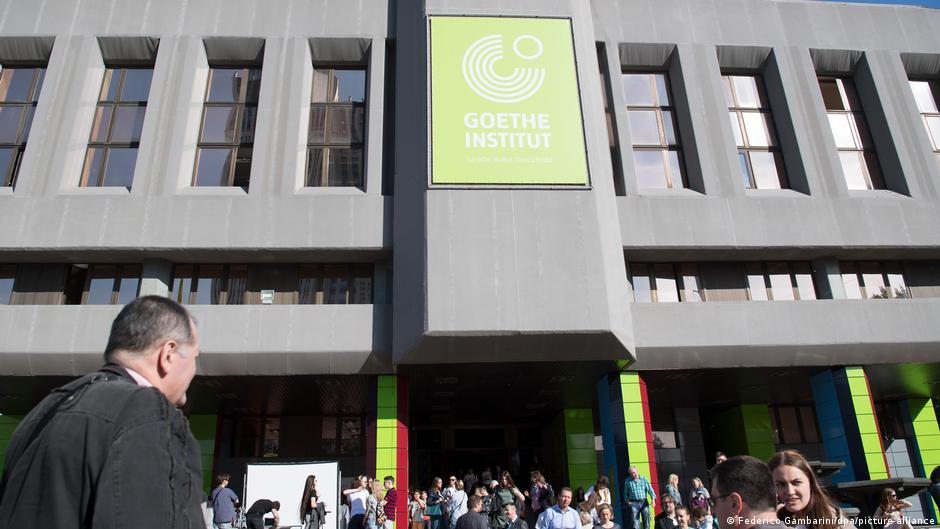
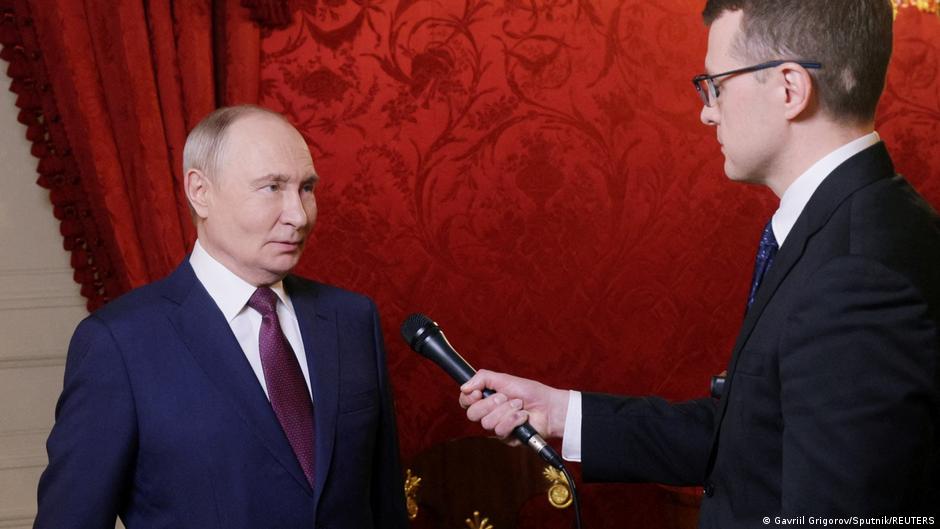
Russia will close the three German Goethe-Institut branches operating in the country after Berlin moved to terminate its agreement with Moscow over the Russian House in Berlin, Foreign Minister Sergei Lavrov said on Thursday, September 3, at the Eastern Economic Forum in Vladivostok.
The decision adds a new corporate and institutional dimension to the already deepening rupture in Russian-German relations. While framed publicly as a cultural-policy dispute, the move effectively removes one of the last formal channels for German soft-power engagement in the Russian market and eliminates a long-standing platform for language training, cultural programming and relationship-building with students, professionals and regional partners.
Lavrov said Germany’s decision had triggered an unavoidable reciprocal response. In remarks broadcast on the Russian Foreign Ministry’s YouTube channel, he said the Germans had Goethe-Institut branches “in Moscow, in St. Petersburg and in Yekaterinburg” and added that “of course, they will be closed” after Russia’s cultural center was expelled from Berlin.
“Of course, they will be closed, after our cultural center was thrown out from there. Otherwise we would not respect ourselves,” Lavrov said.
However, according to the Goethe-Institut’s own information, its third branch in Russia is located not in Yekaterinburg, as Lavrov said, but in Novosibirsk. That discrepancy does not alter the substance of the Russian announcement, which points to the closure of all three German institute branches in the country.
Escalation widens from sanctions to institutional presence
Lavrov said the German authorities had “consciously” taken a step that amounted to ending Germany’s cultural presence in Russia, one that had remained in place despite what he described as the “Ukrainian vicissitudes” in Moscow’s relations with the West. His comments suggest the Kremlin sees the German move not as a technical administrative measure but as a strategic downgrade of bilateral engagement.
For business observers, that matters because cultural institutions often function as low-friction infrastructure for broader international commercial ties. The Goethe-Institut’s network has historically supported German language education, academic exchange and a wider ecosystem that can benefit German companies recruiting local talent, maintaining brand visibility and sustaining long-term market relationships even during political stress.
Its closure would therefore mark more than a symbolic diplomatic loss. It would narrow Germany’s non-commercial footprint in Russia at a time when many formal business links have already been weakened by sanctions, political risk and the retrenchment of Western corporate activity.
Lavrov’s comments came a day after the German government announced tougher sanctions against Russia, blaming Moscow for an August drone incident at Leipzig airport. German Interior Minister Alexander Dobrindt said the decision followed an examination of the drones’ settings and certain components that had also been used in other hybrid incidents.
That sequence is important for understanding the management logic on both sides. Berlin is treating the Leipzig incident as part of a broader hybrid-threat pattern and is responding by tightening pressure not only through sanctions but also through institutional restrictions. Moscow, in turn, is signaling that measures affecting Russian state-linked cultural infrastructure abroad will be answered in kind, including against foreign institutions with longstanding local operations.
Strategic implications for Germany and Russia
Germany’s retaliatory package extends beyond cultural policy. Foreign Minister Johann Wadephul said Berlin had decided to close by September 18 the last remaining Russian consulate general in the country, located in Bonn, and to terminate the agreement governing the activities of the Russian House in Berlin. The same agreement also regulated the Goethe-Institut’s work in Russia.
Berlin also plans to tighten controls on the entry of Russian citizens into Germany and strengthen measures against Russia’s so-called shadow fleet. Together, those steps indicate a coordinated escalation that combines security policy, sanctions enforcement, border management and the dismantling of bilateral institutional frameworks.
From a competitive and strategic standpoint, Germany appears to be prioritizing containment and risk reduction over preserving residual channels of engagement. That may be consistent with its broader policy direction, but it also carries costs. By allowing the legal framework for the Goethe-Institut in Russia to collapse, Berlin risks surrendering one of the few remaining instruments of influence that was still functioning despite the wider breakdown in relations.
For Moscow, the closure announcement fits a pattern of reciprocal statecraft designed to demonstrate symmetry and political resolve. Lavrov’s formulation makes clear that the Russian leadership sees reputational consistency as part of its decision-making: if Russia’s own cultural center is pushed out, German cultural operations in Russia cannot continue under unchanged conditions.
That approach has immediate consequences for the institutional operating environment. Even when commercial activity is already constrained, multinational strategy depends on networks of language, education and local stakeholder engagement. Removing those assets makes future re-entry or normalization harder, not easier, because it erodes the social and organizational infrastructure that companies and institutions rely on when rebuilding ties.
DW said it had requested comment from the Goethe-Institut’s leadership. Until the institute responds, operational questions remain unresolved, including the timing, legal procedure and on-the-ground impact of any shutdown. But the political signal from Moscow is already clear: Germany’s decision over the Russian House pact will be treated not as an isolated diplomatic act, but as a trigger for the removal of Germany’s remaining formal cultural presence in Russia.
For executives, policy advisers and institutions tracking the Russian-German corridor, the episode underscores a broader reality. In the current climate, even organizations positioned outside core commerce can become leverage points in a geopolitical contest, and agreements once seen as peripheral can suddenly determine whether an entire platform for market presence survives.