Putin Tells Armenia EU Bid Would Mean Leaving EAEU, Raising Strategic Stakes
The clash with Prime Minister Nikol Pashinyan underscores how Armenia’s EU ambitions could force a break with a Russia-led economic bloc.
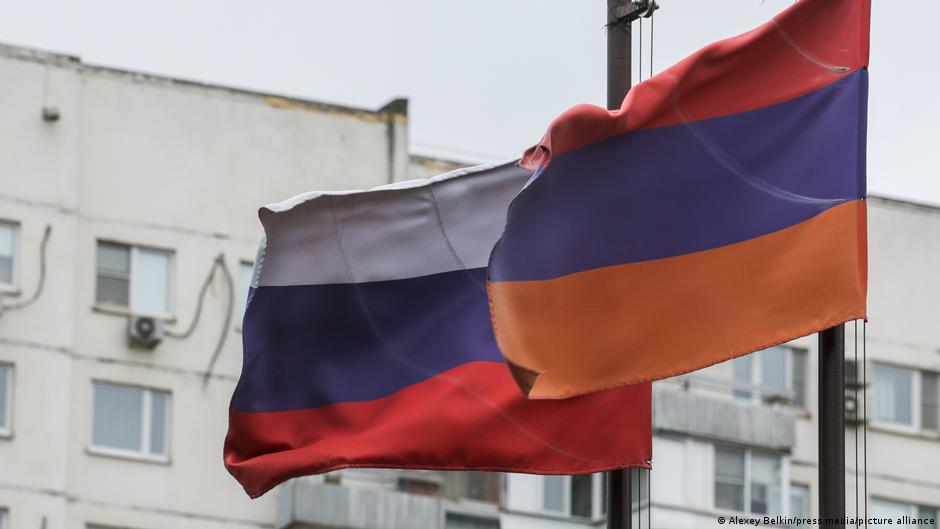
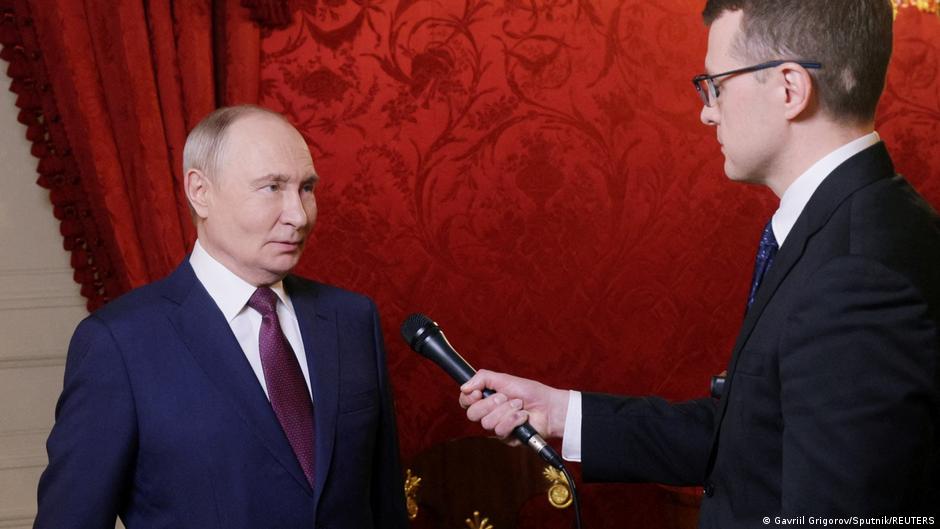
Russian President Vladimir Putin told Armenian Prime Minister Nikol Pashinyan that Armenia’s move to begin the process of joining the European Union would in practice amount to leaving the Eurasian Economic Union, sharpening a strategic dispute with broad implications for trade alignment, political risk and the country’s long-term economic model.
The two leaders met in Bishkek on the sidelines of a Shanghai Cooperation Organisation summit. According to a Kremlin transcript published on Tuesday, September 1, the central issue in the talks was Yerevan’s plan to submit an application to join the EU.
For businesses and investors watching the South Caucasus, the exchange highlights a core structural question: whether Armenia can continue balancing its participation in the Russia-led EAEU while moving decisively toward European integration. Moscow’s position, restated by Putin, is that the two tracks are incompatible. Yerevan, for now, argues that its current steps do not breach existing commitments.
“You said that you had not declared withdrawal. The adoption of a law on the start of the procedure for joining another economic organisation in fact means a statement of withdrawal from ours, because being there and there is incompatible,” Putin said, referring to the EU and the EAEU.
Putin also repeated his call for Armenia to hold a referendum on whether to pursue the EU or remain within the EAEU, saying the issue should be put to the public.
Pashinyan responded that Yerevan had reviewed the treaty framework governing relations between Russia and Armenia, as well as the internal legal basis of the EAEU, and had found no violations of Armenia’s obligations to either Russia or the bloc. He added that with the adoption in 2025 of a law on European integration, Armenia had effectively moved away from the idea of a referendum on choosing between the EU and the EAEU.
Strategic choice with economic consequences
The dispute is more than a diplomatic disagreement. It goes to the heart of Armenia’s external economic strategy and the management choices facing its government. Membership in the EAEU provides Armenia with access to a common economic space alongside Russia and other member states. A move toward EU accession, by contrast, implies a shift toward a rules-based integration process that the European Commission has described as clearly defined and merit-based.
Pashinyan said on August 24 that Armenia intended in the near future to begin the process of applying for EU membership. After that announcement, the European Commission said Armenia was now “closer to the European Union than ever,” while also stressing that accession proceeds within a clearly defined process based on merit.
That formulation matters. For corporate planners, it suggests that even if Armenia opens a formal path toward the EU, any transition would likely be extended, conditional and politically exposed. Companies with supply chains tied to EAEU rules would face uncertainty over tariffs, compliance regimes and market access if Armenia were eventually forced to choose between the two systems.
Putin’s framing turns that latent uncertainty into an explicit negotiating pressure point. By defining the launch of an EU accession process as a de facto exit signal from the EAEU, Moscow is narrowing the room for ambiguity that Yerevan appears to be trying to preserve. Armenia’s leadership, meanwhile, is attempting to keep its legal position intact while advancing a broader geopolitical and economic reorientation.
That tension also has a domestic political dimension. In June, Pashinyan said there were no grounds to hold a referendum on joining the EU. He made the statement in response to a joint declaration by the leaders of Russia, Belarus, Kazakhstan and Kyrgyzstan. Putin had previously argued that membership in the EU and the EAEU cannot be combined, and also said that the “Ukrainian scenario” allegedly began with Kyiv’s attempt to join the EU.
For business observers, the reference signals that Moscow is treating Armenia’s European course not as a technical trade matter but as a strategic realignment. That raises the likelihood that economic tools will continue to be used alongside political messaging.
Pressure, leverage and the competitive landscape
The recent record suggests that commercial pressure is already part of the equation. Ahead of Armenia’s parliamentary elections on June 7, Moscow increased pressure on Yerevan, including by banning the import into Russia of a number of Armenian products. The election was ultimately won by Pashinyan’s Civil Contract party. His face-to-face meeting with Putin in Bishkek on September 1 was their first since those elections.
From a management and policy perspective, that sequence is significant. It indicates that Armenia’s leadership is pursuing its European track despite evidence that Russia is willing to use trade restrictions as leverage. For Armenian exporters and producers, especially those exposed to the Russian market, the policy path carries immediate commercial risk. For the government, the challenge is to manage that exposure while signaling that the strategic direction remains unchanged.
The competitive landscape is therefore not only regional but institutional. On one side is the EAEU, where Armenia already operates and where Russia retains substantial influence. On the other is the EU, which offers the prospect of deeper integration but through a long accession process with strict conditions. Armenia is effectively trying to widen its strategic options without triggering a full rupture before it has built alternatives.
That approach may help explain Pashinyan’s emphasis on treaty analysis and non-violation of obligations. It is a legal and managerial argument designed to preserve operating flexibility. Putin’s rebuttal is a political and structural argument: that the logic of the two blocs is mutually exclusive regardless of the current legal wording.
For companies, lenders and policymakers, the immediate takeaway is that Armenia’s external economic positioning is entering a more confrontational phase. The meeting in Bishkek did not resolve the contradiction. Instead, it clarified the stakes. If Armenia proceeds with an EU application, Moscow appears ready to treat the move as incompatible with continued EAEU membership. Yerevan, by contrast, is maintaining that its present course does not violate existing commitments.
That gap will shape the next phase of Armenia’s economic diplomacy. It will also determine how much room the country has to manage its relations with Russia while pursuing closer ties with Europe. As things stand, the strategic hedge is becoming harder to sustain.