Over 8.4 Million Ukrainians Reside Abroad Amid Ongoing Conflict, Impacting Domestic Demographics
Ukraine faces significant population displacement with over 8.4 million citizens living abroad, affecting workforce and economic recovery prospects.
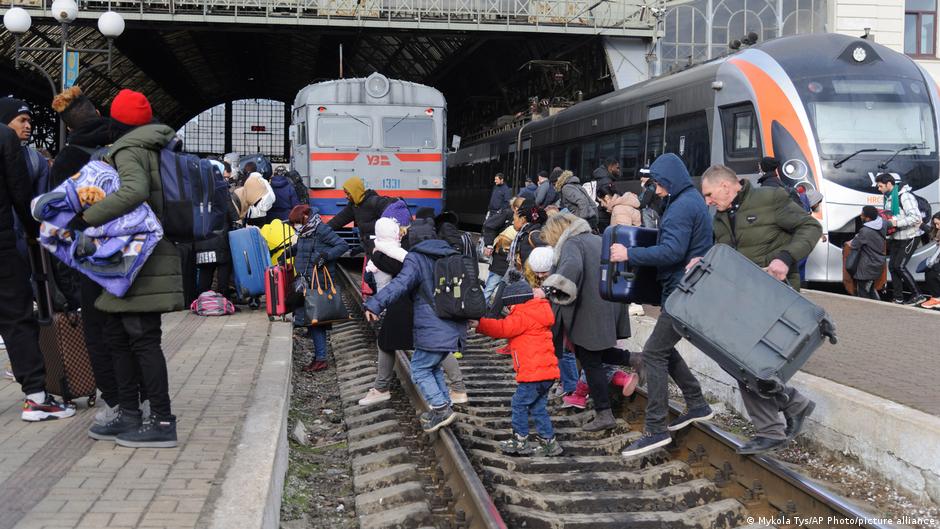
As of 2026, more than 8.4 million Ukrainian citizens are living outside the country's borders, a figure that underscores the profound demographic shifts resulting from ongoing geopolitical tensions and conflict. This revelation was made by Ukrainian Human Rights Ombudsman Dmytro Lubinets during an annual meeting of foreign diplomatic mission leaders.
According to Lubinets, "More than 8.4 million of our citizens are currently outside Ukraine. It is our duty to ensure that each one knows Ukraine remembers them and is ready to protect their rights." Although he did not explicitly link this population displacement to Russian aggression, his remarks came in the context of the continuing war situation, which has precipitated large-scale migration.
Demographic and Economic Implications of Population Displacement
The large-scale exodus from Ukraine has critical implications for the country's labor market, economic recovery, and strategic planning. Prior to the escalation of conflict, Ukraine's population was estimated at over 41 million people, excluding the annexed Crimean Peninsula and certain occupied regions of Donetsk and Luhansk. However, recent data from the National Academy of Sciences of Ukraine places the population residing in Kyiv-controlled territories at approximately 27 to 28 million.
This significant drop raises concerns about labor shortages, decreased domestic consumption, and the longer-term challenges of rebuilding a productive economy amid and after conflict. Additionally, maintaining social services and infrastructure becomes more complex with such a reduced and fragmented population base.
Lubinets also highlighted other humanitarian issues, noting thousands of Ukrainians remain detained in Russian captivity, and more than 20,000 Ukrainian children have been forcibly relocated to Russia. These factors further complicate the social fabric and contribute to demographic destabilization.
"It is our duty to ensure that each one knows Ukraine remembers them and is ready to protect their rights." — Dmytro Lubinets, Ukrainian Human Rights Ombudsman
Data from the United Nations High Commissioner for Refugees (UNHCR) confirms the scale of displacement triggered by the conflict, documenting approximately 5.7 million Ukrainians fleeing since 2022. The European Union hosts a substantial portion of these displaced persons, with Eurostat reporting in July 2026 that around 4.38 million Ukrainians receive temporary protection status within EU countries.
Germany hosts the largest Ukrainian diaspora in the EU with approximately 1.28 million, followed by Poland with 967,500 and Spain with 267,400. These migration patterns reflect both geopolitical proximity and the reception capacities of different EU member states.
Ukraine’s State Statistics Service has noted challenges in maintaining accurate population counts during the ongoing conflict, with official comprehensive demographic assessments anticipated only one to two years after hostilities cease. This data uncertainty complicates strategic governmental planning, particularly in areas such as infrastructure investment, economic development, and social services provision.
Overall, the displacement of over 8.4 million Ukrainians and the resulting demographic shifts represent major challenges for Ukraine’s post-conflict recovery. Corporate sectors and policymakers must navigate an altered competitive landscape marked by workforce fluctuations and shifting consumer dynamics, underscoring the need for adaptive management strategies and international cooperation.