Norway Seizes Russian Research Vessel as Naftogaz Steps Up Asset Recovery
The arrest of the Professor Molchanov highlights Naftogaz's long-running enforcement campaign and raises new questions for Russian state-linked assets abroad.
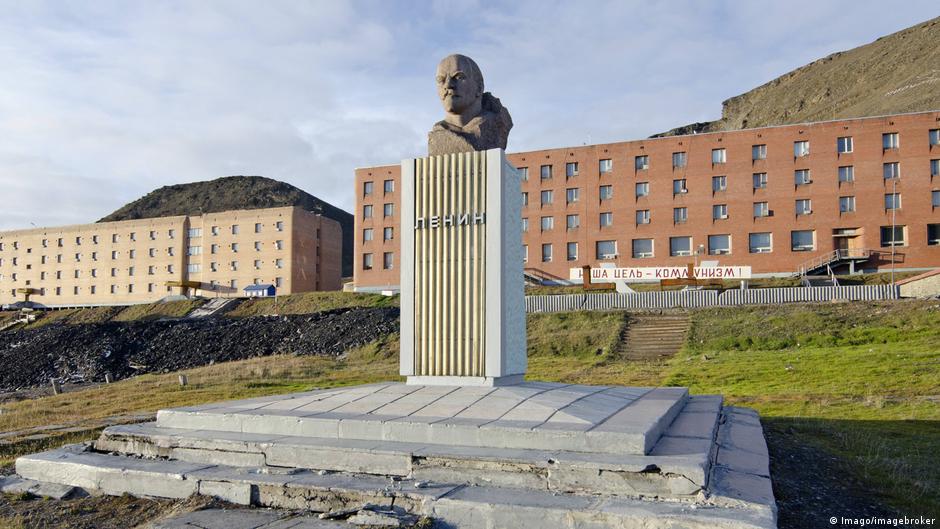
Norwegian authorities have arrested the Russian scientific research vessel Professor Molchanov in the port of Barentsburg on the Svalbard archipelago, in a move that underscores Naftogaz's increasingly international strategy to enforce arbitral claims against Russian assets. The seizure was ordered by the Governor of Svalbard following a ruling by the Nord-Troms District Court on August 31, acting on an application from the Naftogaz group of companies of Ukraine.
The governor's office said on Wednesday, September 2, that the vessel will remain in Barentsburg until either the governor or the Nord-Troms District Court decides otherwise. The statement framed the action as part of Naftogaz's effort to recover funds that, according to the company, were expropriated by Russia in 2014. Naftogaz also confirmed the arrest on its own website, saying the Russian vessel had been detained toward repayment of the debt owed by the Russian authorities to the company.
“This litigation and the resulting decision are part of the company’s efforts to recover funds expropriated by Russia in 2014,” the governor’s press service said.
For business and legal observers, the significance of the move lies less in the individual vessel than in what it suggests about Naftogaz's enforcement posture. The company has been pursuing compensation since 2016 over the loss of assets in Crimea. In February 2019, a tribunal in The Hague ruled in Naftogaz's favor, finding that Russia had violated its obligations under the Ukraine-Russia investment protection agreement and had unlawfully expropriated the company's investments. The court valued the seized assets at $5 billion, or 4.3 billion euros.
Russia's Justice Ministry said at the time that it would not recognize the Hague ruling and would take all necessary measures to ensure the representation and protection of Russia's interests. That refusal has pushed the dispute beyond arbitration and into the harder, more operational phase of international enforcement, where court victories matter only if they can be converted into recoveries from assets located in jurisdictions willing to act.
Enforcement Strategy Moves From Rulings to Reachable Assets
The Svalbard vessel arrest illustrates how Naftogaz appears to be targeting assets connected to the Russian state or Russian entities in foreign jurisdictions where local courts may recognize and enforce arbitral awards. As the Ukrainian company has previously noted, if Russia refuses to comply voluntarily, Naftogaz can seek compulsory enforcement under the 1958 New York Convention on the Recognition and Enforcement of Foreign Arbitral Awards in states where Russian assets are located.
That framework gives the company a route to pressure, but execution depends on asset visibility, legal classification and local court approval. In this case, the Professor Molchanov was physically present in a Norwegian-administered territory, making it a potentially actionable asset once judicial authorization was obtained. For corporate strategists, the episode shows that enforcement campaigns in cross-border disputes increasingly resemble long-duration asset-tracing operations rather than single-event courtroom wins.
The case also highlights the broader exposure faced by Russian state-linked property abroad. The governor's office said crew members and passengers would be looked after by the governor and by Arktikugol, the Russian coal mining company that has operated on Svalbard since 1931. According to the company's website, Arktikugol is the leading Russian organization on the archipelago and is subordinate to Russia's Ministry for the Development of the Far East and the Arctic. That detail places the vessel's detention within a wider ecosystem of state-affiliated Russian activity overseas, a factor likely to sharpen legal and operational scrutiny in future enforcement efforts.
From a management perspective, Naftogaz's approach suggests a disciplined commitment to keeping an old legal claim commercially relevant. The original dispute stems from Crimea, but the company's actions show a willingness to pursue recovery through foreign courts years after the arbitral process began. That persistence has strategic value: it signals to counterparties, creditors and governments that the award remains live and enforceable, and that the company is prepared to convert legal rights into practical pressure wherever jurisdiction allows.
The latest seizure also comes against the backdrop of another court action involving a vessel linked by Ukrainian authorities to Russian activity. In early June 2026, the district court of Ystad in Sweden ruled that the dry cargo ship Caffa, detained by Swedish authorities in March in the Baltic Sea on suspicion of belonging to Russia's so-called shadow fleet, would be transferred to Ukraine.
Ukrainian Prosecutor General Ruslan Kravchenko described that decision as the first case in which a foreign court, at Ukraine's request, approved the arrest of a vessel linked to the export of Ukrainian products from occupied territories. Ukrainian authorities say the Caffa transported grain in the summer of 2025 from occupied Sevastopol to the Syrian port of Tartus, and that a false registration scheme was used to conceal the activity.
Although the legal bases of the two cases are different, together they point to a tougher cross-border environment for Russian-linked maritime assets. For Naftogaz, the arrest of the Professor Molchanov is not merely a symbolic win. It is evidence that enforcement can advance from arbitration into asset detention, and that foreign courts may be prepared to intervene when presented with a recognized claim and a reachable target. For Russia and its state-connected operators, it is another sign that commercial, scientific and transport assets outside Russian territory may increasingly face legal risk tied to unresolved claims arising from 2014 and after.
That makes the Svalbard case more than a regional legal event. It is part of a larger contest over how far Ukrainian claimants can convert international rulings into recoveries, and how vulnerable Russian assets abroad are becoming as those efforts intensify.