Massive Russian Missile and Drone Attacks on Kyiv Result in Civilian Casualties and Infrastructure Damage
Five dead and over 30 wounded as Kyiv endures multi-directional strikes amid warnings of intensified Russian offensives
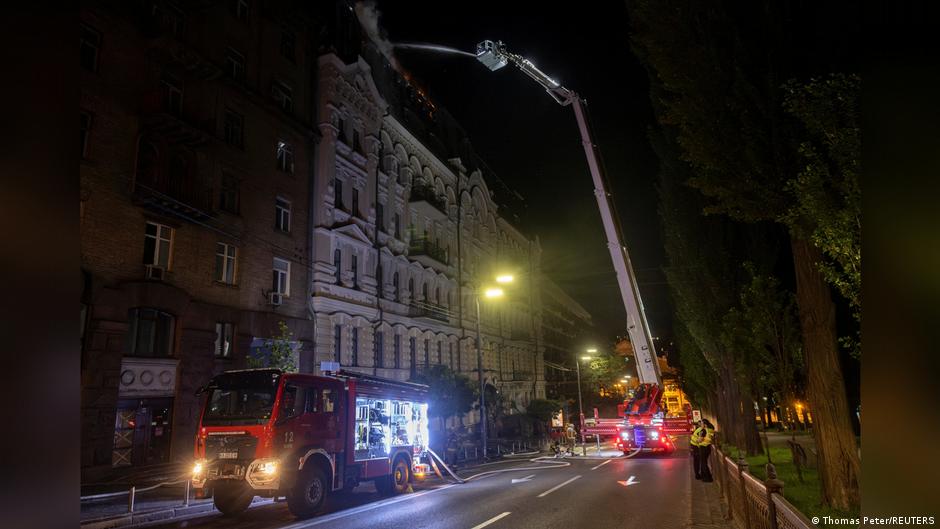
On the evening of July 1, Kyiv faced a series of coordinated missile and drone attacks that led to significant civilian casualties and damage to critical urban infrastructure. Local authorities reported five fatalities and 34 injured individuals amidst fires and structural damages across multiple districts of the Ukrainian capital.
Strategic Implications and Urban Impact
The attacks targeted a range of locations including multi-story residential buildings, a key ambulance substation in the Shevchenkivskyi district, and commercial properties such as a hotel and marketplace. Vitaliy Klitschko, Mayor of Kyiv, and Timur Tkachenko, head of the Kyiv military administration, detailed the extensive destruction and emergency response efforts.
"The assault caused fires on the roofs of a hotel and a market, with a residential high-rise ablaze in Holosiivskyi and structural collapses trapping residents in other districts," stated Klitschko.
Among the injured were emergency service personnel operating at the ambulance substation hit during the strikes. The attacks also sparked fires in the Solomianskyi and Sviatoshynskyi districts, with additional impacts on Obolonskyi and Podilskyi districts. In the Desnianskyi district, a nine-story building suffered damage severe enough to trap residents inside, while drone debris was found near private residences.
Context and Intelligence on Escalation
These attacks occurred shortly after Ukrainian President Volodymyr Zelensky, attending the inauguration of Ireland’s EU Council presidency in Dublin, warned of an imminent large-scale Russian offensive based on intelligence reports. The information was corroborated by local monitoring sources and Telegram channels that highlighted increased reconnaissance activities by Russian forces in Kyiv, Dnipro, and their surrounding regions.
The coordinated nature of the attacks, spanning multiple city districts and involving both drones and missiles, suggests a calculated strategy aimed at overwhelming Kyiv’s defensive and emergency response capabilities.
Corporate and Infrastructure Resilience Considerations
The targeting of healthcare infrastructure, specifically the ambulance substation, raises concerns about the resilience of critical urban services amid ongoing military confrontations. For businesses and investors, such escalations pose heightened operational risks, particularly in sectors reliant on urban infrastructure and logistics.
Emergency management authorities reported a significant increase in Kyiv residents seeking shelter in metro stations as missile alerts persisted for several hours, indicating both the civilian impact and the necessity for robust urban crisis management frameworks.
As the situation evolves, understanding the strategic calculus behind these attacks and their implications for urban governance, infrastructure security, and corporate risk management remains essential for stakeholders monitoring the conflict's impact on Ukraine’s economic and social fabric.