Lula Wins Brazil Runoff as Bolsonaro Challenges Election Result
The disputed outcome introduces political risk for companies already navigating inflation, crime and economic instability in Brazil.
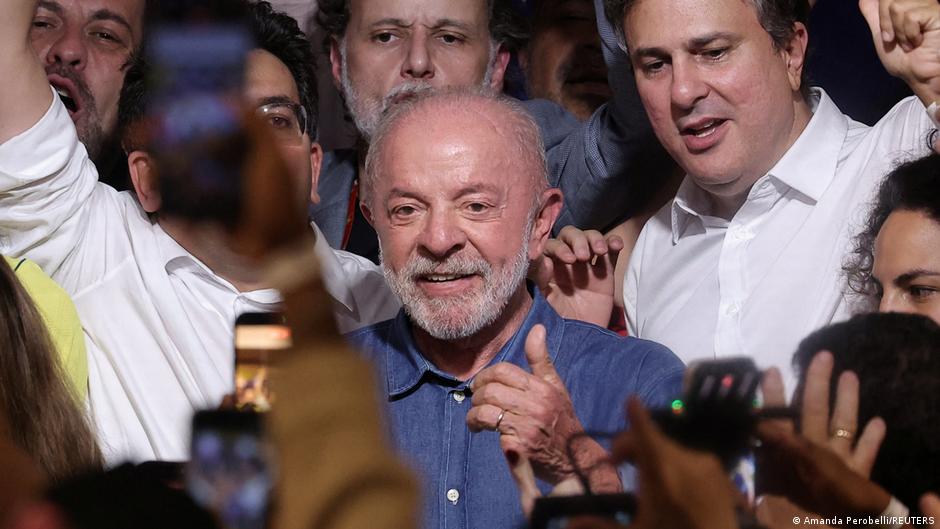
Brazilian President Luiz Inácio Lula da Silva has won a fourth, nonconsecutive term in office, securing a narrow runoff victory that could shape corporate planning, investment decisions and market confidence in Latin America’s largest economy. His opponent, Senator Flávio Bolsonaro, has refused to concede and is seeking to annul the result, creating a period of political uncertainty for businesses operating in the country.
Official results from the presidential runoff held on Sunday, October 25, gave the 80-year-old center-left incumbent 51.8% of the vote. Bolsonaro, a right-wing populist and the son of former far-right President Jair Bolsonaro, received 48.2%. The margin underscores the depth of Brazil’s political polarization and leaves Lula facing a closely divided electorate as he prepares to govern again.
The result also marked the first time in Brazilian history that a candidate who placed second in the opening round went on to win the presidency. For corporate leaders and investors, that reversal highlights the difficulty of relying on early electoral signals when assessing Brazil’s policy direction and operating environment.
Election dispute adds uncertainty for business
Flávio Bolsonaro rejected the result and called for the election to be annulled, citing the extension of voting hours, according to the Associated Press. The challenge raises questions about how quickly the political system can deliver a definitive conclusion and whether the dispute will affect government decision-making, investment sentiment or the transition into Lula’s next term.
The controversy centers on a two-hour extension ordered shortly before polling stations were scheduled to close. Supreme Court Justice Cristiano Zanin issued the decision only three minutes before the planned end of voting.
However, requests to extend polling had previously come from both Lula and Bolsonaro. They cited public transportation problems and adverse weather conditions in some parts of Brazil, factors that could have prevented voters from reaching polling stations within the original timetable.
The immediate business issue is not only who won, but how quickly Brazil’s institutions can resolve the challenge and restore predictability.
No evidence beyond the disputed extension was cited in the source account to support Bolsonaro’s demand for annulment. Even so, a prolonged political confrontation could complicate management decisions by companies weighing capital expenditure, hiring or acquisitions in Brazil. Firms typically place a premium on regulatory visibility, institutional continuity and a stable timetable for policy implementation.
Lula faces economic and security pressures
Lula’s reelection campaign was difficult, reflecting public concern about the cost of living and rising crime. Those same issues are likely to remain central to his fourth administration and will have direct consequences for employers, retailers, banks and consumer-facing companies.
High living costs can constrain household demand, alter purchasing patterns and increase pressure on wages. Rising crime can add to logistics, insurance and security expenses, while also influencing decisions about store locations, distribution networks and workforce deployment. Lula’s ability to address these concerns will therefore be watched not only as a political test but also as an indicator of Brazil’s commercial outlook.
The election took place amid corruption scandals, economic instability and allegations of interference by the United States. Together, those factors add complexity to Brazil’s competitive landscape. Domestic companies must plan around potential shifts in government priorities, while multinational groups may reassess political-risk assumptions, compliance exposure and the timing of long-term investments.
Lula’s center-left positioning may also influence expectations about the balance between social policy, state involvement and private-sector growth. The source article does not specify his policy program, so the implications for taxation, regulation, privatization or individual industries remain unclear. Businesses will need to focus on cabinet appointments, legislative alliances and early administrative decisions for evidence of how his next government intends to manage the economy.
A divided market and a demanding mandate
The public reaction illustrated the contrasting political forces that Lula will have to manage. Fireworks and vuvuzelas were heard in Rio de Janeiro after the results were reported. In São Paulo, thousands of people dressed in red, the color associated with Lula’s Workers’ Party, gathered in the streets to celebrate, according to AFP.
Yet the 48.2% vote for Bolsonaro points to a powerful opposition constituency. That division could affect Lula’s room to pursue major reforms and may increase the importance of coalition-building, legislative bargaining and careful political management. For business, the effectiveness of that process will help determine whether the government can move from campaign commitments to durable policy.
The competitive environment may remain unsettled until Bolsonaro’s challenge is resolved and Lula demonstrates how he plans to respond to economic instability, corruption concerns, crime and household financial pressure. The narrow result gives Lula a renewed mandate, but it does not eliminate the political constraints surrounding his presidency.
Brazilian and international companies now face two immediate tasks: monitoring the institutional response to the requested annulment and evaluating the strategic direction of Lula’s fourth term. The speed and credibility of both processes will be critical to restoring confidence and clarifying the risks and opportunities in the Brazilian market.