Bulgaria’s Presidential Runoff Raises Strategic Risks for Business
A low-turnout contest between Iliyana Yotova and Andrey Gyurov is sharpening debate over Ukraine, security and executive authority.
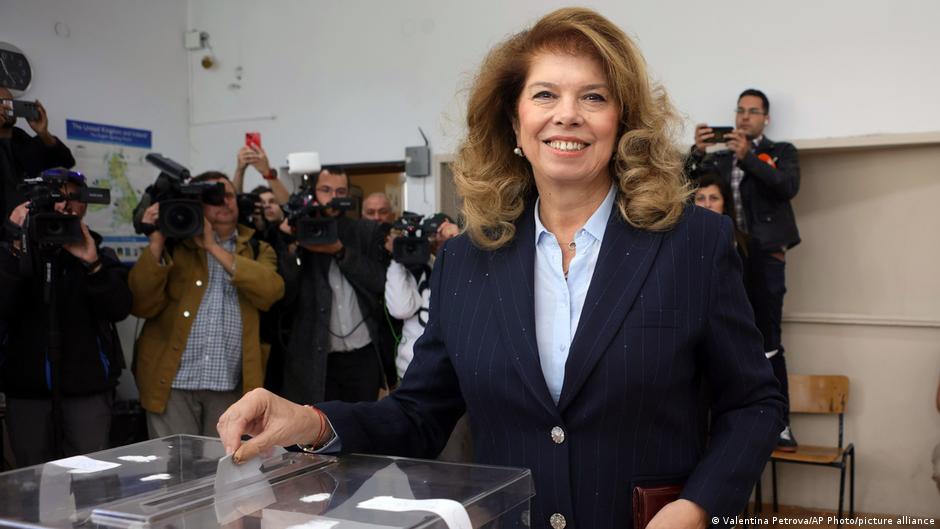
Bulgaria’s presidential election is heading toward a second round after no candidate secured the required absolute majority in the first vote, extending a period of political uncertainty with implications for corporate planning, investment risk and the country’s international positioning.
According to Bulgaria’s Central Election Commission, with 95.3% of ballots processed, incumbent President Iliyana Yotova received 34.6% of the vote. Pro-Western former prime minister Andrey Gyurov followed closely with 32%. The runoff is expected to take place on November 1.
Turnout was only 22.2%, far below the level of more than 50% required for the first round to produce a conclusive result.
The narrow gap between the two leading candidates creates a competitive second-round landscape in which voter mobilization may prove as important as policy positioning. For business leaders, the immediate issue is not simply which candidate wins, but whether the eventual result provides sufficient political legitimacy and clarity for institutions operating in an increasingly sensitive regional environment.
Security policy becomes a business variable
The runoff carries particular foreign-policy significance because of Bulgaria’s proximity to the war in Ukraine. During October alone, four merchant vessels off Bulgaria’s Black Sea coast were reportedly struck by drones. A Starlink station near Sofia was also damaged in an arson attack.
Yotova and the Bulgarian government headed by Rumen Radev responded cautiously to those incidents, offering no definitive assessment and identifying no responsible party. That restraint became a factor in the election campaign and highlighted a strategic question relevant to companies with operations, infrastructure or logistics exposure in Bulgaria: how forcefully the state will respond to security incidents linked, directly or indirectly, to the regional conflict.
For shipping companies, infrastructure operators and businesses dependent on Black Sea trade routes, the reported attacks demonstrate how geopolitical threats can move rapidly into commercial operations. The election does not itself determine corporate security policy, but the president’s public posture can influence perceptions of national resilience, alliance commitments and the predictability of government responses.
Competing approaches to Ukraine
The early phase of the campaign featured few rallies, no televised debates and numerous personal attacks on the two leading candidates. In its final weeks, however, substantive differences over support for Ukraine moved to the center of the contest.
Yotova supports a diplomatic end to the war and sought to reassure voters that Bulgarian troops would not be sent to Ukraine, even though the possibility was not a subject of broad public debate. Her approach emphasizes restraint and attempts to address concerns about military escalation.
Gyurov has previously expressed support for Ukraine. While serving as prime minister, he signed a security cooperation agreement with Kyiv. His record therefore offers voters and international partners a more explicit indication of how he views Bulgaria’s role in the regional security framework.
From a corporate strategy perspective, the distinction matters because foreign-policy alignment can shape confidence among trading partners and investors, particularly in sectors exposed to defense, energy, transportation, telecommunications and critical infrastructure. The election also presents companies with a reputational challenge: businesses may need to prepare for a political environment in which commercial decisions involving Ukraine or Russia attract greater public scrutiny.
Limited office, meaningful influence
Bulgaria’s presidency has formally restricted powers, but the office retains several levers that can affect the operating environment. The president represents the country internationally, with certain exceptions, and serves as commander-in-chief. The officeholder also signs decrees appointing the prosecutor general and the heads of the highest courts.
The president can appoint an acting prime minister from a constitutionally defined, closed group of eligible officials and can veto legislation adopted by parliament. These authorities do not amount to day-to-day control of economic policy, but they can become significant when political institutions are under pressure or when disputes arise over legislation, senior judicial appointments or interim government leadership.
For corporate executives assessing Bulgaria, that makes the election relevant beyond its ceremonial dimension. A presidential veto can affect the timing of legislation, while appointments connected to the judiciary may influence perceptions of institutional stability. The power to select an acting prime minister can also become consequential during periods of government transition.
The runoff therefore represents a choice between two distinct political and foreign-policy profiles rather than a direct referendum on a corporate or economic program. Yotova enters the second round with a modest lead but faces questions over the cautious response to recent security incidents. Gyurov’s clearer support for Ukraine may appeal to pro-Western voters while also sharpening divisions over Bulgaria’s exposure to the conflict.
With participation in the first round exceptionally low, the decisive competitive advantage will depend on which campaign can expand its coalition and persuade disengaged voters to return. Until November 1, businesses operating in Bulgaria will be watching for signals about institutional continuity, regional alignment and the government’s capacity to manage security risks without disrupting trade and investment.