Impact of Recent Russian Missile Strikes on Kyiv and Strategic Ukrainian Response
Russian missile attacks on Kyiv result in civilian injuries amid escalating Ukrainian long-range drone strikes on Russian infrastructure.
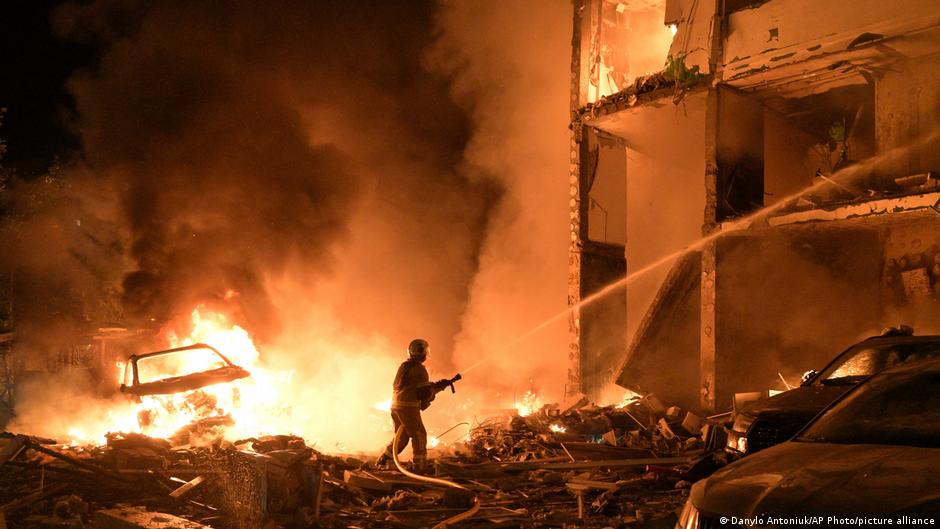
On the night of July 10, Russian forces launched ballistic missile strikes on Kyiv, causing injuries to at least six civilians and significant infrastructure damage. The attacks occurred without timely air raid warnings, increasing civilian vulnerability during the assault.
Details and Immediate Impact of the Attacks
The first explosions were reported around 03:38 local time, with air raid sirens activated only minutes later—at 03:40 in Kyiv and 03:54 in the Kyiv region. According to local authorities and Kyiv's mayor, Vitali Klitschko, the use of ballistic missiles underscored the intensity of the assault.
Damage assessments revealed multiple fires, notably at a transformer substation in the Darnytskyi district and an office building in the Solomianskyi district. Additionally, a missile struck a non-residential building in Sviatoshynskyi district, and another caused a fire in a non-residential area of Dniprovskyi district.
Among the six injured civilians, three received on-site care while the remainder were hospitalized. This incident highlights the ongoing risks faced by the urban population amid the conflict.
Rising Civilian Casualties and Strategic Context
The attacks come amid some of the deadliest months for Ukrainian civilians since Russia’s full-scale invasion. UN reports indicate that May and June 2026 saw unprecedented civilian casualties, with 274 deaths recorded in May and 265 in June, alongside over 1,800 injuries. Early July continued this trend with at least 93 fatalities from Russian strikes within the first week alone.
"The confirmed number of civilian casualties in 2026 is significantly higher than in previous periods, with a consistent rise during the spring and summer months," noted a UN official on conflict monitoring.
These statistics underscore both the humanitarian toll and the persistent volatility in Ukraine’s urban centers.
Ukrainian Strategic Response and Shifting Battlefield Dynamics
In parallel with defending urban areas, Ukraine has intensified its offensive capabilities, particularly through targeted drone strikes on Russian oil refineries. Ukrainian President Volodymyr Zelensky has described these operations as "long-range sanctions" aimed at undermining Russia's fuel supply and economic resilience.
The impact of these strikes is evident in Russia’s worsening gasoline crisis, which reportedly affects even the sentiments within President Vladimir Putin's inner circle. Zelensky emphasized international and internal support for peace efforts, suggesting that strategic pressure on Russia's energy infrastructure could encourage diplomatic resolutions.
To enhance operational effectiveness, Ukraine plans to establish a dedicated military command focused on sustaining these long-range sanctions, reflecting a structured approach to leveraging asymmetric warfare tactics.
Meanwhile, despite increasing internal pressures, Kremlin sources indicate that Putin remains committed to escalating the conflict, particularly in the Donbas region. This uncompromising stance signals continued resistance to negotiated settlements and the likelihood of prolonged hostilities.
For business and strategic observers, the evolving conflict dynamics in Ukraine present complex challenges and highlight the critical interplay between military operations, political decisions, and economic warfare. The sustained targeting of critical infrastructure and urban centers will have significant implications for regional stability, reconstruction prospects, and international investment climates.