Houthi Missile Attempt on Riyadh Raises Pressure on Saudi Energy Strategy
The reported interception over Riyadh adds a new layer of risk for Saudi Arabia as attacks disrupt oil logistics and Red Sea routes.
Saudi Arabia said Yemen’s Iran-aligned Houthi movement attempted to strike Riyadh with a ballistic missile overnight, an escalation that places the kingdom’s political center and energy infrastructure strategy under renewed scrutiny. The Saudi-led Coalition to Restore Legitimacy in Yemen said on Saturday, September 19, that the missile was “intercepted and destroyed,” according to coalition spokesman Brig. Gen. Turki al-Maliki, who announced the incident on X.
The reported attempt was significant because, according to the coalition, it was the first time the Houthis had tried to hit the Saudi capital with a ballistic missile. Air raid sirens were sounded in Riyadh during the night, and some residents reported hearing an explosion. Saudi authorities did not report casualties or damage.
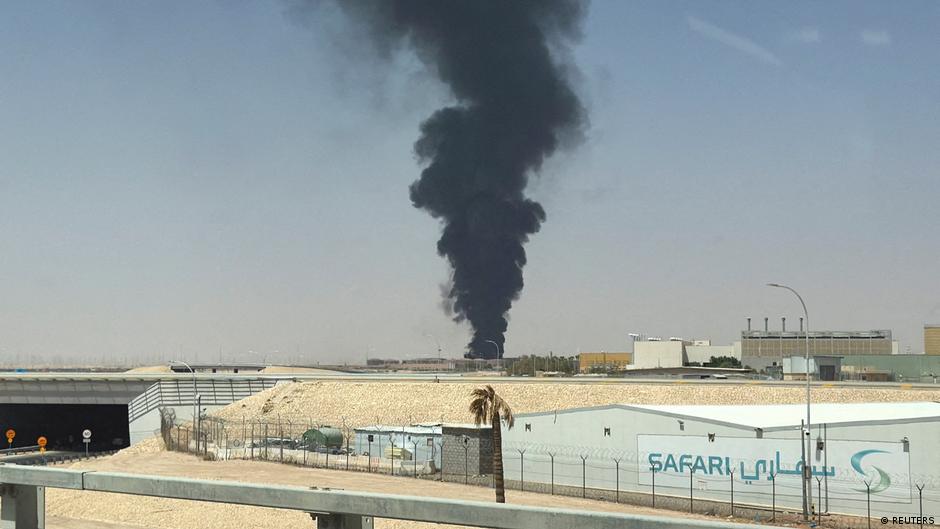
Later, a column of smoke was visible near the airport. AFP, citing its correspondent, reported that a fuel tank belonging to Saudi Aramco, the kingdom’s largest oil company, had caught fire and that the blaze was extinguished. It remained unclear whether the fire was connected to the attempted missile strike. Aramco did not respond to journalists’ requests for comment.
Energy Infrastructure Moves Back to the Center of Risk
For Saudi Arabia, the latest incident is not only a security matter. It also intersects directly with corporate and state strategy around oil exports, infrastructure redundancy and the kingdom’s ability to keep crude moving during a period of regional disruption. Saudi authorities also said the Houthis attempted to attack civilian infrastructure, including targets in the Red Sea port city of Yanbu, but that those attempts were thwarted.
The Houthis, for their part, claimed they had used drones, cruise missiles and ballistic missiles to strike “important facilities” in Riyadh and Aramco infrastructure in Yanbu. The conflicting accounts underline the increasingly contested information environment around attacks on energy assets, where even unconfirmed damage can affect perceptions of operational resilience and supply risk.
Saudi officials said the missile aimed at Riyadh was intercepted and destroyed, while the Houthis claimed strikes on important sites and Aramco infrastructure.
The pressure on Saudi logistics has been building. On September 11, the Financial Times reported that Saudi Arabia had halted operations on the East-West pipeline, which terminates at Yanbu, after a drone attack launched from Iraqi territory. On September 18, Bloomberg reported that Saudi Aramco had notified at least two European refineries that it would not supply them with crude in October. According to Bloomberg, the pipeline was expected to be partially restarted within days and fully restored within a month and a half.
The East-West pipeline has become more important since the start of the U.S. and Israeli war with Iran, which severely complicated tanker traffic through the Strait of Hormuz. Saudi Arabia responded by increasing exports through the pipeline, making the route to Yanbu a critical alternative for moving crude to global markets.
Strategic Route Faces Competitive and Security Strain
The business implications extend beyond one company or one facility. Saudi Aramco’s ability to deliver crude reliably underpins the kingdom’s standing with major buyers, including refiners in Europe. Any interruption in October deliveries to European refineries, even if temporary, highlights the commercial cost of security risks and the challenge of managing customer commitments when transport routes are under pressure.
In recent weeks, the route’s capacity has declined because of Houthi attacks on Saudi tankers in the Red Sea. In August, around 2.5 million barrels per day were shipped through Yanbu, the International Energy Agency said, marking the lowest level since 2013. That figure points to a strategic constraint: the route Saudi Arabia has leaned on as a workaround for Hormuz is itself now exposed to attacks and operational disruption.
The competitive landscape in global oil logistics is also shifting as maritime chokepoints become bargaining tools in a wider regional confrontation. On September 11, Reuters and AFP reported that the Houthis had seized strategically important islands in the Bab el-Mandeb Strait, which connects the Red Sea with the Arabian Sea. Around 12% of global cargo traffic passes through the strait, including oil trade, making it especially important for Saudi Arabia after the closure of Hormuz.
The Houthis said shipping through Bab el-Mandeb was “safe for all commercial vessels except Saudi ones.” That statement, if reflected in operational behavior, would effectively target Saudi commercial flows while attempting to preserve broader shipping confidence. For Riyadh and Aramco, it raises the strategic cost of dependency on Red Sea export channels at a time when alternate routes are already constrained.
Further complicating the picture, it also became known the day before the Riyadh incident that the Houthis had established control over the port of Mokha on Yemen’s Bab el-Mandeb coast. Reuters reported that the Houthi advance was being directed by Iran’s Islamic Revolutionary Guard Corps. Sources in Tehran said Iran was seeking to open a new front in its confrontation with the United States.
Saudi management decisions now sit at the intersection of security policy, oil market obligations and infrastructure planning. Aramco’s supply notifications to European refineries suggest the company is already making operational choices shaped by damaged or constrained infrastructure. The expected phased restart of the East-West pipeline may relieve some pressure, but the reported timeline for full restoration shows that disruption cannot be treated as a brief tactical interruption.
The attempted strike on Riyadh also broadens the risk frame for investors and customers. Until now, much of the concern has centered on shipping lanes, tankers and export terminals. A ballistic missile attempt against the capital, combined with reports of smoke near the airport and a fire at an Aramco fuel tank, brings corporate headquarters, aviation-adjacent infrastructure and urban security into the same strategic conversation.
On September 16, the Saudi-led coalition also said the Houthis attacked the Muslim holy city of Mecca with a drone, which it said was shot down on approach. The Yemeni rebels rejected the accusation. Taken together, the recent incidents point to a conflict spilling across symbolic, civilian and commercial targets, with Saudi Arabia’s energy strategy increasingly shaped by military developments along routes once intended to provide strategic flexibility.