Drone Barrage Tests Moscow Region’s Infrastructure and Crisis Management
The reported attack disrupted airports, damaged energy and logistics assets, and highlighted rising operational risks around Russia’s capital.
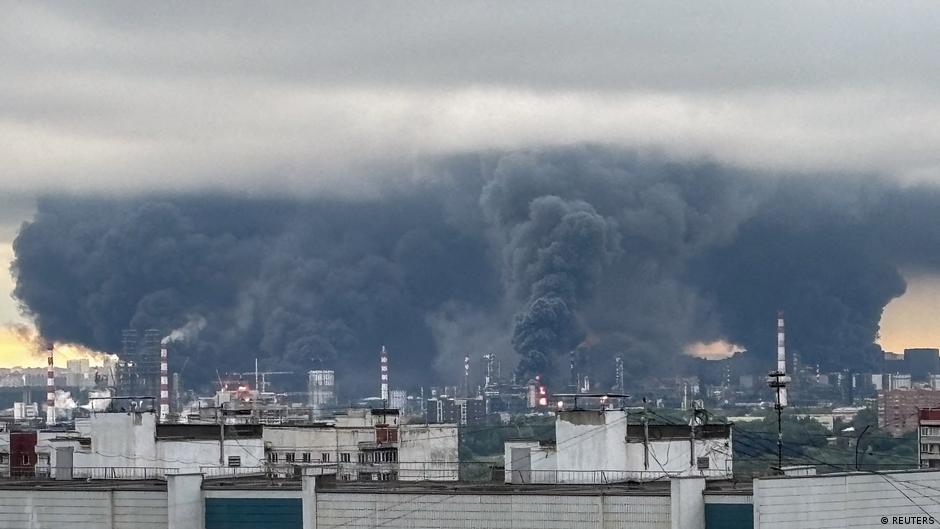
A large-scale drone attack on Moscow and the surrounding region on Sunday, September 20, left two people dead and at least six injured, according to Moscow Region Governor Andrei Vorobyov, while also exposing the vulnerability of major logistics, energy and transport infrastructure around the Russian capital.
Vorobyov wrote on Telegram that 249 Ukrainian unmanned aerial vehicles had been shot down over the Moscow region. Moscow Mayor Sergei Sobyanin separately reported that 186 drones had been intercepted on approach to the city. The figures, if taken together with the reported damage across several municipalities, point to an attack whose significance extends beyond the immediate security impact and into the operating environment for large infrastructure owners, transport operators, industrial facilities and public authorities.
The reported damage included fires at a warehouse complex, residential buildings and an object on the territory of the Moscow oil refinery. The incidents also led to the temporary suspension of operations at three Moscow-area airports: Vnukovo, Domodedovo and Zhukovsky. For businesses, the episode underlines a familiar but intensifying strategic problem: assets once treated as relatively secure because of their proximity to the capital are increasingly exposed to disruption risk.
Infrastructure Exposure Moves Closer to the Capital
Vorobyov said that a warehouse complex caught fire in Sofyino after the attack. The anonymous Telegram channel VChK-OGPU claimed that a logistics complex of about 850,000 square meters there was fully engulfed in flames. That claim has not been independently confirmed in the source material, but even the reported location of the fire is commercially significant. Large warehouse and distribution facilities are central to retail, e-commerce, manufacturing supply chains and regional freight flows.
Any major fire at such a site can create cascading effects for tenants, insurers, contractors and transport companies. In a mature logistics market, the loss or shutdown of capacity can push cargo to alternate hubs, lengthen delivery schedules and increase costs for businesses already operating in a more complex sanctions and wartime environment. The attack therefore raises questions not only about air defenses but also about corporate contingency planning, inventory location and the resilience of private-sector infrastructure near high-risk urban centers.
Vorobyov also said drones hit three apartment buildings and one private house, causing fires. In Istra, debris from a drone damaged an apartment in a residential building, according to municipal district head Tatyana Vitusheva. The anonymous channel VChK-OGPU further claimed that drones attacked a thermal power plant in Lyubertsy and that a UAV struck a residential building in Kotelniki. The Telegram channel Ostorozhno, Novosti, citing local residents, reported a fire in a residential complex in Kotelniki.
For companies operating around Moscow, the business question is no longer limited to direct damage. It is whether critical sites, staff, suppliers and transport routes can function through repeated disruption.
Energy Assets and Airport Operations
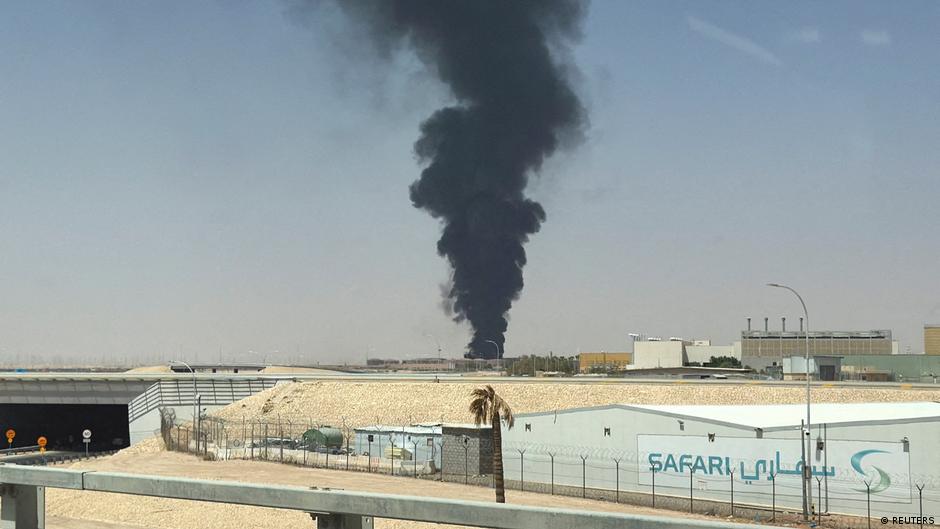
The energy sector also featured prominently in the reported incidents. Sobyanin said an object on the territory of the Moscow oil refinery had been damaged, adding that there were no casualties. VChK-OGPU reported that the oil refinery in Moscow’s Kapotnya district was burning. The source article notes that the refinery had already been attacked in June.
Repeated incidents involving a refinery carry business implications beyond the site itself. Refineries are strategic industrial assets connected to fuel supply, transport networks, emergency services and broader energy security. Even when officials report limited damage, the recurrence of attacks can alter how companies, contractors and state-linked operators assess maintenance, insurance, physical security, staffing and emergency response protocols. For competitors and counterparties, disruption at a major refinery can also sharpen attention to supply continuity and alternative sourcing.
The suspension of operations at Vnukovo, Domodedovo and Zhukovsky airports adds another layer to the risk picture. Airport closures, even temporary ones, can affect passenger flows, cargo schedules, crew planning and downstream logistics. For airlines, ground handlers, retailers and freight operators, the strategic issue is cumulative interruption: repeated shutdowns can increase costs and force operating models to incorporate more frequent delays near the country’s main political and economic center.
Management and Competitive Implications
From a corporate strategy perspective, the reported attack reinforces the premium on operational resilience. Companies with assets in the Moscow region may face pressure to review site concentration, backup power, staff evacuation procedures, emergency communications and supplier redundancy. Logistics companies in particular may need to weigh the cost of distributing capacity across several facilities against the efficiency benefits of large centralized hubs.
The same logic applies to industrial and energy operators. Management teams responsible for critical infrastructure must now assume that disruption planning is not an abstract compliance exercise but a recurring operating requirement. That shift can affect capital expenditure priorities, vendor selection and the balance between efficiency and redundancy. In practical terms, companies may spend more on security, fire suppression, monitoring, business continuity systems and alternate routing, even when such investments do not directly increase revenue.
The competitive landscape may also change. Operators with diversified sites, stronger emergency protocols and more flexible transport arrangements could gain an advantage over rivals with highly concentrated assets. Insurers and lenders may reassess risk assumptions for logistics parks, energy facilities and high-density commercial infrastructure in the region. Tenants could also demand clearer contractual protections around downtime, force majeure, replacement space and service-level commitments.
For government authorities, the management challenge is equally visible. The reported interception of hundreds of drones suggests a large defensive effort, but the deaths, injuries, fires and transport disruption show that interceptions alone do not eliminate economic consequences. Public communication by Vorobyov and Sobyanin focused on casualties, drone numbers, damaged property and the absence of victims at the refinery site. Businesses, however, will read the same information through a broader lens: how quickly disruptions are contained, how reliably critical services continue, and how predictable the operating environment remains.
The September 20 attack therefore stands as more than a security incident. It is a stress test for the Moscow region’s infrastructure model, for corporate crisis management and for the assumptions that guide investment in logistics, energy and transport assets near the Russian capital.