Gulagu.net Founder Halts Project Amid Escalating Risks and Shifting Political Landscape
Human rights group Gulagu.net suspends operations as founder Vladimir Osechkin cites global crisis and intensified threats from Russian authorities.
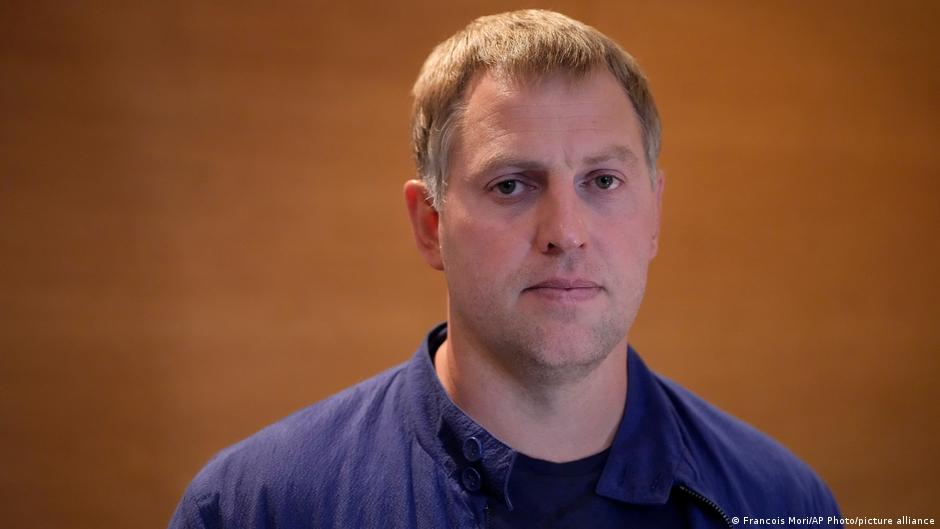
Vladimir Osechkin, the founder of the human rights organization Gulagu.net, recently announced the suspension of the project, attributing the difficult decision to a profound global crisis impacting human rights activism and escalating personal risks.
Strategic Challenges and Security Threats
Gulagu.net, established to assist prisoners in Russian penal colonies and detention centers, has faced mounting operational challenges amid deteriorating international legal norms and shrinking support for human rights defenders. Osechkin emphasized in an interview that the group and its allies who oppose torture, violence, and war are currently experiencing what he describes as a “global crisis.”
“We—and all those who stand against torture, violence, and war—are in a state of global crisis. Many of my colleagues remain silent, but this silence harms not only our mission but the world at large,” Osechkin stated.
He pointed out that international law is undergoing a crisis, with human rights relegated to a secondary concern while public attention fixates on billionaires and celebrities. Such dynamics undermine the visibility and effectiveness of advocacy efforts.
Osechkin also criticized the global human rights community’s preference for engaging with polished figures who deliver appealing rhetoric, contrasting this with the harsh realities faced by political prisoners and war detainees subjected to torture. He revealed that some prominent opposition figures, swapped for freedom, were deliberately placed in better conditions before exchanges to manipulate public perceptions, while many prisoners endured severe abuse.
Since its inception, Gulagu.net has not received any human rights awards or formal recognition, a fact Osechkin links to the political complexities surrounding the organization’s work and its direct confrontation with Russian security services.
Furthermore, Osechkin shared details about the intense personal threats he faces. Having spent time in custody from 2007 to 2010 during a criminal investigation, he described the physical toll endured, including significant health damage. Currently exiled in France since 2015, Osechkin is considered a prime target for Russian intelligence services. He disclosed that multiple Russian agents were detained in France preparing assassination attempts against him, with ongoing investigations by French anti-terrorism authorities.
His family and team members are under police protection. Analysts reportedly identify him as the top target in Europe following Alexei Navalny, due to his role in documenting war crimes and facilitating the escape of key witnesses from Russian military and penal institutions.
Geopolitical Shifts and Operational Constraints
Osechkin also highlighted the changing geopolitical environment, noting that a possible new Russian mobilization in autumn 2024 would exacerbate the crisis. New Russian laws empower authorities to rapidly revoke passports, block driver’s licenses, and confiscate assets, while Western countries have tightened border controls and limited visa issuance, restricting movement and complicating the work of activists and dissidents.
The founder’s relocation to France followed his refusal to provide the Russian Federal Security Service (FSB) with access to Gulagu.net’s data. He remains wanted in Russia, where he was sentenced in absentia in 2020 on charges of fraud involving significant damage, as well as in 2025 on charges related to disseminating false information about the Russian Armed Forces. Associates within Russia have received prison sentences linked to cooperation with Gulagu.net.
Osechkin’s statements underscore the intersection of human rights advocacy with complex geopolitical and security considerations. The suspension of Gulagu.net signals a recalibration in strategy amid heightened risks, deteriorating international support frameworks, and evolving authoritarian tactics.
As Osechkin concludes, the loss of a stable foundation underfoot reflects broader systemic challenges that human rights organizations face in hostile environments. The future trajectory of Gulagu.net and similar initiatives will depend on adapting to this constrained landscape while continuing to document abuses and support victims.