Germany’s Russia Closures Signal a Harder Strategic Line on State Influence
Berlin’s move to shut Russian facilities in Bonn and Berlin broadens its response from security to institutional containment, with wider implications for pressure tactics.
Germany’s decision to close Russia’s consulate general in Bonn and terminate the operating agreement for the Russian House in Berlin marks more than a diplomatic rebuke. Framed publicly as a response to Moscow’s alleged involvement in the attempted attack at Leipzig/Halle Airport, the measures also point to a broader strategic shift in how Berlin is treating Russian state-linked infrastructure on German soil: not simply as diplomatic or cultural outposts, but as assets that can expand the Kremlin’s operational reach.
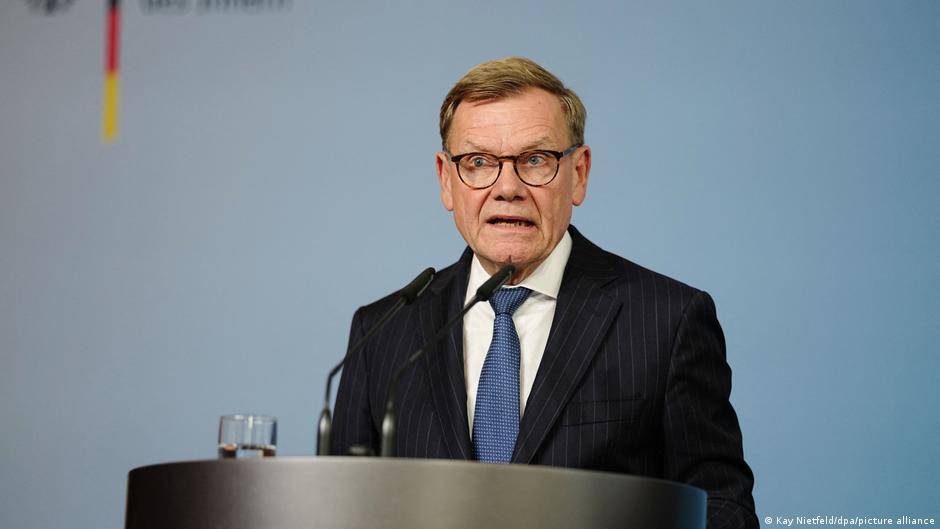
German Foreign Minister Johann Wadephul said the closures would materially limit Russia’s room for action in Germany. In comments to German broadcasters ARD and ZDF on Tuesday, September 1, he argued that Berlin could not afford to leave Moscow with the impression that such actions could take place without a response. He also said Germany could never rule out further escalation by Russia, but that the risk of no response being interpreted as an invitation to take further steps against Germany was significantly higher.
“We must not leave Russia under the illusion that it can do such things without a response from Germany,” Wadephul said.
For business and policy observers, the significance lies in the choice of targets. Rather than relying only on statements or symbolic sanctions, Berlin moved against two institutions that Wadephul portrayed as functionally important to Russia’s presence in Germany. He described the Bonn consulate as a “substantial restriction” on Russian capabilities in the country, saying it had been used comprehensively by various Russian agencies, not only the foreign ministry. He added that German authorities could not be sure actions harmful to Germany’s security were not being undertaken from there.
That language suggests a more expansive German interpretation of state-linked foreign facilities as multi-purpose nodes rather than narrow diplomatic channels. From a strategic management standpoint, Berlin appears to be raising the operating cost for Moscow by stripping away platforms that, in its view, supported broader state activity. The move fits a containment model: reduce the physical infrastructure, reduce the optionality.
From Diplomacy to Capability Denial
The Russian House in Berlin carries a different but complementary significance. Wadephul said the institution was no longer fulfilling its original purpose of promoting cultural ties between Russia and Germany. By terminating the agreement governing its activities, Berlin is signaling that it no longer accepts the distinction between formal cultural exchange and the wider political environment in which such institutions operate.
That matters because state-backed cultural centers, consular networks and commercial or logistical channels can all form part of a country’s long-term influence architecture. In corporate terms, Germany is not just responding to a single incident; it is pruning infrastructure that it believes no longer serves its stated purpose and may instead create security exposure. It is a management decision centered on risk reduction, asset denial and message discipline.
The steps were announced after Wadephul and German Interior Minister Alexander Dobrindt formally declared on September 1 that Russian authorities were involved in the attempted attack at Leipzig/Halle Airport on August 4. In response, the German government decided to close the Russian consulate general in Bonn and revoke the agreement on the Russian House in Berlin. Germany also said it would tighten controls on the entry of Russian citizens and intensify measures against Russia’s so-called shadow fleet.
On that last issue, Wadephul said nothing concrete had yet been decided, but that Berlin intended to increase pressure and take further measures. He said Germany was holding talks with many countries where the shadow fleet is based and to which it delivers oil in circumvention of sanctions. That statement is notable because it extends the policy discussion beyond bilateral retaliation and into supply-chain enforcement. The shadow fleet issue is fundamentally commercial as well as geopolitical, involving shipping, insurance, sanctions evasion and the routing of Russian oil sales.
For European businesses, especially in energy, logistics and compliance, the signal is that Germany is preparing to push harder on the connective tissue that allows sanctioned trade to continue. Even without concrete new measures yet announced, the direction of travel is clear: closer scrutiny of transnational networks that support Russian economic resilience.
Wadephul also said he regretted that Russia had chosen what he called such a hostile course toward Europe and Germany. At the same time, he said Berlin wanted constructive relations with Moscow and remained open to dialogue. He expressed hope that Russia could be contained and brought back onto a reasonable path if it knew a clear response would follow, including from countries such as Germany.
That mix of deterrence and declared openness to dialogue reflects a dual-track strategy familiar to corporate crisis management: impose consequences, preserve a channel. Berlin’s position is that maintaining the possibility of communication does not preclude the removal of structures it now sees as liabilities. The implication is that Germany is trying to separate dialogue from permissiveness.
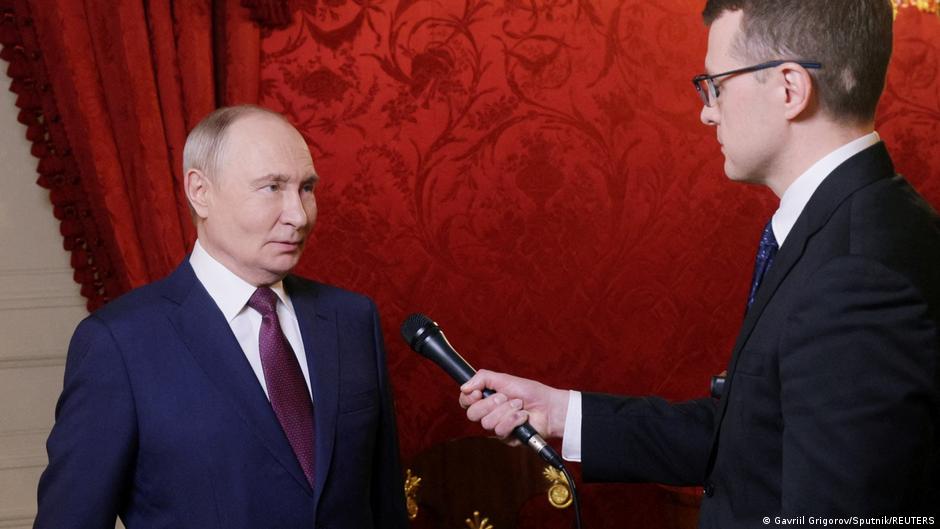
Russia responded sharply. President Vladimir Putin said on the evening of September 1 that Germany’s new sanctions were a “gross mistake” and said there was no proof of Russian involvement in the Leipzig airport incident. Russia’s embassy in Berlin said on X that the accusations against Moscow were unfounded, absurd and contrary to common sense.
The political reaction across Europe indicates that Berlin’s move may strengthen a broader coalition approach. The EU and NATO, as well as the governments of several European countries, expressed support for Germany. Some German opposition politicians, however, criticized the government’s countermeasures. Some considered the actions insufficient, while others saw them as a dangerous escalation.
That split underscores the policy tension Berlin now faces. If the goal is to deter further hostile action, the government must convince both allies and domestic audiences that its measures are credible and proportionate. If the goal is also to preserve strategic stability, it must avoid steps that close off all channels or trigger uncontrolled escalation.
From a competitive landscape perspective, Germany’s latest move adds to the pressure on Russia’s ability to operate across Europe through official and quasi-official platforms. It also signals to partners that Berlin is willing to act not only through sanctions rhetoric but through the dismantling of physical and institutional footholds it believes can be leveraged against German interests. For companies exposed to sanctions enforcement, cross-border transport, or political risk in Europe, the message is straightforward: Germany is broadening the definition of what counts as actionable Russian presence, and that will likely reshape the operating environment further.