German Public Divided as Alternative for Germany Surpasses CDU/CSU in Popularity
Insa poll reveals 45% of Germans oppose banning AfD despite its political ascendancy over CDU/CSU bloc
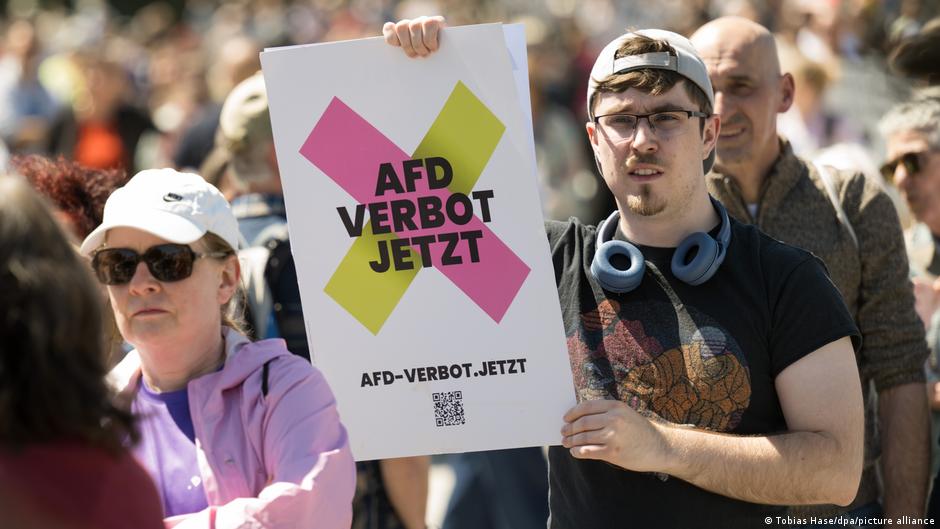
A recent survey by the Insa Institute highlights a significant division in German public opinion regarding the far-right party Alternative for Germany (AfD). The poll shows that while 40% of Germans support banning the AfD, a larger share—45%—oppose such a measure, with the remaining 15% undecided. This sentiment emerges amid the AfD's current status as the most popular party in Germany, outpacing the traditional conservative bloc CDU/CSU by eight percentage points.
AfD's Rising Influence and Public Opinion on Political Isolation
The survey, commissioned by Bild am Sonntag and released on July 5, reveals that 42% of respondents back the so-called "Brandmauer" strategy. This approach advocates for a strict political firewall that isolates the AfD, precluding any cooperation at all governmental levels. However, 39% of those surveyed disagree with this policy of exclusion, and 19% remain uncertain or declined to express a view.
"We are the new people's party in Germany," declared Alice Weidel, co-chair of the AfD, asserting the party's ambition for political leadership during the recent party congress in Erfurt.
Since February 2021, the Federal Office for the Protection of the Constitution (BfV) has monitored the AfD under suspicion of right-wing extremism. Despite this, the party's popularity has remained resilient and steady at 29%, according to the weekly Sonntagstrend poll by Insa. Meanwhile, support for the CDU/CSU slipped slightly from 22% to 21% in the same period.
The Social Democratic Party (SPD) and the Greens each hold 13% support, with the Greens recently overtaking the SPD in some polls. The Left party trails slightly behind with 10% backing. Concurrently, public approval for the federal government stands at a low of 13%, according to the ARD Deutschlandtrend survey published on July 2. Chancellor Friedrich Merz's approval rating dropped to 13%, marking a new low for his tenure.
Against this backdrop of shifting political allegiances and declining government approval, the AfD's leadership is capitalizing on momentum. Co-leader Alice Weidel's personal support hovers around 25%, underscoring the party's growing foothold in German politics and its challenge to established parties.
Implications for Germany’s Political Landscape and Corporate Strategy
The AfD's steady rise and the public's ambivalence toward banning the party represent critical considerations for corporate and political strategists alike. Firms engaged in Germany face a complex environment where political risk is elevated due to the polarized electorate and uncertain coalition dynamics.
For businesses, the prospect of AfD's increased influence could translate to shifts in regulatory approaches, public sentiment, and market confidence. Political isolation strategies, such as Brandmauer, while intended to marginalize extremist influence, may also contribute to further societal division, complicating consensus-building efforts essential for legislative stability.
Investors and corporate leaders should monitor these developments closely, as the AfD's challenge to the CDU/CSU bloc disrupts traditional power balances and may impact future policy directions on economic governance, immigration, and social integration—all factors influencing Germany's business climate.