German BSW Lawmaker Plans Belarus and Russia Trips to Reopen Municipal Links
Sven Hornauf is assembling a cross-party and civil society delegation as German cities reassess suspended twin-city ties with Belarus and Russia.
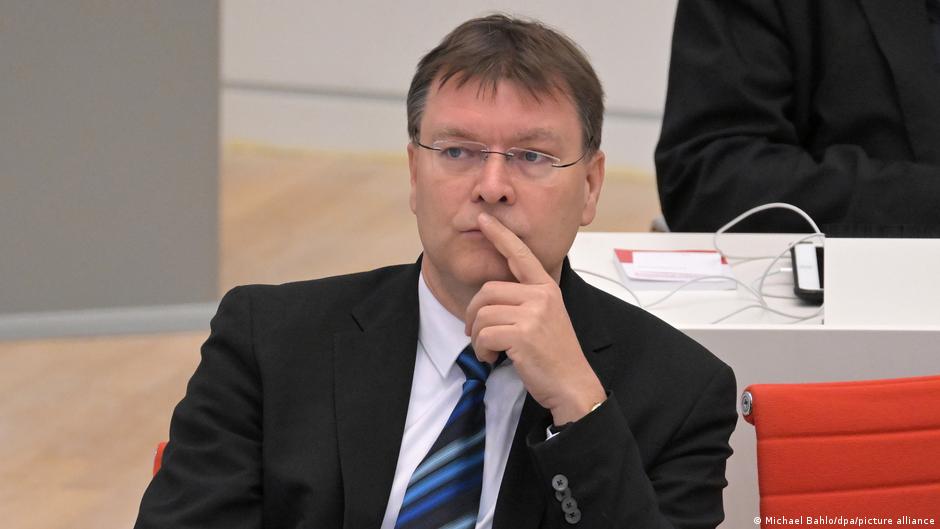
Sven Hornauf, a lawmaker from Germany’s left-populist BSW party in the Brandenburg state parliament, is preparing a delegation of German politicians and civil society representatives for visits to Belarus and Russia, positioning the initiative as an effort to restore contacts between twin cities.
The plan, first outlined by Hornauf in an interview with the regional newspaper Märkische Oderzeitung on Saturday, October 3, points to a continuing tension in German local diplomacy: formal political relations with Moscow and Minsk remain deeply constrained, yet many municipal partnerships have not been fully dismantled. Larger German outlets, including dpa, Tagesspiegel and Die Welt, reported on the plans the following day.
Hornauf, a politician from the Alliance for Social Justice and Reasonable Economic Policy, known as BSW and formerly associated with Sahra Wagenknecht’s alliance, said he intends to travel by bus to Vitebsk in November with like-minded delegates from various German parties. He has also said he plans a visit to Russia in April 2027.
Hornauf said the goal is to “send a signal in favor of mutual understanding between peoples.”
For business and institutional observers, the initiative is less about immediate commercial engagement than about the infrastructure of relationship management. Twin-city arrangements often sit below the level of national foreign policy, but they can preserve networks among local administrations, cultural groups and civic organizations. In periods of geopolitical rupture, those networks can become either dormant assets or reputational liabilities, depending on how they are handled.
Municipal Diplomacy as a Strategic Channel
Hornauf has framed the planned trips around the need to restore regular contacts directly at the level of people, arguing that the broader political climate, regardless of side, should not prevent such exchanges. His proposal focuses on partnerships between German cities and counterparts in Belarus and the Russian Federation, many of which were suspended after Russia’s full-scale invasion of Ukraine.
The delegation being organized for Belarus is expected, according to Hornauf, to include 30 to 40 people. Most of them are not members of any political party. At the same time, he named several BSW members among the expected participants, as well as representatives of the Greens and the far-right Alternative for Germany, or AfD. Hornauf said the final composition of the delegation would be determined during preparatory meetings.
From November 6 to 11, the delegation from Hornauf’s home city of Frankfurt an der Oder is due to visit Vitebsk. Other participants in the same broader initiative plan to travel to Minsk and several additional Belarusian twin cities. In each case, the stated purpose is the restoration of twin-city ties.
The management decision facing municipalities is delicate. Fully severing partnerships can deliver a clear political signal, but it also closes channels that may have taken decades to build. Maintaining informal or suspended relationships can preserve optionality, but exposes city officials to criticism that they are normalizing relations with governments aligned against Ukraine or under Western scrutiny.
Political Risk and Competitive Positioning
The broader data cited in the Russian-language source underscores why Hornauf’s initiative may resonate beyond one state parliament. According to a 2026 survey by the media group Redaktionsnetzwerk Deutschland of about 100 German cities and municipalities, only one had fully terminated its partnership with a Russian twin city. Many partnerships had been suspended, but not legally or institutionally ended.
RND also reported that roughly 40 percent of surveyed municipalities had continued unofficial contacts with Russia after 2022, including invitations for representatives of Russian cities to Germany. In 42 percent of responding German municipalities, officials supported renewing partnerships with Russia in the event of a peaceful settlement in Ukraine.
Those figures suggest that German municipalities are keeping strategic options open. In corporate terms, many appear to be avoiding a full exit from relationship assets while freezing active cooperation. The approach resembles a holding pattern: politically compliant in the near term, but designed to allow reactivation if macro conditions change.
For BSW, Hornauf’s plan fits a broader positioning strategy. The party has sought space in German politics by challenging mainstream policy on Russia, defense spending and economic strategy. A municipal outreach initiative allows it to turn that position into a concrete political project, one that can appeal to voters who see local and civic engagement as distinct from national security policy.
At the same time, Hornauf’s inclusion of participants from different political camps, including Greens and AfD representatives, complicates the optics. Cross-party participation could help portray the trips as a civic initiative rather than a narrow party exercise. But the presence of AfD figures may also intensify criticism, particularly because Hornauf has previously faced scrutiny for supporting several AfD initiatives.
Management Choices Under Scrutiny
Hornauf drew media attention in spring 2026 as one of the initiators of a visit by BSW members and supporters to the Russian embassy in Berlin. That earlier episode already placed him within a controversial current of German politics that argues for renewed channels with Russia despite the unresolved war in Ukraine and the security concerns it has produced across Europe.
He has also criticized Germany’s steps to strengthen defense capabilities in response to Russia’s aggressive policy. In particular, he opposed the deployment of the U.S.-Israeli Arrow 3 missile defense system at the Bundeswehr base in Holzdorf. The missile defense system entered operational service in Germany at the end of 2025.
For German municipalities, the business analogy is governance under reputational risk. City leaders must decide whether legacy partnerships with Belarusian and Russian cities remain dormant civic assets, potential instruments of soft power, or liabilities that conflict with national and European policy. Hornauf’s planned trips bring that unresolved question back into public view.
The immediate practical impact may be limited: a bus trip to Vitebsk and a planned 2027 visit to Russia do not amount to a formal reset in German foreign policy. But they do reveal how local actors, parties and civic networks are testing the boundaries of engagement. In a fragmented political landscape, municipal ties can become a competitive arena for parties seeking to shape the debate before national policy changes.
Hornauf’s initiative therefore functions on two levels. It is a proposal to revive city-to-city relationships with Belarus and Russia, and it is also a management test for German local government: how to preserve channels for future engagement without appearing to dilute the political consequences of Russia’s war in Ukraine.