Flávio Bolsonaro Leads Brazil Vote as Runoff Puts Markets on Alert
The first-round result sets up a high-stakes October 25 contest between Lula da Silva and the Bolsonaro family’s new standard-bearer.
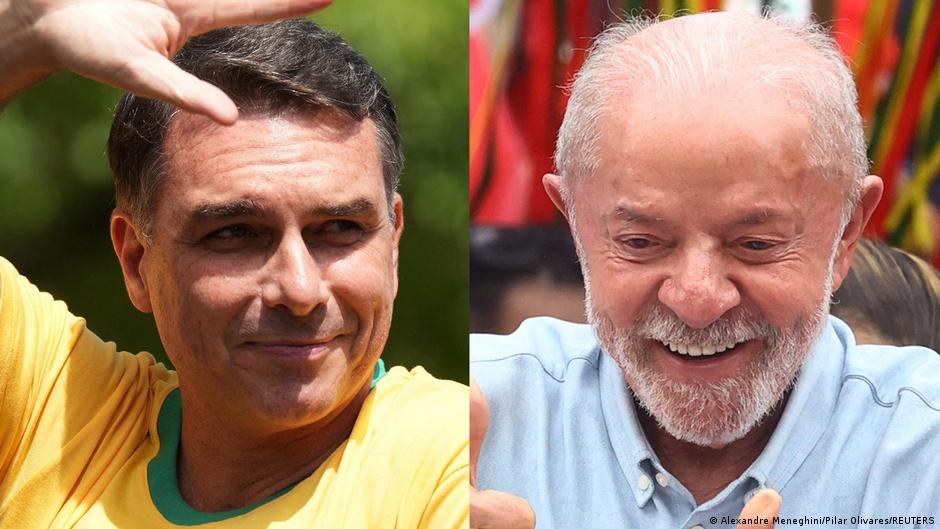
Brazil’s presidential election is heading to a second round after Senator Flávio Bolsonaro, the eldest son of former President Jair Bolsonaro, narrowly led the first round with 47.03% of the vote, according to data from Brazil’s electoral authority after 99.99% of ballots had been counted. Incumbent President Luiz Inácio Lula da Silva followed with 45.16%, while turnout reached 78.92%.
The result immediately reframes the campaign as more than a conventional left-right contest. For investors, corporate leaders and international partners, the October 25 runoff will test whether Brazil’s political and economic direction remains anchored in Lula’s current administration or shifts toward a new Bolsonaro-led management of the state, with implications for regulation, public security, state-linked finance and the country’s relationship with global capital.
No candidate crossed the 50% threshold required to win outright, making a runoff inevitable. That outcome has become familiar in Brazilian presidential politics: since the early 2000s, every presidential race has required a second vote. Yet this contest carries an unusual dynastic and institutional dimension, because Lula’s opponent is not Jair Bolsonaro himself, but his son Flávio, a 45-year-old senator from Rio de Janeiro who has inherited both the political brand and the controversies attached to the former president’s movement.
A Business Vote With Political Family Risk
For Brazil’s business community, the runoff offers competing readings of continuity and disruption. Lula enters the second round as the sitting president and a known quantity for domestic industry, foreign investors and public-sector stakeholders. Flávio Bolsonaro, by contrast, is campaigning as a law-and-order candidate who has emphasized promises to fight crime, an issue with direct economic relevance in a country where security costs, logistics risks and urban violence affect corporate operations.
But the younger Bolsonaro also brings reputational questions that could weigh on boardroom assessments of political risk. In 2019, cases were opened against him over allegations involving payments to fictitious employees listed among his subordinates and suspicious transfers to his bank account. Those earlier suspicions are part of the broader risk profile now attached to his presidential campaign, particularly for companies watching Brazil’s governance standards and anti-corruption environment.
With 47.03% of the first-round vote, Flávio Bolsonaro enters the runoff as the race’s frontrunner, but not as a candidate free of institutional baggage.
The electoral arithmetic is narrow enough to make coalition-building and managerial credibility central to the next phase. A lead of less than two percentage points over Lula gives Flávio Bolsonaro momentum, but it does not provide a governing mandate. The campaign’s final weeks are likely to focus on whether he can broaden support beyond the Bolsonaro base while reassuring economic actors that a change in leadership would not deepen instability.
The Bolsonaro Brand Returns Under New Conditions
The runoff also revives the unresolved legacy of the 2022 election, when Lula defeated Jair Bolsonaro in a second round. The elder Bolsonaro refused to recognize the result, and his supporters took to the streets in protest. He was later sentenced to a long prison term for attempting a coup. That history matters for corporate strategy because political legitimacy, social order and institutional predictability are core inputs in investment decisions.
Flávio Bolsonaro’s candidacy therefore carries a strategic ambiguity. On one hand, he benefits from a nationally recognized political brand with an energized voter base. On the other, that brand is tied to a period of confrontation with Brazil’s institutions. For companies operating in heavily regulated sectors, from banking and infrastructure to media and energy, the question is not only who wins, but how the winner manages institutions after the vote.
The Bolsonaro family’s legal exposure has widened beyond the former president. In June 2026, Brazil’s Supreme Court sentenced Eduardo Bolsonaro, another son of Jair Bolsonaro and also a political figure, to four years and two months in prison. The case stemmed from Eduardo’s calls for the United States to impose sanctions on Brazil over the sentence handed to his father. Eduardo lives in the United States, and the case against him was heard in absentia.
That episode adds an international dimension to the runoff. Brazil’s next president will inherit not only a polarized domestic environment but also questions about how political disputes are projected abroad. For multinational companies, the prospect of sanctions rhetoric, judicial conflict and cross-border political lobbying can complicate compliance planning and stakeholder management.
Financial-Sector Scrutiny Adds to the Stakes
The campaign is also unfolding against the backdrop of an investigation involving Banco Master and its largest shareholder, Daniel Vorcaro. Brazilian authorities are continuing to investigate allegations that the bank and Vorcaro fraudulently attracted investments worth tens of millions of dollars from public and private funds through promises of high returns that could not be fulfilled. In effect, the allegations concern the possible creation of a financial pyramid scheme.
Vorcaro is also known as one of the producers of “Dark Horse,” a complimentary biographical film about Jair Bolsonaro. The film’s storyline develops the former president’s claims about “stolen elections.” Media outlets previously published correspondence between Vorcaro and Flávio Bolsonaro that may indicate the politician knew about the existence of the alleged fraudulent scheme and may have helped facilitate it, including through cover in the form of supposedly expensive film production.
For business readers, that detail is significant not simply because it introduces another controversy into the campaign, but because it links politics, financial markets and media production in a way that raises governance questions. If the runoff becomes a referendum on institutional trust, the Banco Master investigation could sharpen investor attention on transparency, regulatory enforcement and the relationship between political influence and capital formation.
The second round on October 25 will therefore be watched well beyond party headquarters. A Lula victory would represent continuity under a president who has already been managing the state through the current cycle. A Flávio Bolsonaro victory would mark the return of the Bolsonaro movement to the presidency through a new family figure, with a platform that includes a crime-fighting message but also a set of unresolved legal and reputational issues.
In strategic terms, Brazil’s largest companies and foreign investors now face a three-week period of scenario planning. The headline result is clear: Flávio Bolsonaro leads the first round, and Lula remains close behind. The deeper business question is whether Brazil’s next administration can provide enough predictability for capital, institutions and corporate decision-making in a political environment still shaped by the last Bolsonaro-Lula confrontation.