Schröder’s Globus Russia Role Draws German Backlash Over Strategy and Risk
The former chancellor’s move into Hyperglobus has intensified scrutiny of German owners’ Russia exposure and the corporate logic of political access.
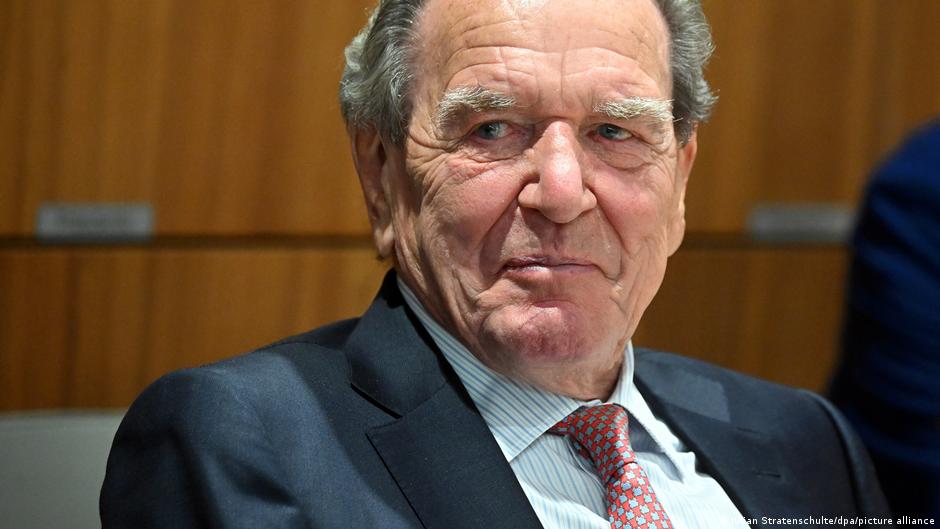
Former German Chancellor Gerhard Schröder has joined the supervisory board of Hyperglobus, the company that operates the Russian business formerly tied to German hypermarket chain Globus, triggering sharp criticism from politicians and economists in Germany and renewing debate over how German-linked companies manage exposure in Russia.
The appointment places Schröder, long viewed by many observers in Germany as a lobbyist for Russian business interests, in a senior oversight role at a retailer whose ownership and strategic future have become politically sensitive. Hyperglobus confirmed to DW on October 2 that Schröder would become a member of its supervisory board and would oversee the retailer’s “strategic development.”
For business observers, the move is more than another controversy involving a former head of government. It highlights a broader corporate dilemma: German owners with assets in Russia must navigate political risk, reputational pressure in Germany and the possibility of state intervention in Russia. In that context, Schröder’s value is being interpreted by critics less as retail expertise than as access.
Political Access as Corporate Insurance
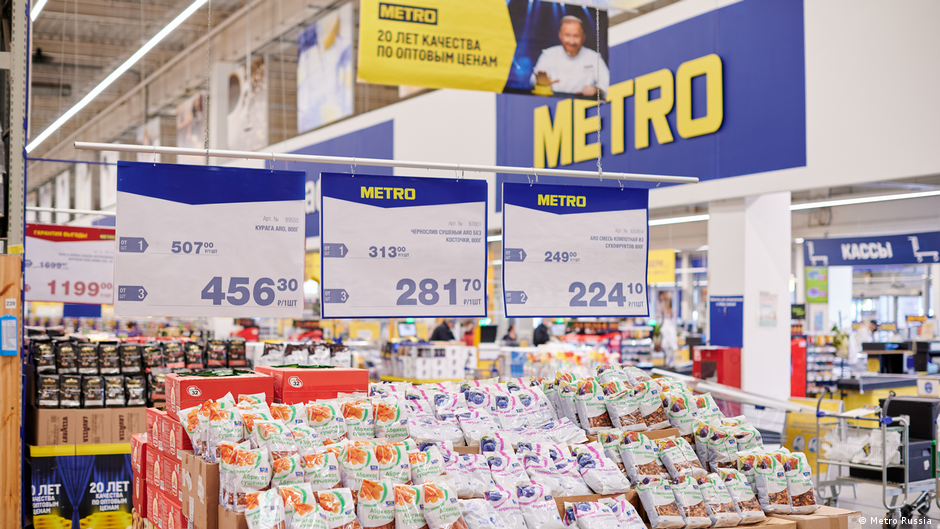
Janis Kluge, a German economist and head of a research division at the Berlin-based German Institute for International and Security Affairs, argued that bringing Schröder into Hyperglobus management amounts to the company “buying itself lifetime insurance” against suffering the fate of German retail group Metro, whose Russian assets were transferred into temporary management by decree of Vladimir Putin.
Kluge wrote on X that “Schröder is once again monetizing his access to Putin.” His assessment points to the strategic interpretation now surrounding the appointment: that Hyperglobus may be seeking protection in Russia’s unpredictable operating environment by adding a figure identified with close ties to the Kremlin.
Since January 1, 2025, the Russian business of the Globus network has been “legally and organizationally independent,” Globus Gruppe spokesperson Isabel del Alcazar von Buchwald told DW. At the same time, she said the shareholders of Russia’s Hyperglobus are the same German businesspeople as those behind the rest of the group.
That structure places the company in a delicate position. Formal independence may create legal and organizational separation, but common ownership keeps the business tied to German corporate decision-makers. Schröder’s new supervisory board seat therefore lands at the intersection of ownership continuity, sanctions-era scrutiny and the Russian state’s demonstrated willingness to intervene in foreign-linked assets.
German Critics Frame the Move as a Lobbying Mandate
Roderich Kiesewetter, a Bundestag member and foreign policy expert for the governing Christian Democratic Union, described Schröder’s new post as a “betrayal of Europe and his own country.” Writing on X on Saturday evening, October 3, he also suggested that any public and demonstrative handshake with Schröder now sends a political signal.
“Anyone who publicly and demonstratively shakes Schröder’s hand wants to demonstrate their position,” Kiesewetter wrote on X.
Thomas Jäger, a political science professor at the University of Cologne, was similarly critical. “Schröder has a new lobbying assignment. In Russia. Where else?” he wrote on X. He also asked whether German President Frank-Walter Steinmeier had known about the appointment when he recently greeted Schröder.
The handshake referenced by Kiesewetter and Jäger appeared to point to the September 28 ceremony in Karlsruhe marking the 75th anniversary of Germany’s Federal Constitutional Court. Steinmeier attended the event and, upon entering the hall, shook hands with several attendees, including Schröder, who was seated in the front row as an honorary guest.
The episode has become part of the wider reaction because it underscores how Schröder’s public standing remains contested in Germany. A business role in Russia does not remain confined to corporate governance; it spills directly into Germany’s domestic political optics, especially when a former chancellor is involved.
Reputational Risk for Owners and Management
Jan Schnellenbach, a German economist and professor of microeconomics at Brandenburg University of Technology in Cottbus, accused the former chancellor of “shamelessness.” Referring to earlier claims about Schröder’s health, he wrote on X: “Weren’t we told that he was too ill to appear before a German court? Do Russian money have healing powers?”
The criticism reflects how Schröder’s business activity in Russia is viewed against his record after leaving office. He previously held leadership roles at Rosneft and at the operator of Nord Stream, positions that contributed to the perception among many German observers that he has acted as an advocate for Russian corporate interests.
For Hyperglobus, the appointment may offer a calculated management advantage in Russia, but it also raises the cost of reputational exposure in Germany. The company’s shareholders remain German businesspeople, according to Globus Gruppe’s own comments, even as the Russian entity is described as legally and organizationally independent. That combination makes it harder to separate business continuity in Russia from questions of governance responsibility and political alignment.
The retail sector has already become a test case for how foreign-linked companies operate in Russia under pressure. The reference to Metro is significant because it signals the perceived risk that Russian authorities may place assets under temporary management. Against that backdrop, critics see Schröder’s supervisory role as a defensive instrument for owners seeking to reduce the odds of similar intervention.
The company has framed Schröder’s mandate as strategic development, but the debate in Germany is focused on what “strategy” means in this case. In normal retail governance, it could refer to expansion, store formats, supply chains, pricing or capital allocation. In the Russian market now, however, strategy also means political survival, state relations and asset protection.
That is why the appointment has attracted attention beyond the retail industry. It raises questions about whether prominent political figures can serve as informal shields for companies operating in high-risk jurisdictions, and whether such arrangements undermine the public responsibilities attached to former senior officeholders.
For Globus-linked owners, the decision may have been intended to strengthen the Russian business at a moment of uncertainty. For critics in Germany, it instead confirms a pattern: Schröder converting political relationships into corporate influence in Russia, while German-linked businesses attempt to preserve value in a market where law, ownership and state power have become deeply entangled.