Foreign Retailers in Russia Face Temporary Control and Strategic Uncertainty
Assets linked to Auchan, Leroy Merlin, Metro and others have come under temporary management as owners lose access to Russian operations.
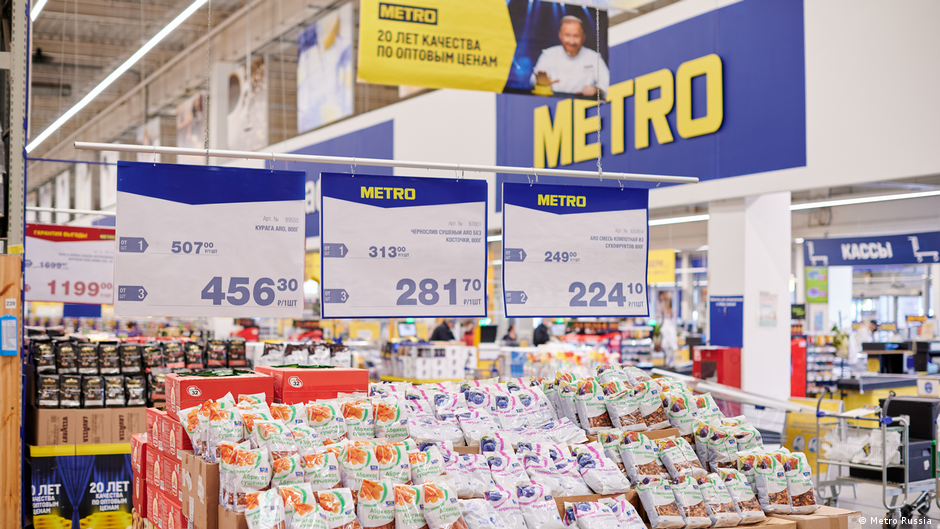
The position of foreign retailers still connected to Russia has become increasingly uncertain as corporate control, asset access and political risk converge. A series of foreign retail chains have lost the ability to manage their Russian assets directly, with temporary management introduced over assets associated with France’s Auchan and Leroy Merlin, Germany’s Metro and other companies.
The central business question is whether temporary management could become a precursor to broader nationalization of foreign-owned retail assets in Russia. The affected companies represent more than storefronts: they are operating platforms, supply relationships, real estate footprints, employer networks and consumer brands that were built over many years. Once owners lose access to those assets, the distinction between a temporary governance arrangement and a more permanent transfer of control becomes strategically significant.
For global retailers, Russia now presents a management problem that reaches beyond local market performance. The issue is no longer simply whether demand exists or whether stores can operate profitably. It is whether foreign shareholders can exercise basic ownership rights, appoint management, direct cash flows, protect brand value and make decisions about exit, retention or restructuring.
Temporary Management Becomes a Corporate Strategy Risk
The introduction of temporary management changes the operating logic for foreign retailers. In normal circumstances, a parent company can determine pricing strategy, capital investment, supplier relationships, staffing decisions and long-term positioning. Under temporary management, that authority is disrupted. Owners may remain legally connected to the asset, but practical control can move elsewhere.
For companies such as Auchan, Leroy Merlin and Metro, the issue is especially sensitive because retail assets are difficult to preserve passively. Stores require constant operational decisions: inventory must be sourced, leases managed, employees paid, logistics maintained and customer trust protected. If foreign owners cannot access or direct these assets, the underlying business can change in ways that may be hard to reverse.
This is why temporary management can carry consequences similar to an enforced strategic separation. Even without a formal sale or nationalization, the parent company’s ability to influence performance, reputation and future value may be sharply reduced. The longer such arrangements remain in place, the more difficult it becomes for foreign owners to reassert control or recover the asset’s earlier strategic role.
Foreign retail groups are facing a control problem as much as a market problem: ownership matters less if management access is removed.
Globus and the Search for Protection
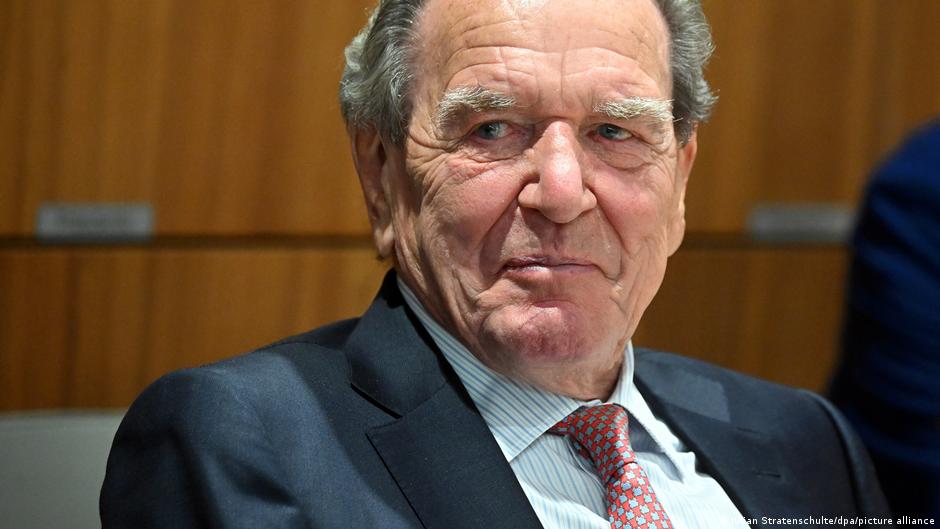
The case of Globus adds another dimension to the competitive and political landscape. Former German Chancellor Gerhard Schröder has joined the supervisory board of the former Russian subsidiary of the German holding company Globus. His presence points to the way some businesses may seek prominent figures as a form of institutional or reputational protection in a market where conventional governance channels have become less predictable.
From a business analysis perspective, such a move can be read as an attempt to stabilize oversight, signal continuity or create a layer of political familiarity around an asset exposed to pressure. It does not by itself resolve the broader question of foreign shareholder rights in Russia, but it illustrates how companies and their former local structures may adapt when legal ownership, operating control and political influence become intertwined.
For competitors, these developments may reshape the retail field. If foreign chains are placed under temporary management or lose direct access to assets, domestic operators and locally controlled entities may gain room to consolidate market share, absorb supplier relationships or reposition stores. Western brands that remain visible to consumers could continue operating in some form, even as the original foreign owners lose influence over their Russian business.
That creates a complex reputational dilemma. A foreign retailer may be associated with ongoing operations in Russia even if it no longer controls the asset. Conversely, a company that exits or loses control may still face questions from investors, regulators or consumers about how its former Russian footprint is being used.
M&A Options Narrow as Control Questions Grow
In ordinary distressed-market conditions, foreign companies might explore asset sales, management buyouts, local partnerships or staged exits. But the introduction of temporary management can weaken those options. Buyers may discount assets whose control status is unclear. Sellers may lack the authority or access needed to negotiate effectively. Management teams may be separated from parent-company decision making.
This uncertainty also affects valuation. Retail assets depend heavily on continuity: supplier terms, store traffic, logistics, brand trust and workforce stability. When governance is unsettled, potential acquirers face higher risk, and owners may be unable to capture full value even if a transaction becomes possible.
For multinational boards, the Russian retail situation underscores a broader lesson in country risk management. Market entry decisions made during periods of expansion can leave companies exposed when political conditions shift. The assets of large retailers are visible, labor-intensive and embedded in daily consumer life, making them more difficult to abandon cleanly than financial investments or smaller representative offices.
The immediate facts are stark: several foreign retail chains have been deprived of the ability to manage their Russian assets, temporary management has been introduced over assets tied to Auchan, Leroy Merlin, Metro and others, and the former Russian unit of Globus has brought Gerhard Schröder onto its supervisory board. The unresolved question is whether these measures remain temporary mechanisms or become part of a more durable restructuring of foreign retail ownership in Russia.
For the companies involved, the challenge is not only legal defense. It is strategic containment: limiting value erosion, protecting global reputation, understanding who controls operations and deciding whether any credible path remains for exit, recovery or continued association with the Russian market.