Dodik Allies Consolidate Power in Bosnia Vote as Governing Parties Prevail
Preliminary results show establishment candidates retaining key posts in Bosnia and Herzegovina, reinforcing Milorad Dodik’s political network.
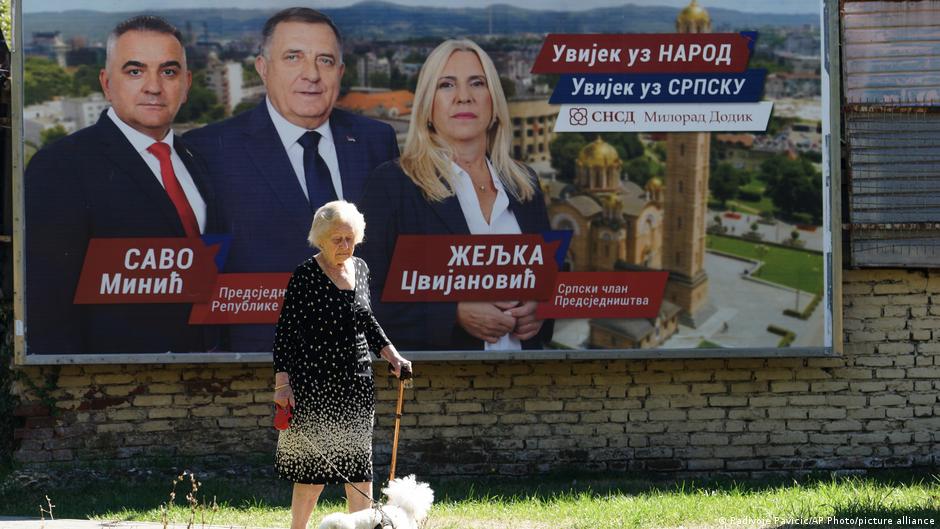
Governing parties and candidates aligned with Milorad Dodik emerged as the clear winners in Bosnia and Herzegovina’s latest elections, according to preliminary results published by the Central Election Commission on Sunday evening, October 4. The vote covered members of the state presidency, the central parliament, two regional parliaments and the presidency of Republika Srpska, the Serb-majority entity within Bosnia and Herzegovina.
For business observers, the result is less a dramatic political shift than a confirmation of the country’s existing power structure. The outcome suggests continuity in a complex institutional system where political control is divided among ethnic constituencies and where governing parties retain substantial influence over regional and national decision-making. That continuity may reduce short-term uncertainty, but it also leaves unresolved the longstanding questions around administrative efficiency, regulatory coordination and the durability of Bosnia and Herzegovina’s fragmented governance model.
The most closely watched contest was the presidency of Republika Srpska. Savo Minic, the entity’s prime minister and the candidate backed by Dodik, prevailed over opposition candidate Branko Blanusa. Preliminary data showed Minic ahead in most electoral districts across Republika Srpska. Blanusa won some districts, but the Central Election Commission’s figures indicated those gains were not enough to alter the overall result.
Dodik’s Network Retains Strategic Influence
Minic’s victory is strategically significant because it preserves the influence of Dodik’s political camp at the top of Republika Srpska’s executive structure. Minic ran, as did Zeljka Cvijanovic, on behalf of the Alliance of Independent Social Democrats, or SNSD, the party founded by Dodik. Cvijanovic, who had already served in Bosnia and Herzegovina’s presidency, was also on course to retain a major institutional role after Serb voters backed her with about 55% of the vote.
Dodik himself has been formally barred from political activity for six years under a court ruling. In 2025, he was forcibly removed from office for failing to comply with decisions of Bosnia and Herzegovina’s Constitutional Court and international agreements. He refused to recognize the court decision and sought support in Moscow. Dodik and Minic met Russian President Vladimir Putin at the Kremlin on September 29.
Dodik has already congratulated both Savo Minic and Zeljka Cvijanovic on their victories, despite the court-imposed ban on his own political activity.
The election therefore demonstrates a familiar feature of political management in the region: formal legal constraints on an individual leader do not necessarily dismantle the broader party organization, patronage structure or executive network associated with that leader. From a corporate strategy perspective, that matters because investors, contractors and foreign counterparties often read Bosnia and Herzegovina’s political environment through the practical influence of party systems rather than through office titles alone.
SNSD’s performance extended beyond the presidential race in Republika Srpska. According to the Central Election Commission, the party was also winning the election to the entity’s parliament, the National Assembly. Most Bosnian Serbs also voted for SNSD in elections to the lower chamber of the national parliament, the House of Representatives of the Parliamentary Assembly.
Presidency Results Point to Continuity
At the state level, the preliminary results likewise pointed to continuity among established political figures. After 95% of ballots had been counted, Denis Becirovic remained the leading candidate to represent Bosnian Muslims in the country’s presidency. Becirovic had previously served as chairman of the presidency and received around 38% of the vote.
Croats are expected, according to preliminary results, to be represented by Darijan Filipovic, who received about 48% of the vote. Serb voters preferred Cvijanovic, who secured about 55%. Together, these results indicate that the country’s collective presidency will continue to reflect the balance of power among entrenched political forces.
Bosnia and Herzegovina has a highly unusual presidency system in which the duties of head of state are shared by three representatives: one Croat, one Bosnian Muslim and one Serb. The arrangement was created under the Dayton Accords of 1995, which were designed to settle conflicts among Bosnian Muslims, Orthodox Serbs and Catholic Croats and to end the civil war. Many analysts consider the resulting structure inefficient.
For companies operating in Bosnia and Herzegovina, that inefficiency is not an abstract constitutional issue. It shapes the practical environment for investment, procurement, infrastructure decisions and policy implementation. Authority is dispersed, veto points are numerous and political incentives are often tied to ethnic constituencies as much as to economic programs. Election outcomes that preserve existing leadership may help businesses anticipate counterparties, but they do not necessarily simplify the operating environment.
Competitive Landscape Remains Constrained
The opposition’s performance in Republika Srpska showed that alternative political blocs retain some territorial support, but the broader result underlined the governing camp’s organizational advantage. Blanusa’s ability to win some electoral districts did not translate into a system-wide breakthrough. In business terms, the political market remains characterized by high barriers to entry, strong incumbency and party structures capable of mobilizing support across several layers of government.
That matters for Bosnia and Herzegovina’s competitive landscape because the country’s governance system influences everything from public-sector contracting to relations with international partners. A reinforced SNSD position in Republika Srpska, combined with continued representation by Dodik allies in state institutions, suggests that corporate stakeholders should expect continued policy friction between entity-level priorities and national-level governance.
The results also carry geopolitical implications for the business environment. Dodik is known for his closeness to Russia, and his recent visit to Moscow with Minic shortly before the election will be read by foreign investors and diplomatic observers as part of the political context around the vote. The source data does not indicate any immediate policy change following the election, but the reaffirmation of Dodik’s allies in office signals that his political orientation remains institutionally relevant even while he is formally barred from holding political activity.
For now, the main conclusion is one of consolidation rather than disruption. Candidates from governing parties prevailed, Dodik’s allies retained critical positions, and SNSD showed strength in both entity and national parliamentary races. The election avoided major surprises, but it reinforced the central business risk in Bosnia and Herzegovina: a stable-looking political order that remains structurally complex, slow-moving and deeply shaped by competing centers of power.