EU Budget Talks Expose Deep Divisions Over Growth, Defense and Taxes
European leaders failed to bridge competing demands for fiscal restraint and higher investment in the bloc’s next seven-year budget.
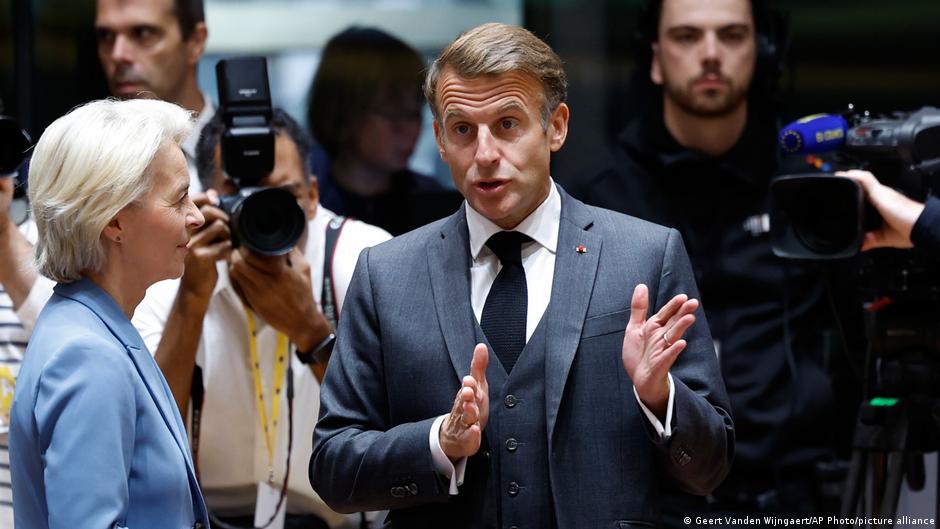
European Union leaders ended the first day of their Brussels summit without agreement on the bloc’s next seven-year budget, leaving a consequential debate over spending priorities, competitiveness and financing unresolved until December.
The negotiations brought together several positions that sources in Germany’s federal government described to AFP as producing “contradictory debates.” The divisions were known before the summit began, but the failure to make a breakthrough highlights the difficulty of aligning 27 governments around a long-term financial strategy.
Germany, Austria, Sweden, Denmark, the Netherlands and Finland are calling for savings. France, Spain and Poland, by contrast, support a larger EU budget. The dispute is not simply about the overall amount: it concerns which economic sectors should receive capital, how much national governments should contribute and whether Brussels should gain new sources of revenue.
A Two Trillion Euro Strategy Under Pressure
The European Commission presented a draft long-term budget worth almost €2 trillion during the summer. Ireland, which holds the presidency of the Council of the EU, subsequently proposed reducing that plan by €140 billion, or approximately 8%.
Ireland’s proposal would cut EU expenditure on competitiveness, scientific research, defense and foreign policy. From a business perspective, those categories sit close to the center of Europe’s attempt to strengthen its industrial position, develop new technologies and respond to geopolitical pressure. Reducing them could ease the burden on governments seeking fiscal discipline, but it would also narrow the pool of EU-level funding available for strategic investment.
The proposed reductions therefore reveal a management dilemma familiar to large organizations: whether to protect the balance sheet by containing expenditure or invest more heavily when competitive and security pressures are rising. The EU must make that choice through negotiation among member states with different fiscal positions, domestic priorities and expectations of the common budget.
“Substantially” reduce the European Commission’s proposed budget.
German Chancellor Friedrich Merz used that formulation before negotiations began. He also categorically rejected allocating additional money to two traditionally large areas of EU expenditure: agriculture and cohesion policy. His position points toward a tighter portfolio-management approach, in which established programs cannot automatically claim more resources while the overall budget is being challenged.
France Seeks New EU-Wide Revenue
France pursued a different financing strategy at the summit, advocating new EU-wide levies that could expand the budget without raising member-state contributions. The proposed charges would apply to digital services, crypto assets and online gambling.
For companies operating in those industries, the French proposal would introduce another layer of strategic uncertainty. Its attraction for governments is clear: new centralized revenue could support additional EU spending while limiting demands on national treasuries. Yet the approach would shift part of the cost toward fast-growing digital and financial activities, potentially affecting pricing, investment decisions and the competitive environment across the single market.
The debate also reflects a broader question about the EU’s operating model. A budget funded primarily through national contributions keeps financial authority closely tied to member governments. New common levies would give the bloc additional capacity to finance shared priorities, while requiring agreement on sectors selected to carry the burden.
No compromise emerged on the first day, and the next EU summit is scheduled for December. Many member states want the seven-year budget approved before the end of the year because elections in several countries in 2027 could bring Eurosceptic and populist forces to power.
Political Timetable Raises Execution Risk
France is a particular concern in that timetable. Far-right politician Marine Le Pen could win the country’s presidential election. President Emmanuel Macron has warned that reaching an EU budget agreement would be “difficult” in that event, according to AFP.
The political calendar has consequently become part of the budget’s execution risk. Governments are not only negotiating spending levels and revenue mechanisms; they are deciding whether a settlement reached now would be preferable to talks conducted after possible changes in national leadership.
That urgency has not eliminated the prospect of delay. Austrian Chancellor Christian Stocker said negotiations could drag on and continue into next year. Such an extension would prolong uncertainty around the allocation of funds to research, defense, competitiveness and other programs with direct implications for companies, investors and public-sector partners.
The December meeting will test whether leaders can turn the competing proposals into a workable package. The central trade-off remains unresolved: a smaller budget aligned with the demands of fiscally cautious states, or a larger program supported by new EU-wide revenue and designed to sustain investment across multiple strategic fronts.
For European business, the outcome will help determine both the availability of public investment and the regulatory cost of financing it. The summit’s first day showed that member states agree on the need for a long-term plan, but remain divided over the scale, funding structure and strategic priorities of the EU’s next financial cycle.