EU and Mexico Finalize Comprehensive Trade Agreement to Boost Bilateral Economic Ties
The new pact eliminates most tariffs on EU imports to Mexico and aims to enhance trade efficiency and investment cooperation.
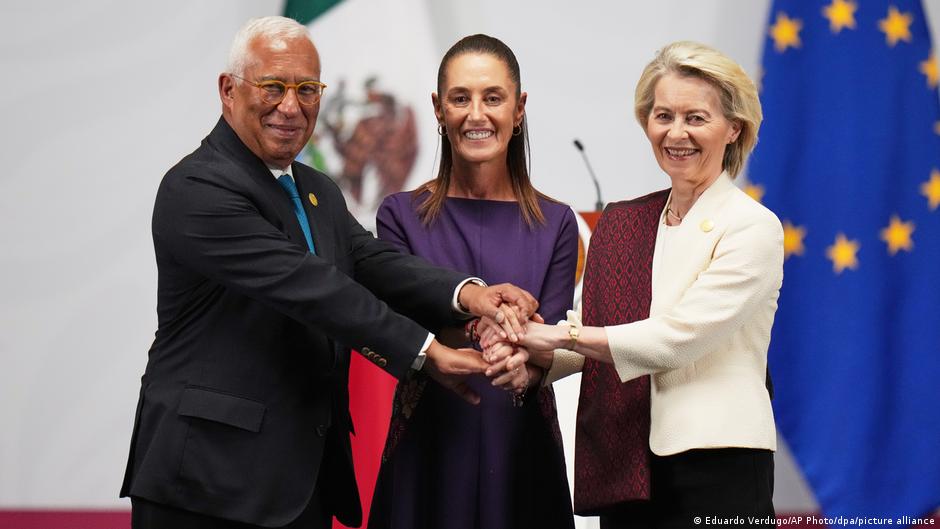
After a decade of negotiations, the European Union and Mexico have signed a comprehensive trade and cooperation agreement designed to deepen economic integration and expand commercial opportunities between the two parties. The agreement, finalized in Mexico City on May 22, removes nearly all existing tariffs on imports from the EU, simplifies bureaucratic trade barriers, and facilitates easier access for EU companies to Mexican public procurement markets.
Strategic Implications and Economic Projections
The deal reflects a strategic pivot amid evolving global trade dynamics and geopolitical challenges. European Council President António Costa emphasized the critical nature of this partnership given the current geopolitical context, highlighting the mutual benefits expected from enhanced economic ties.
“Given the current geopolitical situation, our partnership is more important than ever,” António Costa stated during the signing ceremony.
According to estimates from Mexico’s Ministry of Economy, the agreement could raise Mexico’s exports to the EU by approximately 50% by 2030, reaching an annual value near €31 billion. Presently, EU exports to Mexico total around €56 billion annually, with trade volumes between the two regions growing 75% over the last decade.
The agreement includes tariff-free access for nearly all traded goods such as Mexican chicken and asparagus and European products including dried milk, cheese, and pork, although some products will be subject to quota restrictions. Furthermore, Mexico plans a gradual elimination of tariffs on poultry, pork, cheese, and chocolate, as outlined in a report by Germany Trade & Invest (GTAI).
Competitive and Investment Landscape
Beyond tariff reductions, the agreement addresses non-tariff barriers by streamlining customs procedures and trade-related bureaucracy, enhancing regulatory cooperation, and opening government procurement to foreign companies. EU Commission President Ursula von der Leyen announced a planned €5 billion EU investment package aimed at Mexican infrastructure projects, signaling a commitment to support Mexico’s economic development and industrial modernization.
Mexico’s strategic position as Latin America’s second-largest economy and an important manufacturing hub—especially for German enterprises—makes it a pivotal market in the context of North American trade relations. The agreement complements Mexico’s existing commitments under the United States-Mexico-Canada Agreement (USMCA), enabling EU companies to leverage Mexico’s regional integration to access broader North American markets.
Additionally, the deal incorporates provisions on climate change, human rights, and international cooperation, reflecting a broader EU agenda to embed sustainability and ethical standards within trade frameworks.
Prospects for Corporate Strategy and M&A
This agreement is poised to reshape competitive dynamics in sectors such as agriculture, food processing, and manufacturing. With tariff barriers significantly reduced, companies in both regions may accelerate market entry strategies, optimize supply chains, and pursue cross-border mergers and acquisitions to capitalize on new opportunities. The protection of geographical indications for products like Parma ham, Bavarian beer, and Tyrolean bacon strengthens brand value and market differentiation for European exporters, while securing access to key Mexican raw materials supports European manufacturing competitiveness.
Industry stakeholders should closely monitor the ratification process within EU institutions, as the finalization of this deal will set the stage for enhanced bilateral engagement and potentially pave the way for new joint ventures and expanded foreign direct investment flows.