Drone Strike on Russia’s Yamal Region Raises New Risks for Gas Strategy
The first reported Ukrainian drone attack on Yamal highlights the growing exposure of Russia’s core gas infrastructure to long-range disruption.
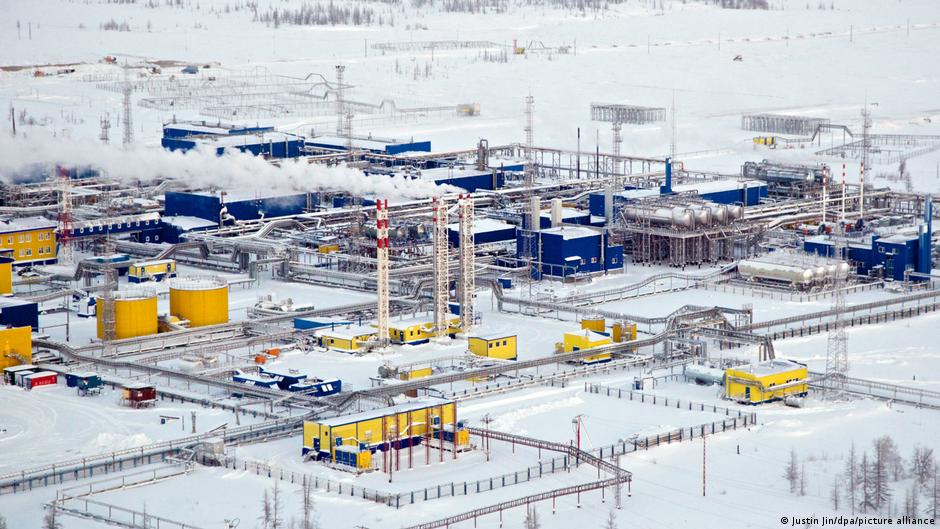
Ukrainian drones have attacked Russia’s Yamalo-Nenets Autonomous District for the first time, according to regional authorities, bringing the war’s risk map to one of the most important production centers in the Russian natural gas industry. The incident, reported on Wednesday, September 9, involved a fire at an industrial facility in Novy Urengoy, a city deeply embedded in the country’s gas infrastructure.
Dmitry Artyukhov, the governor of the region, said the attack had been repelled, but that debris from an unmanned aerial vehicle fell on the grounds of an enterprise and caused a fire. Official information indicated that there were no deaths or injuries. Artyukhov said the scale and nature of the damage were still being assessed.
For Russia’s energy sector, the significance lies less in the immediate confirmed damage than in the geography of the strike. Yamal is not a peripheral industrial zone. It is a core gas-producing region that, by estimates, accounts for about 80% of Russia’s natural gas output. Any incident there carries strategic implications for operators, managers, insurers, logistics planners and state decision-makers responsible for maintaining continuity in the fuel and energy complex.
Russian officials said the attack targeted a fuel and energy complex facility in Yamal and that personnel had been evacuated in advance.
A Strategic Asset Comes Under Pressure
Artem Zhoga, the presidential envoy to Russia’s Urals Federal District, said the target was a fuel and energy complex facility in Yamal. He also said personnel at the enterprise had been evacuated ahead of time. Russian authorities did not identify the specific site that came under attack.
Several media outlets and analytical projects that track strikes inside Russian territory reported, however, that the possible target may have been the condensate preparation plant for transport in Novy Urengoy, part of Gazprom’s gas infrastructure. The facility is regarded as one of the key sites for processing gas condensate in the region. The Russian authorities have not confirmed that identification.
From a corporate strategy perspective, the uncertainty itself is material. Large energy groups depend not only on production volumes, but also on confidence in processing nodes, transport preparation, workforce safety protocols and the resilience of operating assets. A strike on, or near, infrastructure connected to gas condensate processing introduces a new category of operational risk for assets previously considered far from the main theater of the war.
The Novy Urengoy facility processes gas condensate from the Urengoy, Yamburg and other fields in the region. Its design capacity is estimated at about 19.5 million tons of raw material per year. That scale makes any disruption, even if limited, relevant to the broader management of Russia’s gas value chain, especially at a time when energy infrastructure has become a recurring target in the conflict.
Distance Changes the Competitive Risk Map
Novy Urengoy is located roughly 2,800 kilometers in a straight line from the Russian-Ukrainian border. If it is confirmed that the drones were launched from Ukrainian territory, the strike could represent the longest known Ukrainian armed forces attack on Russian territory since the start of the full-scale war.
That distance matters for business planning. Energy companies, state agencies and contractors have generally treated geography as a major layer of protection. The farther an asset was from the border, the more it could be managed primarily through conventional industrial safety, physical security and local emergency response procedures. A confirmed long-range attack would challenge that assumption and could force a reassessment of defensive investment across a much wider network of assets.
For Gazprom and the wider Russian gas sector, the incident points to an expanding management burden. Executives and state officials must now consider how to allocate security resources across upstream fields, processing facilities, transport preparation plants and supporting infrastructure in regions that are economically critical but geographically remote. That creates a capital allocation problem: more spending on protection, redundancy and emergency response may be required even where there is no immediate evidence of sustained physical damage.
The competitive landscape is also affected. Russia’s gas industry already operates under geopolitical pressure, market restrictions and the long-term challenge of redirecting exports and investment priorities. Attacks on infrastructure deepen the perception of supply-chain vulnerability. Even if domestic production continues, the strategic message is that key assets are no longer insulated from the conflict by distance alone.
Management Decisions Under Wartime Conditions
The official account emphasized that no workers were killed or injured and that personnel had been evacuated in advance. That detail is important for management analysis because it suggests that local authorities or enterprise managers had at least some warning or response protocol in place. In high-risk industrial environments, the ability to evacuate staff before an incident can be as important as the defensive systems themselves.
Still, the event raises difficult questions for corporate governance and operational continuity. Companies operating in Yamal must now evaluate whether existing risk models adequately account for long-range drone threats. They may also need to revisit coordination between corporate security teams, regional authorities, federal agencies and emergency services. For energy infrastructure, the response cannot be limited to repairing damage after an incident. It must include scenario planning for repeated attempts, cascading disruptions and the reputational impact of attacks on nationally significant assets.
The absence of official identification of the targeted enterprise also reflects a common wartime communications dilemma. Authorities and companies may seek to limit operational details for security reasons, while markets, counterparties and local communities need reliable information about safety and continuity. That tension becomes sharper when the assets involved are part of a sector as strategically central as Russian gas.
The immediate facts remain limited: drones attacked the Yamalo-Nenets Autonomous District for the first time; a fire occurred at an industrial facility in Novy Urengoy; officials reported no casualties; the damage was still being assessed; and Russian authorities said the target was part of the fuel and energy complex. Yet even within those limits, the business implications are substantial. The incident places Russia’s Arctic-linked gas infrastructure more directly inside the operational risk framework of the war and may force energy managers to treat distance not as protection, but as a variable that can no longer be relied upon.