Zelenskyy Flight Delay in Moldova Highlights Executive Risk in Wartime Europe
A reported drone threat near Moldova delayed the Ukrainian president’s flight to Oslo, underscoring security risks around leadership travel.
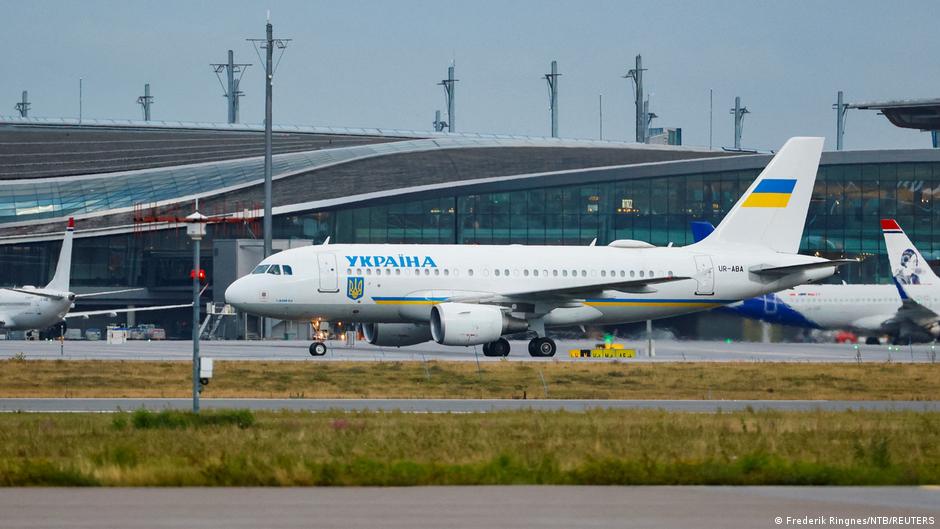
A reported drone threat in Moldovan airspace that delayed Ukrainian President Volodymyr Zelenskyy’s departure for Oslo has added a new layer of scrutiny to the operational risks surrounding wartime leadership travel in Europe. The incident, described publicly by Norwegian Prime Minister Jonas Gahr Stoere and later clarified by his office, points to the growing complexity of executive security, cross-border airspace management and political decision-making in a region where military activity and civilian aviation increasingly intersect.
Stoere said in an interview with Norwegian broadcaster NRK on Wednesday, September 9, that Zelenskyy’s aircraft had “barely” avoided a collision with a drone while preparing to leave Moldova for Norway. The Ukrainian president’s office had not commented on the episode at the time of the report. Stoere did not specify where he obtained the information, and his remarks left open whether the event was accidental or could have represented a deliberate attempt against Zelenskyy.
“His plane almost collided with a drone when it was due to take off from Moldova. This is the reality he lives in,” Stoere said, according to the Russian-language source article.
The Norwegian prime minister’s office later refined that account, saying there had been a drone threat in Moldovan airspace the previous day that delayed Zelenskyy’s aircraft en route to Oslo. It added that the threats were the kind Zelenskyy faces daily, while noting that it was not known how close the drones were to his aircraft.
Security as a Strategic Constraint
For governments, the episode illustrates how security conditions can shape the logistics of top-level diplomacy. Leadership travel is not merely ceremonial in wartime; it is an instrument of alliance management, fundraising, defense coordination and political signaling. Any disruption to that movement can affect schedules, diplomatic sequencing and crisis communications across multiple capitals.
A senior Ukrainian official told DW that while the Ukrainian president’s aircraft was waiting to depart from Chisinau, a Russian jet-powered drone entered Moldovan airspace. Zelenskyy’s departure was subsequently postponed, and other flights were suspended. Those details, if treated as an operational account rather than a formal investigation finding, suggest that security authorities faced a real-time airspace management decision involving a high-value political target and broader civilian aviation exposure.
The commercial implications are indirect but significant. Airlines, insurers, airport operators and companies with regional supply chains all monitor the same risk environment that governments do. Drone incursions near borders can trigger flight suspensions, rerouting, higher insurance costs and more conservative corporate travel policies. For businesses operating in or around Moldova, Ukraine and the Black Sea region, such incidents reinforce that geopolitical risk is no longer confined to battlefield zones.
Zelenskyy arrived in Oslo from Moldova on the evening of September 8 to attend the funeral of King Harald V. After the ceremony, he met with Stoere. The official Norwegian government statement about their talks did not mention the drone incident. That omission is notable from a management and communications standpoint: governments often separate public diplomatic messaging from sensitive operational security details, especially when the facts remain incomplete or intelligence sources may be involved.
Moldova’s Airspace Challenge
The incident also places Moldova’s position in sharper focus. Moldova is not the central battlefield of the war, but its geography makes it vulnerable to spillover from Russian drone activity targeting Ukraine, particularly around the Odesa region and border infrastructure. For a small state, managing airspace threats connected to a larger war creates a disproportionate institutional burden.
On September 9, Moldovan police reported the discovery of a fallen drone equipped with a propulsion system. According to the report, the impact caused an explosion that left a large crater. Inside the drone were damaging elements in the form of metal balls. No casualties were reported. Those details point to the physical risk posed by unmanned systems even when they do not hit their apparent intended target.
Separately, the local regional military administration said Russian drones attacked the Starokozache international road border crossing in Ukraine’s Odesa region, on the border with Moldova, during the night of September 9. NRK noted that the airport from which Zelenskyy flew to Oslo is about two hours by road from that border crossing. The proximity does not establish a direct connection between the incidents, but it helps explain why security officials would treat regional drone activity as relevant to presidential flight planning.
From a corporate strategy perspective, the episode is a reminder that state capacity and infrastructure resilience are now central variables for investment and operations across Eastern Europe. Ports, airports, border crossings and logistics corridors are not only economic assets; they are potential pressure points in a broader contest involving military technology, political signaling and supply-chain disruption.
Competitive Landscape of Drone Warfare
The reported entry of a Russian jet-powered drone into Moldovan airspace, as described by the Ukrainian official, also reflects the competitive evolution of drone warfare. Unmanned systems have become relatively low-cost tools for imposing high operational costs on opponents. They can disrupt transportation, force air defenses to respond, complicate diplomatic travel and increase uncertainty for civilian infrastructure managers.
For Ukraine and its partners, the management challenge is twofold. First, they must protect senior leaders whose international travel remains essential to maintaining political and financial support. Second, they must keep such travel visible enough to sustain diplomatic momentum while avoiding disclosures that could make movements easier to target. That creates a persistent tension between public leadership and operational secrecy.
For Norway, Stoere’s public comments brought attention to the security risks faced by Zelenskyy while also requiring clarification from his office. That sequence demonstrates the sensitivity of executive communication during crises. A prime minister’s statement can shape international perceptions immediately, but follow-up precision matters when the underlying facts remain uncertain. In this case, the clarification narrowed the claim from an apparent near-collision to a broader drone threat that delayed the aircraft, while acknowledging uncertainty over the drones’ proximity.
The Ukrainian president’s office had not commented, leaving the public record dependent on Norwegian statements, a Ukrainian official cited by DW, Moldovan police reporting and regional military claims from Odesa. Together, those accounts depict a regional operating environment in which drone threats are frequent enough to disrupt presidential travel, civilian flights and border infrastructure, yet ambiguous enough to complicate attribution and response.
For business leaders assessing the region, the takeaway is not a single incident but a pattern of risk convergence. Political leadership, commercial aviation, border logistics and unmanned warfare now overlap in ways that can rapidly alter plans. The delay of Zelenskyy’s aircraft in Moldova is therefore more than a security anecdote; it is a case study in how geopolitical volatility can affect the management decisions of governments and the risk calculations of companies operating near Europe’s eastern frontier.