Russian Strikes on Sumy and Mykolaiv Hit Civilian and Port Infrastructure
The attacks killed civilians and damaged commercial, logistics and port assets, underscoring the operational risks facing Ukrainian cities and supply chains.
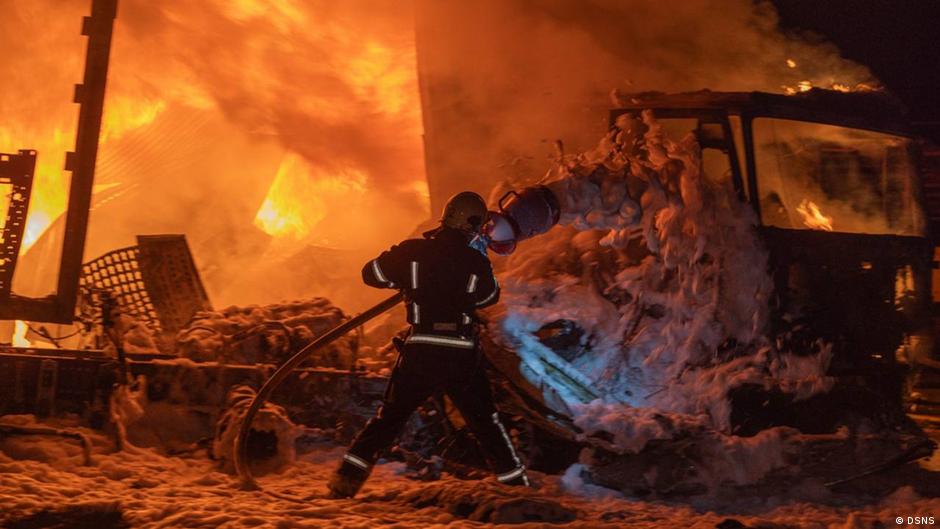
Russian forces struck the Ukrainian cities of Sumy and Mykolaiv on September 9, causing civilian deaths and injuries while also damaging infrastructure tied to retail, logistics and port operations. The incidents add to the security pressures facing regional administrations and businesses operating in frontline and near-frontline areas, where commercial sites, warehouses and transport assets remain exposed to repeated attacks.
In Sumy, a Russian strike hit a parking area near the Manufaktura shopping center on Wednesday evening. According to Oleh Hryhorov, head of the local regional military administration, two young people were killed: a 21-year-old man and a 21-year-old woman. Preliminary information indicated that about 20 other people were wounded. Among the injured were teenagers.
Regional authorities said two men and one woman were in serious condition. Another Sumy resident was described as being in extremely serious condition. Rescue workers and municipal services operated at the strike site, while the Sumy regional administration warned that the threat of further attacks in the region remained.
Regional authorities said the threat of repeated attacks in Sumy region remains.
Retail and Public-Space Risk in Sumy
For a business audience, the Sumy strike highlights the vulnerability of civilian commercial zones that serve both economic and social functions. A shopping center parking lot is not only a consumer-facing location; it is also part of a broader urban system involving retailers, tenants, property managers, security teams, utility providers, transport links and municipal emergency response.
The attack near Manufaktura therefore carries implications beyond the immediate human toll. Commercial property operators in affected regions face heightened uncertainty around foot traffic, tenant operations, insurance coverage, continuity planning and emergency procedures. Local authorities, meanwhile, must balance public safety warnings with the need to preserve basic urban services and economic activity.
The reported presence of teenagers among the injured also reinforces the reputational and social risks for any organization operating in public venues during wartime. Management decisions around opening hours, shelter access, evacuation procedures and staff training become central elements of corporate resilience, even for businesses whose core activities are not directly connected to defense or logistics.
Mykolaiv Attacks Target Port-Linked Infrastructure
Russian forces also continued striking Mykolaiv, with attacks reported throughout September 9. According to Heorhii Reshetilov, head of the Mykolaiv regional military administration, port infrastructure was damaged during the day’s attacks. Two people were killed and at least 12 others were wounded, including a one-year-old child.
Ukraine’s State Emergency Service said that some Russian strikes hit warehouse facilities where vegetables were stored, as well as a post office branch. These targets point to the breadth of assets exposed in the city: port facilities, storage premises, postal infrastructure, civilian sites and residential areas.
The operational impact for Mykolaiv is significant because port and warehouse infrastructure are key nodes in regional commerce. Damage to such assets can disrupt handling capacity, storage availability, delivery schedules and the movement of goods. Even when physical damage is localized, the wider business effect can include higher security costs, delivery delays, rerouting of supplies and reduced confidence among counterparties.
The post office strike is also notable from a management and public-service perspective. Postal facilities support consumer deliveries, business documentation, payments and personal communications. In wartime conditions, they can become critical infrastructure for both households and companies, particularly where private logistics providers face security or capacity constraints.
Repeated Strikes Compound Management Challenges
The Mykolaiv region had already come under a large-scale Russian attack overnight into September 9. Authorities reported that drones and ballistic missiles damaged port and civilian infrastructure, as well as residential buildings. Earlier reports from officials said one woman had been killed and four people had been wounded in that overnight attack.
The sequence of attacks matters for corporate planning. A single incident can be treated as a disruption; repeated strikes over a 24-hour period create a different management problem. Companies must assess whether facilities can reopen, whether staff can travel safely, whether inventory can be moved, and whether counterparties can rely on agreed timelines.
For regional administrations, the challenge is similarly layered. Emergency services must respond to casualties and damaged sites, municipal crews must restore basic services, and officials must communicate continuing risks to residents and businesses. In Sumy, authorities explicitly warned that further attacks remained possible. In Mykolaiv, the day-long pattern of strikes followed an overnight assault, showing how response operations can overlap with fresh threats.
Competitive and Strategic Implications
From a competitive landscape perspective, infrastructure damage in Ukrainian cities can reshape local business conditions even without formal market exits or acquisitions. Firms with stronger contingency systems, diversified storage, alternative delivery routes and better capital buffers are more likely to withstand interruptions. Smaller operators tied to a single site, warehouse or customer channel may face sharper disruption.
The attacks also underline the strategic importance of logistics assets that might otherwise be seen as routine commercial infrastructure. Warehouses storing vegetables, post office branches, parking areas near shopping centers and port facilities each play a role in local economic continuity. When such assets are damaged, the consequences can move across sectors, affecting retail, agriculture, transport, public services and household consumption.
No merger or acquisition activity was reported in connection with the attacks. However, the business significance lies in the environment these incidents create for investment and management decisions. Companies assessing exposure in Sumy, Mykolaiv or comparable Ukrainian regions must factor in not only direct physical risk but also staff safety, customer behavior, infrastructure reliability and the cost of maintaining operations under repeated attack threats.
The latest reported strikes killed civilians in both cities and wounded dozens more. They also damaged commercial and logistics-related infrastructure at a time when Ukrainian regional economies remain under severe pressure from the war. For business leaders, the events in Sumy and Mykolaiv are a reminder that in conflict-affected markets, corporate strategy and public safety are closely linked, and resilience planning is no longer a peripheral function.