Zvyagintsev's Anti-War Appeal Rejected by Kremlin Amid Russia's Political Silence
Kremlin spokesman refuses to forward Cannes winner Zvyagintsev's call to end the Ukraine war, highlighting suppression of dissent in Russia.
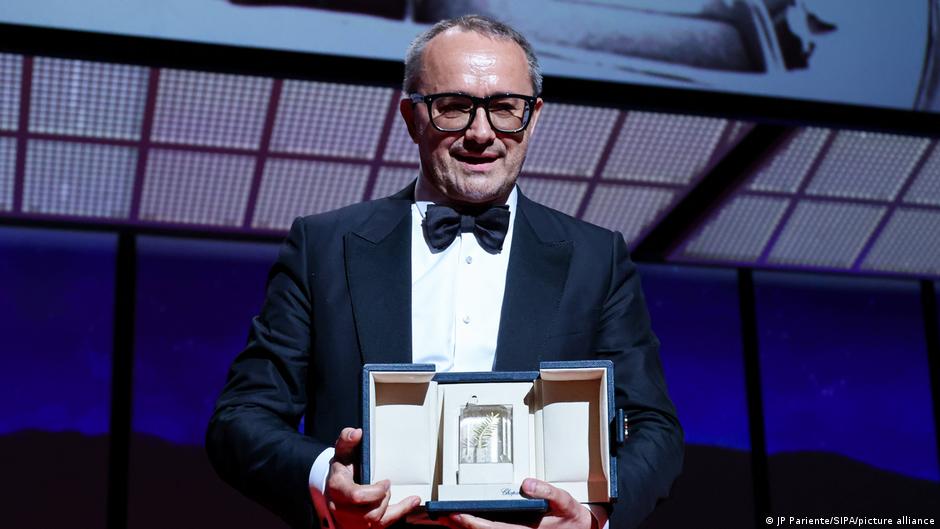
At the 2023 Cannes Film Festival, renowned Russian filmmaker Andrei Zvyagintsev used his platform upon receiving the Grand Prix for his film "The Minotaur" to issue a direct appeal to Russian President Vladimir Putin to end the war in Ukraine. His speech condemned the ongoing conflict as a senseless slaughter and called for immediate action to halt the violence.
"Millions of people on both sides of the contact line now dream of only one thing: an end to the countless killings," Zvyagintsev declared before an applauding audience. "The only person who can stop this meat grinder is you, Mr. President of the Russian Federation. End this carnage already. The whole world is waiting for it."
Political Pushback and Corporate Communication Breakdown
However, Dmitry Peskov, Kremlin spokesperson, publicly stated that he would not convey Zvyagintsev's anti-war message to President Putin. Peskov justified this refusal by claiming that Zvyagintsev "never condemned the bloody massacre initiated by the Kyiv regime in Donbas since 2014," arguing that if the filmmaker had done so earlier, he might have had a "right to speak" now. Instead, Peskov maintained that the director currently lacks such a voice.
"Zvyagintsev never condemned the bloody massacre orchestrated by the Kyiv regime on Donbas since 2014," said Dmitry Peskov, underscoring the Kremlin's dismissal of dissenting views.
Furthermore, Peskov emphasized that he personally would not pass the appeal to the president and doubted anyone else would either, signaling a systemic suppression of opposition voices within Russia's political communication channels.
In response, Zvyagintsev acknowledged this denial of his voice as emblematic of the broader silencing of millions of Russians. He pointed out that such exclusion is not new, referencing past periods such as 2008, 2011, and 2014 when citizens' voices were similarly disregarded.
"Yes, absolutely right — I have no right to speak, just as hundreds of millions of Russians do not today," Zvyagintsev stated. "You have never heard their voices. You labeled your own citizens with derogatory terms in 2008, 2011, and 2014. Now our collective path is nearing a dead end."
He strongly urged that instead of engaging in rhetoric that deflects or questions citizens' past actions, Russia should adopt a pragmatic stance focused on immediate cessation of the "senseless and ruthless war."
"Nothing but sorrow and tears; disappointment and depressive apathy; severed limbs of your fellow citizens in the name of an illusory goal; destruction of young people vital for building life and the future — nothing good lies ahead unless we stop now," the filmmaker concluded.
Implications for Russia's Corporate and Political Landscape
This episode highlights the constraints faced by prominent figures trying to influence Russia's political trajectory amid the ongoing conflict. For businesses and management in Russia, the environment reflects a broader trend of restricted open dialogue and centralized control over messaging. Such suppression of dissent can impact corporate governance, stakeholder communication, and strategic positioning both domestically and internationally.
In the context of mergers and acquisitions, management decisions, and competitive dynamics, the inability to publicly address or contest key political issues may challenge corporate resilience and adaptability. International partners and investors must navigate the risks associated with limited transparency and political interference.