Yemen Offensive Near Mocha Raises Stakes for Red Sea Trade and Gulf Security
Yemen’s internationally recognized authorities are seeking to regain territory from the Houthis as regional powers weigh military support.
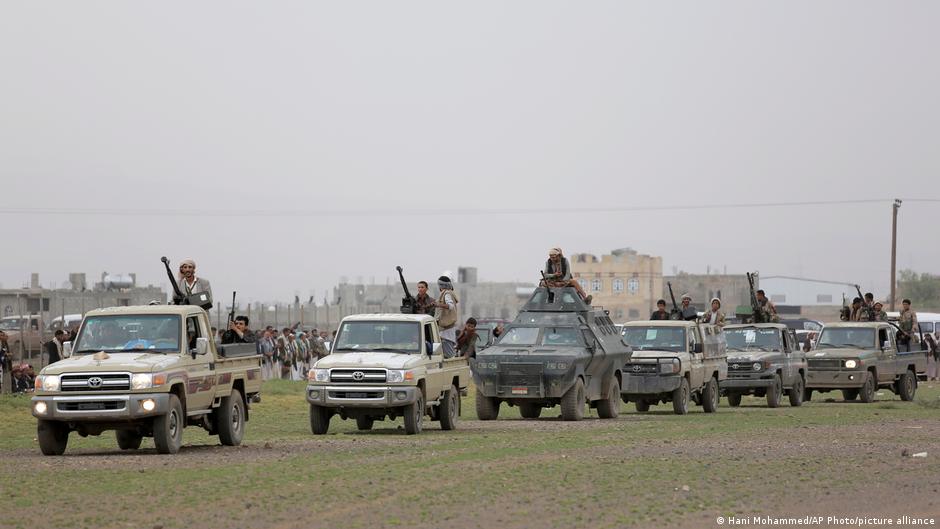
Yemen’s internationally recognized authorities have opened a new phase in their campaign against the Houthi movement, advancing toward the port city of Mocha and framing the operation as an effort to restore control over the entire country. The push comes after a general mobilization was announced in late September and after the Houthis expanded attacks in Yemen and across the Saudi border, increasing pressure on regional security and global trade routes.
For business and energy markets, the confrontation is no longer only a domestic Yemeni military contest. Mocha sits on the Red Sea coast near the Bab el-Mandeb Strait, one of the world’s most strategically sensitive maritime chokepoints. Control of territory along this corridor affects shipping risk, insurance costs, energy logistics and the strategic calculations of Gulf governments, Turkey and Pakistan.
Reuters reported on Monday, October 5, that forces loyal to Yemen’s internationally recognized authorities had reached the approaches to Mocha, seeking to drive out the Houthis, who had taken the city a month earlier. The reports were among the first indications of government strikes against Houthi positions after Rashad al-Alimi, chairman of Yemen’s Presidential Leadership Council, announced on October 4 the start of a large-scale military operation against the Islamist group.
Al-Alimi said the goal of the operation was to return all of Yemen’s territory to the control of the internationally recognized authorities.
That objective implies a campaign of considerable scale. The Houthis hold significant parts of Yemen, including the most densely populated areas and the capital, Sanaa. Any attempt to reverse those gains would require not only battlefield momentum, but also sustained political coordination, logistics, financing and outside support.
A Contest for Territory and Leverage
The internationally recognized Yemeni authorities announced a nationwide mobilization at the end of September to fight the Houthis. They also promised amnesty to all members of Ansar Allah, the Houthi movement, who switch sides and join government forces. That offer is both a military and management decision: it seeks to weaken the opposing force, reduce the cost of combat and create incentives for defections in a fragmented conflict environment.
The Houthis, however, are also claiming battlefield success. Yemen Press Agency, citing a representative of the group, reported that Houthi forces had captured a district in Taiz province as well as Rashad al-Alimi’s former residence in the region. The Houthi-controlled Al Masirah television channel showed video footage of fighters taking control of al-Alimi’s multi-story house and raising the group’s flag above the building.
These competing claims underscore the operational uncertainty around the campaign. The government side is attempting to project a broader strategic offensive, while Ansar Allah is emphasizing local advances and symbolic gains. In business terms, both sides are seeking to influence expectations: among fighters, regional backers, investors monitoring energy risk, and governments assessing whether to deepen their involvement.
Regional Security Becomes a Business Risk
Houthi military spokesman Yahya Saree also claimed that the group had carried out a series of operations inside Saudi Arabia. According to Saree, the Houthis attacked King Khalid International Airport in Riyadh, an Aramco refinery in Rabigh and several military facilities in the kingdom. Saudi Arabia did not confirm those claims.
At the same time, Reuters reported that Riyadh, Ankara and Islamabad had agreed on the rapid deployment of troops in the region under the Mecca Defense Pact concluded in August. The pact provides for a collective response by Turkey, Saudi Arabia and Pakistan to an attack on any of the three countries. According to Reuters, Riyadh is prepared to take part in the offensive by Yemeni government forces against the Houthis by providing air support.
That regional alignment changes the strategic balance around Yemen. Saudi involvement through air support would provide the government side with capabilities that are difficult to replicate domestically. The broader pact with Turkey and Pakistan also sends a signal that attacks on Saudi infrastructure or territory may be treated as part of a wider regional security problem, not merely as spillover from Yemen’s civil conflict.
For companies exposed to the Gulf, Red Sea routes or oil markets, the implications are direct. Earlier in September, the Houthis announced an expansion of military operations in the Middle East and struck four cities in southern Saudi Arabia. More than 70 people were injured in the massive shelling, and fires broke out at oil facilities. Saudi Arabia responded with more than 60 airstrikes on several provinces controlled by the Houthis.
Mocha, Bab el-Mandeb and Competitive Positioning
The Houthis have also intensified attacks inside Yemen with the aim of capturing the country’s entire Red Sea coast. Their military gains, including the capture of Mocha on the Bab el-Mandeb Strait, have enabled Iran and its allies to consolidate control over key waterways in the region, according to the source article. The rebels’ attacks have threatened global trade routes and contributed to rising energy prices.
The Houthi leadership has separately declared the Bab el-Mandeb Strait closed to ships from Saudi Arabia. Even if enforcement capacity varies, the declaration itself is commercially significant. Shipping companies, commodity traders and insurers often respond not only to confirmed disruptions, but also to credible threats, missile activity and the possibility of escalation around chokepoints.
On September 19, the Saudi-led Coalition to Restore Legitimacy in Yemen said that Yemeni rebels had attempted for the first time the previous night to strike the Saudi capital, Riyadh, with a ballistic missile. Brigadier General Turki al-Maliki, the coalition’s official spokesman, said on X that the missile had been intercepted and destroyed.
The latest offensive therefore sits at the intersection of military strategy and economic security. For Yemen’s recognized authorities, the campaign is a bid to regain lost territory and rebuild political legitimacy. For the Houthis, territorial control along the Red Sea offers leverage over Saudi Arabia, the Yemeni government and international shipping. For Riyadh and its partners, the conflict now touches core infrastructure, energy assets and the credibility of regional defense arrangements.
The outcome near Mocha may not decide the war by itself. But it will help determine whether the internationally recognized government can reverse Houthi coastal gains, whether Saudi Arabia expands its military role, and whether the Red Sea remains a manageable commercial corridor or becomes a more persistent source of geopolitical and energy-market risk.