Yemen Mobilization Call Highlights Rising Strategic Risk Around Red Sea Trade
Rashad al-Alimi’s appeal for mobilization and promised amnesty for defecting Houthi fighters reflects mounting pressure on Yemen’s government and its Gulf backers.
Yemen’s internationally backed leadership is moving to widen its base of military support as Houthi advances reshape both the country’s battlefield and the commercial risk profile of one of the world’s most sensitive maritime corridors.
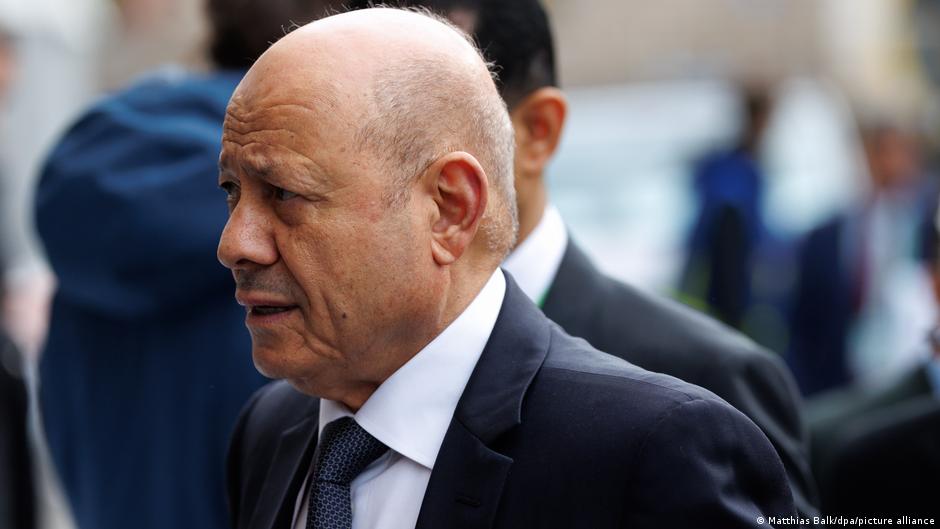
Rashad al-Alimi, chairman of Yemen’s Presidential Leadership Council, called on citizens to mobilize amid an escalation in the conflict with the pro-Iranian Houthi movement. In an address to Yemenis on Friday, September 25, he urged the population to contribute to the country’s defense and join the ranks of government forces. He also said that Houthi fighters who leave the movement and switch to the government side would be pardoned under a forthcoming amnesty.
Al-Alimi urged Yemenis to help defend the country and said those who abandon the Houthi ranks for the government side would be covered by an imminent amnesty.
The appeal comes as the government’s military position continues to weaken. Several weeks ago, Houthi forces struck government troops. Despite support from Saudi military aviation, Yemen’s army has continued to retreat. For businesses and governments watching the region, the issue is no longer only Yemen’s internal political fragmentation, but the growing capacity of non-state forces and their state-aligned backers to influence trade, energy flows and security costs.
Strategic Waterways Become the Center of the Conflict
Over recent months, the Houthis have succeeded in capturing the entire Red Sea coast as well as areas adjacent to the Bab el-Mandeb Strait. That geography gives the conflict a direct bearing on global commerce. The strait has gained strategic importance since the war of the United States and Israel against Iran, according to the source account, and is being used as an alternative trade route that partly offsets disruptions in oil supplies caused by the blockade of the Strait of Hormuz.
The business implications are significant. Control or disruption around maritime chokepoints can alter shipping schedules, insurance costs, routing decisions and energy pricing. The Houthi advances have led Iran and its allies to consolidate control over key waterways in the region, affecting oil exports from Saudi Arabia and other Gulf states to the global market. Rebel attacks threaten international trade routes and contribute to higher electricity prices.
For Saudi Arabia and other Gulf energy exporters, the conflict presents a strategic-management problem that extends beyond military response. The region’s export model depends on predictable access to sea lanes and reliable infrastructure. Fires at oil facilities, missile threats and repeated airstrikes raise the cost of maintaining that predictability. Even where production is not permanently impaired, volatility can influence customer behavior, hedging strategies and the willingness of global buyers to rely on exposed routes.
A Competitive Landscape Shaped by State Backers
The conflict’s competitive landscape is shaped by external sponsorship and regional rivalry. Reuters has reported, according to the source text, that the Houthi advance is being directed by Iran’s Islamic Revolutionary Guard Corps. Sources in Tehran say Iran is seeking to open a new front in its confrontation with the United States.
That claim, if viewed through a corporate strategy lens, suggests a deliberate use of asymmetric leverage. Rather than competing only through conventional state-to-state channels, Iran and its allies can gain bargaining power by increasing pressure on trade corridors and Gulf energy exporters. The Houthis’ territorial gains give that strategy a physical base along the Red Sea and near Bab el-Mandeb.
Yemen’s war has been ongoing since 2014 and has effectively divided the country among three opposing sides. The pro-Iranian Houthis hold northern and western provinces, including the capital, Sanaa, where about 70% of Yemen’s population lives. That demographic and territorial position gives the movement administrative depth as well as battlefield momentum, while the government faces the management challenge of rebuilding manpower and confidence while under pressure.
Al-Alimi’s promised amnesty is therefore more than a political gesture. It is a recruitment tool and a potential attempt to weaken the Houthis from within by lowering the personal cost of defection. In corporate terms, it resembles a turnaround strategy under crisis conditions: retain loyal capacity, attract personnel from a rival organization and signal that the leadership still has a path to regain operational control.
Yet the offer also underscores the government’s vulnerability. A leadership confident in its military trajectory would be less likely to pair a national mobilization call with a broad promise of pardon. The appeal indicates that manpower, morale and allegiance are becoming central variables in the next phase of the war.
Escalation Raises Costs for Gulf Security Planning
In early September, the Houthis announced an expansion of military operations in the Middle East and struck four cities in southern Saudi Arabia. More than 70 people were injured in the heavy shelling, and fires broke out at oil facilities. Saudi Arabia responded with more than 60 airstrikes on several provinces controlled by the Houthis.
On September 19, the Saudi-led Coalition to Restore Legitimacy in Yemen said Yemeni rebels had tried for the first time to strike the kingdom’s capital, Riyadh, with a ballistic missile. That reported attempt broadened the risk calculus for Saudi decision-makers. A threat to Riyadh carries political and economic symbolism beyond the immediate military target, potentially affecting investor perceptions, aviation security, energy-market confidence and the kingdom’s broader regional posture.
For the Gulf, the conflict is increasingly a test of resilience across security, logistics and energy strategy. For Yemen’s government, it is a test of whether political leadership can convert a mobilization appeal into battlefield stabilization. For the Houthis and their allies, recent gains have strengthened their position around critical infrastructure and transit routes.
The result is a conflict whose consequences reach far beyond Yemen’s borders. As the Houthis press forward and the government seeks to rally new support, the Red Sea and Bab el-Mandeb are becoming not only military objectives, but strategic assets in a wider contest over energy exports, trade flows and regional influence.